







 Covivio Hotels Revenue Grows 4.7% as European Markets Split
 Lithuanian Apartment Prices Accelerate Across Major Cities
 Georgia's Tourism Revenue Hits Record High
 Norway's Sovereign Fund Commits €1.5bn to European Warehouses
 Market Rout of October 2026: Can Branded Hotels Protect Capital?
 Residential Property Prices in Tbilisi Rise by 5.9% Year-on-Year
Cyprus Delays Schengen Entry
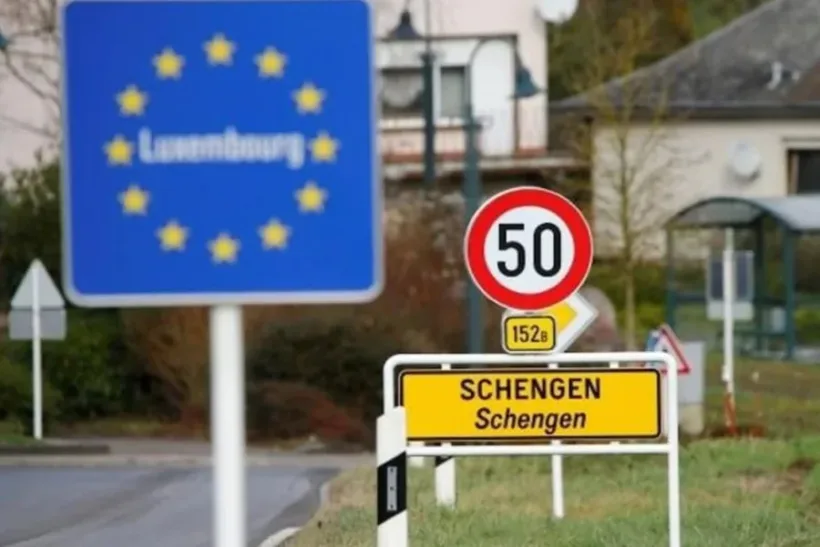
Cyprus Mail
Cyprus will not join the Schengen Area in 2026 as previously planned. Accession is now expected no earlier than 2027, with the timetable still uncertain. The delay could weigh on foreign investment in property and make the island's permanent residence programme less attractive.
EU Approval Remains Pending
Cyprus joined the European Union in 2004 but is still outside the Schengen Area. In May 2025, President Nikos Christodoulides pledged to complete the necessary preparations by the end of December.
In July 2026, the European Commission gave a positive assessment of Cyprus's preparations to join Schengen. The Council of the EU must take the final decision unanimously. In the autumn, the issue of Cyprus's accession was not included on the agenda of a meeting of EU justice and home affairs ministers.
On October 10, Deputy Minister for Migration and International Protection Nicholas Ioannides told public broadcaster CyBC that the government planned to complete six remaining measures by early November and notify the European Commission once they were in place. The authorities now expect Cyprus to join the Schengen Area in 2027, although no date has been set for the Council to consider the application.
Island's Division Complicates Negotiations
The principal obstacle is the political status of northern Cyprus. Since 1974, the island has been divided by the so-called Green Line, separating government-controlled areas from the self-proclaimed Turkish Republic of Northern Cyprus, recognised only by Ankara. The entire island is part of the EU, but the application of EU law is suspended in the north.
Border controls are a particularly sensitive issue. There are nine official crossing points between the two sides, while the dividing line is not legally considered an external EU border. Schengen membership would require checks on the movements of foreign nationals without altering the status of these territories. Nicosia fears that introducing full border controls could effectively entrench the island's division. Another point of contention is the Entry/Exit System (EES), which the authorities do not plan to introduce at these crossings.
British military bases present an additional challenge. The Pergamos and Strovilia crossing points are situated in the Dhekelia area, where checks are carried out by British authorities. Nicosia is discussing with London and Brussels how to align existing procedures with Schengen requirements. Austria and the Netherlands have informally raised security concerns about these locations, although neither has publicly threatened to block Cyprus's accession.
Visa Rules Will Remain Unchanged
The revised timetable leaves current travel restrictions between Cyprus and the Schengen countries intact. A Cypriot national visa does not permit entry to other Schengen states, and a residence permit issued by the island does not replace a Schengen visa. However, foreign nationals holding valid double-entry or multiple-entry Schengen visas may enter Cyprus without obtaining a separate national visa, subject to the applicable conditions.
Once Cyprus joins, the biggest change will be for holders of residence permits in Cyprus. They will be able to visit other Schengen countries without a separate visa for up to 90 days in any 180-day period. This will not confer the right to work or settle permanently elsewhere.
The delay also affects foreign property buyers who obtain permanent residence under the investment programme. For now, this status permits them to live in Cyprus but offers no additional freedom to travel in Europe. The benefits of visa-free movement are therefore postponed along with Schengen accession.
Cyprus Reviews Golden Visa Programme
Cyprus's investment-based permanent residence programme remains open. The minimum investment is €300,000. Residential property must be newly built and purchased directly from a developer, with VAT charged on top of the purchase price. Other eligible investments include commercial property, stakes in local companies and investment funds. Applicants must also demonstrate annual income of at least €50,000.
In September, the authorities announced plans to tighten the eligibility rules. Around 1,500 permits have been issued over the past two years, while compliance checks are being carried out on approximately 12,000 permits granted since 2013. The government is also considering measures to direct more foreign capital into education, defence and innovation.
The review is linked to preparations for Schengen membership, which could make the programme more attractive to overseas investors. No specific amendments have been approved, and their implementation timetable remains unknown, Cyprus Mail reports.
Foreign property buyers also face restrictions when making payments. The issue is particularly acute for Russian and Belarusian nationals, who must transfer funds through banks abroad and provide evidence of their origin. Even when permanent residence requirements are met, financial checks can delay a transaction.
Cyprus Property Market: Demand and Outlook
International Investment analysts note that the delay in Schengen accession comes amid strong demand for property in Cyprus. A total of 14,969 property sale contracts were registered in the first nine months of 2026, up 14% from the same period in 2025. Foreign buyers accounted for approximately 42% of transactions.
The postponement could make property purchases aimed at obtaining permanent residence less appealing, as the prospect of visa-free travel across the Schengen Area has been pushed back. It is too early to assess any market impact: the available figures cover the period before the government's October announcement.
Rising construction activity poses an additional risk. A substantial number of new properties could reach the market in 2027–2028, increasing competition for buyers. The outlook will depend on supply and demand, housing prices, investment terms and the pace of European integration.
FAQ: Frequently Asked Questions
When will Cyprus join the Schengen Area?
The government is targeting 2027, but no exact date has been confirmed. Accession requires the completion of outstanding procedures and unanimous approval by the Council of the EU.
Why did Cyprus fail to join Schengen in 2026?
One of the main unresolved issues is border control on the divided island. The Green Line crossing regime and the need for political agreement among Schengen countries add further complications.
Can you enter Cyprus with a Schengen visa?
Yes. A valid double-entry or multiple-entry category C Schengen visa generally allows entry without a separate Cypriot visa, subject to the applicable requirements. Exceptions apply to certain nationalities.
Can holders of a Cyprus residence permit travel within Schengen?
At present, a residence permit issued by Cyprus does not, by itself, entitle its holder to visa-free travel within the Schengen Area. Once the country becomes a full member, holders of qualifying permits will be able to visit other participating states for up to 90 days in any 180-day period.
How much must you invest to obtain permanent residence in Cyprus?
The current programme requires a minimum investment of €300,000. VAT is payable in addition when purchasing new residential property. Applicants must also prove annual income of at least €50,000 and meet other eligibility criteria.
Will Cyprus abolish its golden visa programme?
As of October 20, 2026, the programme remains in operation. The government is considering tougher requirements, but no final changes or implementation date have been announced.
How could delayed Schengen accession affect Cyprus's property market?
The delay could make buying property for permanent residence and future visa-free travel in Europe less attractive. However, there is not yet verified evidence of a decline in sales caused by the decision.