







 New Housing in the UAE: Dubai Leads in Construction Volume
 Cyprus May Restrict Airbnb in Areas Facing Housing Shortages
 Young Americans Move to Appalachia for Affordable Housing
 Asunción Property Market Accelerates as Construction Booms
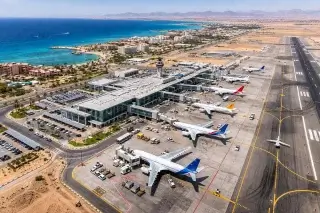 Egypt Expands Aviation for Tourism Growth
 Latvia’s Residence Permits for Real Estate to Be Abolished from September 15
Antalya Loses 665,000 Tourists in Eight Months

Antalya received 10.76 million tourists between January and August 2026, about 664,500 fewer than a year earlier, a decline of roughly 6%. Tourism executives estimate foregone revenue in the hundreds of millions of euros, although there is no single calculation: estimates range from about $350–500 million to €620–700 million depending on the methodology. The industry is particularly concerned about weaker demand from several major European markets as domestic costs rise and Turkey’s price competitiveness deteriorates.
Antalya tourist arrivals fall by 6%
Antalya received 10,764,084 tourists in the first eight months of 2026, 664,530 fewer than in the same period last year. The decline was roughly 6%, Turkish business newspaper Ekonomim reported, citing tourism industry representatives.
The slowdown was already visible before the end of August. Foreign arrivals since the beginning of the year passed 10 million by August 21, but remained around 6% below the previous year. Russia, Germany and the UK were still Antalya’s three largest source markets, according to Anadolu Agency.
The number of Turkish citizens living abroad who holidayed in Antalya also declined, falling from 718,034 to 706,939, or about 2%.
Russia holds steady as European demand weakens
Russia has proved more resilient than several European markets. Around 2.17 million Russian tourists visited Antalya in January–August, broadly matching the previous year. Ukrainian arrivals rose 5% to 306,795, while Hungary and Uzbekistan were also among the markets showing growth.
Tourism executives are more concerned about Germany and the UK, two of Antalya’s most important European source markets. Poland and the Netherlands also recorded declines. Recep Yavuz, head of the Antalya City Council Tourism Working Group and general manager of NBK Touristik, said four of Antalya’s five leading source markets were down.
Performance varied sharply elsewhere. Israeli arrivals increased 59% over the first eight months, while the Iranian market contracted by 73%, equivalent to roughly 25,200 fewer visitors.
The €600–700 million figure is an industry estimate
The widely cited €600–700 million figure is not an official calculation of Antalya’s lost tourism revenue. It comes from industry executives using different assumptions.
Yavuz estimates foregone revenue at about €620 million. His calculation takes into account roughly 672,000 missing tourists, an average European package-tour price of about €800 and additional spending by travellers.
Hakan Saatcioglu, president of the Professional Hotel Managers Association, uses a full-year scenario. If Antalya finishes 2026 with 1 million fewer tourists and each missing visitor would have stayed seven days while spending €100 per day, hotels alone would forgo around €700 million. Spending outside hotels is not included in that calculation.
Korhan Alsan, a board member at MK Group responsible for tourism investment and brand development, gives a lower estimate of about $350–500 million. He argues that visitor numbers and tourism receipts do not move in equal proportion because higher spending per traveller can compensate for part of the decline.
It is therefore inaccurate to describe €600–700 million as a confirmed loss. The figure is an industry scenario rather than an official regional revenue statistic.
Turkey is earning more from each remaining visitor
National tourism data support the distinction between visitor numbers and revenue. The number of departing visitors, including foreigners and Turkish citizens resident abroad, fell 5.1% year on year in the second quarter of 2026 to 15.58 million. Tourism income declined by a smaller 2.6% to $15.87 billion, according to the Turkish Statistical Institute, TÜİK.
Visitors generated $15.66 billion of the total, while transfer passengers accounted for another $209.5 million. Individual spending reached $10.93 billion and Turkey’s share of package-tour expenditure was $4.72 billion. Visitors staying overnight spent an average of $113 per night.
That helps explain why estimates for Antalya differ. A 6% decline in arrivals does not automatically translate into a 6% drop in revenue if spending per visitor increases.
Higher prices are weakening Turkey’s competitive position
Tourism executives identify the relationship between domestic prices and exchange rates as one of the main pressures on demand. Turkish hotels, restaurants and other tourism businesses face rapidly rising costs in lira, while exchange-rate movements do not necessarily offset those increases for foreign travellers.
Consumer prices in Turkey rose 31.51% year on year in August 2026 and 1.84% from the previous month, according to the latest TÜİK inflation data. Annual inflation therefore remains above 30% despite a gradual slowdown.
For hotels, much of the cost base is domestic. Food, wages, maintenance, energy and supplier services all affect operating expenses. Room and package prices, however, compete directly with holidays in Greece, Spain, Egypt and other Mediterranean destinations.
Industry representatives say a perception that Turkey has become expensive is becoming more entrenched in parts of the European market. That is an industry assessment rather than a measurable statistical indicator, but falling demand from Germany, the UK, Poland and the Netherlands has made price competitiveness a central issue for Antalya in 2026.
Hotels are cutting prices to protect occupancy
Weaker demand is already affecting hotel pricing. Antalya Chamber of Commerce and Industry President Yusuf Hacisuleyman says hotels have made price concessions to maintain visitor volumes. Even if Antalya eventually comes close to its target arrival numbers, revenue may remain weaker because of those discounts.
Hotels therefore face a difficult balance. Higher room rates are needed to cover rising operating costs, but aggressive increases can make Antalya less competitive. Discounts can protect occupancy while putting revenue and margins under pressure.
The final outcome of the season cannot therefore be judged by arrivals alone. Average room rates, revenue per available room, length of stay and spending outside hotels are also important indicators.
A loss of 665,000 visitors is not a market collapse
Despite the decline, Antalya remains one of the Mediterranean’s largest tourism destinations. More than 10.7 million tourists visited in the first eight months alone. Hotel representatives also expect major international events later in the year to support occupancy.
The more significant concern is that weakness has spread across several large source markets. If European demand remains soft through the autumn, Antalya could finish further behind 2025. The possibility of losing 1 million visitors over the full year remains an industry forecast rather than an official projection.
As International Investment experts note, the €600–700 million figure should be treated as an estimated range rather than a confirmed loss for Antalya. The more important signal is the simultaneous decline across several major European markets while domestic inflation remains high. If hotels continue to offset rising costs with discounts, visitor numbers may recover faster than revenue and profitability. For hospitality investors, average room rates, occupancy, operating costs and the mix of source markets are therefore becoming more important than headline arrival figures alone.
FAQ
How many tourists has Antalya lost in 2026?
Antalya received 664,530 fewer tourists between January and August than during the same period in 2025, a decline of roughly 6%.
How many tourists visited Antalya in the first eight months?
Antalya received 10,764,084 tourists between January and August 2026.
Has Antalya really lost €700 million?
There is no official confirmation of a €700 million loss. Industry estimates range from about $350–500 million to roughly €620 million, while the €700 million figure is based on a full-year scenario involving 1 million fewer tourists.
How many Russian tourists visited Antalya?
Around 2.17 million Russian tourists visited Antalya during the first eight months of 2026. Industry figures suggest the market was broadly unchanged from the previous year.
Which European markets have declined?
Tourism executives report weaker demand from Germany, the UK, Poland and the Netherlands.
Why are Antalya’s tourist numbers falling?
Industry representatives cite rising domestic costs, exchange-rate dynamics, weaker price competitiveness and softer demand from several major European markets.
Is Turkey’s tourism revenue also falling?
Turkey’s tourism income declined 2.6% year on year to $15.87 billion in the second quarter of 2026, while visitor numbers fell by a larger 5.1%.
Could Antalya lose 1 million tourists this year?
Hotel-industry representatives have raised that possibility if the current decline continues through the end of 2026. It remains a forecast rather than an official result.