







 Cyprus May Restrict Airbnb in Areas Facing Housing Shortages
 Young Americans Move to Appalachia for Affordable Housing
 Asunción Property Market Accelerates as Construction Booms
 Egypt Expands Aviation for Tourism Growth
 Latvia’s Residence Permits for Real Estate to Be Abolished from September 15
 Egypt Prepares New Law for Property Developers
New Housing in the UAE: Dubai Leads in Construction Volume
Khaleej Times
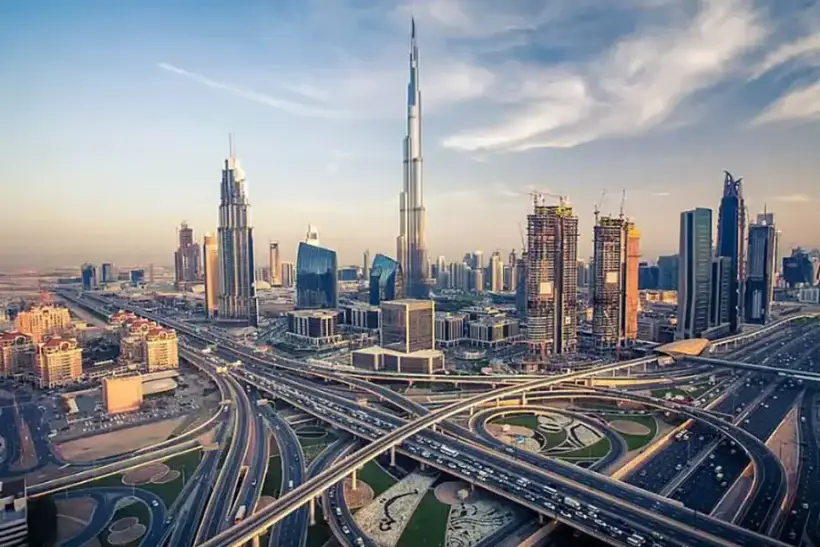
The UAE housing market continues to expand. Dubai accounts for the largest share of new supply, with around 56,600 homes and apartments scheduled for completion by the end of 2026. This figure is significantly higher than in Abu Dhabi and the Northern Emirates, Khaleej Times reports, citing a Colliers report.
Dubai Real Estate Market
In the second quarter of 2026, around 11,650 residential units were completed in Dubai, including 9,200 apartments and 2,450 villas. According to Colliers, another approximately 56,600 homes and apartments are expected to be completed by December. At the same time, buyer activity is weakening. Knight Frank data show that residential sales in the first half of 2026 fell by 13.6% compared with the same period a year earlier. The decline was particularly noticeable in May and June.
The correction has also affected Dubai housing prices: in the mass-market segment, they have fallen by 5–20%, depending on the area. Felix Cheung, head of international residential property at JLL in Hong Kong, notes that this is a moderate decline in transaction values rather than a broad market collapse.
Rising costs are creating additional pressure on developers. Faisal Durrani, Partner and Head of Research for the Middle East and North Africa at Knight Frank, estimates that construction material costs in Gulf countries have increased by more than 20% since the beginning of the year.
Abu Dhabi Expands Its Housing Stock
In the second quarter of 2026, around 2,200 homes and apartments were completed in Abu Dhabi. Handover activity took place both in established districts and in newer residential communities. Colliers highlights Al Shamkhah, Yas Island, Al Raha Beach and the Bloom Living development in Zayed City among the main locations. Another approximately 3,200 residential units are scheduled for completion by the end of 2026.
The additional supply is entering the market after several years of strong price growth. According to ValuStrat, housing prices in Abu Dhabi rose by 17.8% over 12 months in areas where foreigners are allowed full ownership. However, quarterly growth slowed to just 2.1% in the second quarter, the weakest increase in two years, indicating a gradual moderation of the market.
Apartments recorded the strongest gains, with prices rising by 24.1% over 12 months, while villas increased by 12%. Most market activity is concentrated in off-plan projects. In the second quarter of 2026, 6,061 transactions involving such properties were recorded, up 156% from the same period in 2025. New-build properties accounted for 84% of all residential sales. At the same time, the total number of transactions fell by 8% compared with January–March, to 7,206. The decline was especially pronounced in the secondary market, where sales dropped by 28.3%, to 1,145 units.
Sharjah Leads the Northern Emirates
Around 7,450 residential units are expected to be completed across the Northern Emirates in 2026. Sharjah accounts for the largest share, with approximately 5,450 homes and apartments. Around 1,400 units are scheduled for completion in Ras Al Khaimah and another 600 in Ajman.
Colliers notes that the overall construction pipeline in the Northern Emirates has become more moderate. Sharjah, however, continues to stand out for strong development activity: in the second quarter of 2026 alone, projects comprising around 4,600 residential units were announced.
One of the notable recently completed projects was Il Teatro Residences in Aljada, Sharjah. In Ras Al Khaimah, developers handed over the final units at the Danah Bay project.
Sharjah therefore accounts for almost three-quarters of all housing scheduled for completion in the Northern Emirates in 2026. At the same time, a substantial volume of future supply is being formed by new projects announced during the second quarter.
What Is Changing for Investors
International Investment analysts note that the UAE real estate market is gradually moving beyond a period of almost uninterrupted growth and becoming more sensitive to the balance between supply and demand. The large volume of new construction in Dubai, expansion of Abu Dhabi’s housing stock and high development activity in Sharjah are increasing competition between projects and may restrain further price growth.
The UAE housing market is entering a more complex phase in which strong development activity alone no longer guarantees the pace of price appreciation seen in previous years. Rising supply is coinciding with weaker sales in Dubai and slower price growth in Abu Dhabi, which could widen the gap between stronger and weaker projects.
Another factor is the renewed escalation in the Middle East and the hostilities between the United States and Iran. They have already made buyers in Dubai more cautious while also increasing the cost of construction materials, transportation and cargo insurance. If tensions persist, they could further slow sales and complicate the delivery of some projects.
For investors, this combination of factors points to a more selective market with less potential for rapid price growth. Projects in areas with limited new supply and stable demand from owner-occupiers may prove more resilient, while locations with large volumes of properties entering the market at the same time and a high dependence on investment demand could be more vulnerable.