







 Vietnam Mortgage Surge Pushes Homes Out of Reach
 Lithuanian Apartment Prices Accelerate Across Major Cities
 London Flats Lose Value Ahead of Leasehold Reform
 Construction of the Batumi–Sarpi Highway Begins in Georgia
 Baltic Property Investment Accelerates in 2026
 Hong Kong and Singapore Renew Their Expat Rivalry
Flight Chaos Disrupts Major US Airports
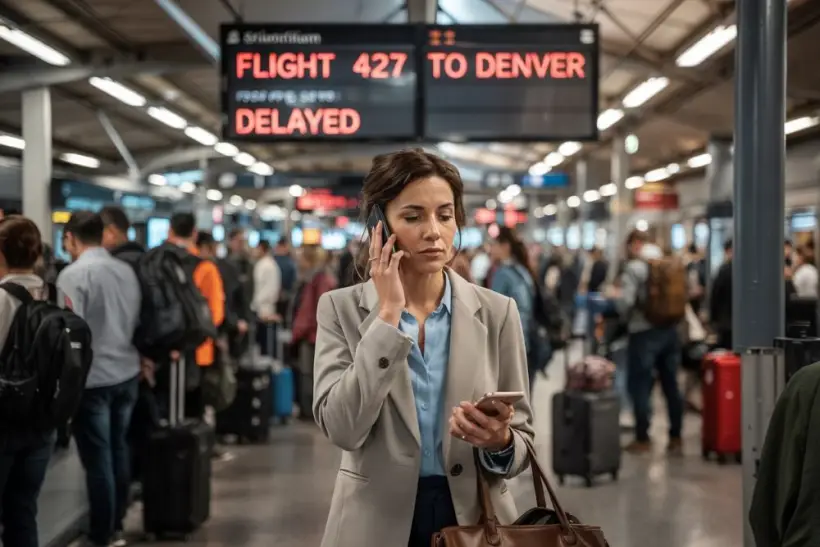
Thousands stranded across the United States
Air travel across the United States faced widespread disruption as more than 111 flights were cancelled and nearly 3,935 experienced delays in a single day. Major hubs including Chicago, Orlando, Los Angeles, New York, Seattle and Washington were among the hardest hit, leaving thousands of passengers stranded in crowded terminals with limited information and long waiting times.
Both domestic and international services were affected, amplifying knock-on effects across airline networks nationwide.
Airlines struggle to maintain operations
Major carriers including Spirit Airlines, United Airlines, Southwest Airlines, Delta Air Lines, Air Canada and SkyWest were among those most impacted. While cancellations remained relatively limited, delays surged, indicating that airlines attempted to preserve schedules despite severe operational constraints.
Several carriers reported hundreds of delayed flights, disrupting crew rotations, aircraft positioning and onward connections across the country.
Weather and ground constraints drive disruptions
Winter weather conditions played a central role in the disruption, with deicing operations required at multiple airports such as Baltimore, Washington Dulles, Philadelphia and Salt Lake City. While essential for flight safety, these procedures significantly extended turnaround times.
Ground stops at Washington Reagan National Airport, strong winds affecting flight flows and arrival restrictions at several hubs compounded the situation. The combination of weather, air traffic control limitations and airport congestion created cascading delays nationwide.
Most affected airports nationwide
Chicago O’Hare recorded one of the highest numbers of delayed flights, exceeding 400 in a single day. Orlando, Los Angeles, Newark, JFK and Dallas-Fort Worth also experienced heavy disruption. Smaller airports, including Salt Lake City and Juneau, were not immune, highlighting the system-wide nature of the disruption.
Peak travel hours further intensified congestion, resulting in overcrowded terminals and extended queues at airline service desks.
Impact on passengers and the aviation sector
For travelers, the disruption translated into missed connections, additional expenses and significant uncertainty. For airlines, the situation increased operational costs and exposed vulnerabilities in network resilience. The events underline the challenges facing the US aviation system during periods of high demand combined with adverse weather.
As experts at International Investment report, the scale of today’s disruption underscores long-standing structural weaknesses in US aviation infrastructure. They note that without sustained investment in airport capacity, digital traffic management and weather-resilient operations, similar large-scale disruptions are likely to remain a recurring feature of air travel in the United States.