













Builders Clash With Senate Housing Bill
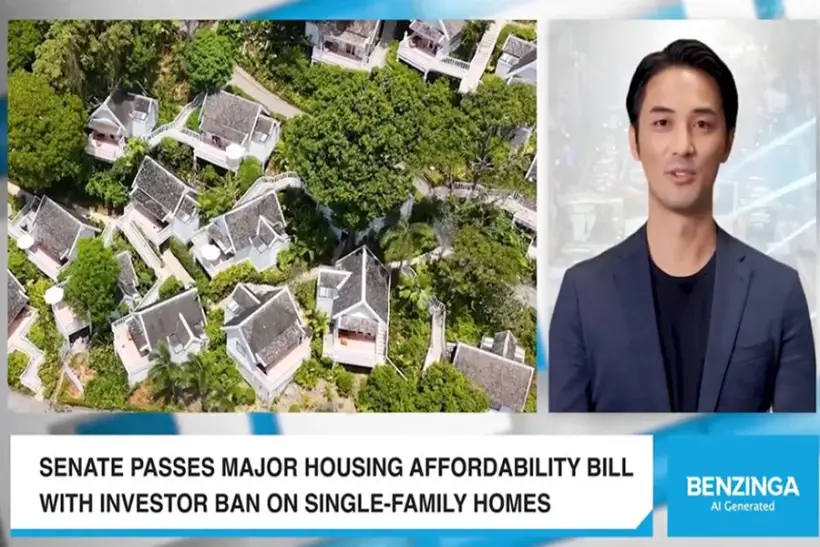
US housing bill sparked a fight over the investor ban
The US housing market ran into a fresh political fault line in early March as builders and real estate groups pushed back against the Senate version of a major housing package, arguing that one of its most visible measures — a restriction on large institutional investors in the single-family housing market — could hurt not just private equity and rental operators, but home construction itself. Bloomberg reported on March 4 that the investor restriction had become the main source of conflict around the Senate housing package, even though the broader bill is designed to increase housing supply and reduce barriers to development.
The legislation at the center of the dispute is the 21st Century ROAD to Housing Act, the biggest bipartisan housing package in years. The Senate later passed it by an 89-10 vote. AP said the bill combines deregulation, support for manufactured housing, incentives for local homebuilding and a parallel effort to curb institutional investors in the single-family market. That combination is what turned a rare bipartisan housing compromise into a direct confrontation between lawmakers, builders and the rental-housing industry.
What the Senate bill would do to large housing investors
Legal analyses from Mayer Brown and Latham & Watkins say the Senate version would bar large institutional investors that own more than 350 single-family homes from buying additional single-family houses, subject to limited exceptions. The bill would not force existing divestitures, but it would sharply restrict future acquisitions and would separately affect the build-to-rent segment that has become increasingly important for some developers and landlords.
The most controversial feature is the treatment of built-for-rent single-family homes. Industry and legal summaries say large investors would only be able to acquire such homes under narrow conditions, and in some cases would have to sell them to individual buyers within seven years. The Wall Street Journal and Barron’s both highlighted that provision as the key reason markets interpreted the bill as a serious challenge to the build-to-rent model, because it undermines the economics of long-term ownership and leasing.
Why US builders opposed the investor ban provision
The strongest industry criticism came from the National Association of Home Builders. After Senate passage, NAHB Chairman Bill Owens said the requirement that institutional investors sell built-for-rent single-family homes within seven years would sharply reduce investment in rental housing and could cut annual single-family production by nearly 40,000 units. That is a significant claim because the bill is being sold politically as a supply-side housing solution, while builders say the disputed provision could do the opposite.
Other housing groups lined up against the measure as well. Bloomberg reported that 12 housing and real estate organizations opposed the provision, while the Mortgage Bankers Association confirmed it joined a coalition letter urging Senate leaders to change the build-to-rent language. NPR-partner coverage and ConnectCRE also reported that industry groups warned the rule could reduce housing production and leave renters with fewer options.
Why build-to-rent has become a central issue in US housing
The fight matters because build-to-rent has become one of the few fast-growing housing formats in suburban and high-growth US markets. In a letter to Senate leaders, The Pew Charitable Trusts warned that restrictions on build-to-rent could weaken one of the limited channels for expanding supply for families that cannot or do not want to buy immediately. Barron’s and Vox, despite taking different positions on the broader policy, agree that the long-term ownership restriction on new rental homes has become the core problem for builders and rental operators.
Critics also stress that institutional investors own only a small share of the total single-family market, while the broader US housing shortage is driven mainly by years of underbuilding, zoning constraints and high financing costs. Vox argued that sweeping restrictions on corporate landlords may be politically attractive, but could economically reduce rental supply in precisely the segments where households are looking for an alternative to homeownership.
Why the Senate backed the bill anyway
The Senate support was broad because the overall package contains provisions long sought by both parties, including easier construction rules, more support for modular and manufactured housing, more flexibility for local governments and a visible response to voter anger over housing affordability. AP described the package as the biggest housing bill in decades. Bloomberg also noted that the investor ban added a populist dimension that appealed to parts of both parties and aligned with the White House’s political messaging.
The Senate version also sits inside a broader policy shift following Donald Trump’s January executive order targeting institutional homebuyers. Latham & Watkins said the current bill builds on that direction, while Bloomberg reported in January that the administration’s push against Wall Street homebuyers had already become one of the most contentious themes in US housing policy.
What happens next in the House
Even after Senate passage, the bill’s future remains uncertain. AP, the Wall Street Journal and Bloomberg all reported that the House is likely to become the arena where the disputed provision is rewritten, because many Republicans and most affected industry groups are now counting on revisions or a conference process. Builders and real estate groups are openly hoping the House will remove or soften the build-to-rent restrictions.
For the market, that means the conflict is no longer just about punishing institutional landlords. The larger question is whether the US wants to prioritize a politically popular crackdown on large investors or preserve capital flows into new rental housing supply. The answer will determine whether the Senate package becomes mainly a symbolic attack on Wall Street landlords or a real structural shift in how the single-family housing market is financed and expanded.
As International Investment experts report, the clash over the Senate housing bill shows how the US affordability debate is now colliding with the market’s reliance on private capital to fund new supply. If the build-to-rent provision survives largely unchanged in the final law, the market may end up with not just tighter rules for institutional investors, but also slower construction in some of the very segments where housing shortages are already most severe.