







 How Ukraine’s New-Build Housing Market Has Changed Over Four Years
 European Prime Rents Rise as Property Yields Turn Higher
 The Most Expensive Airlines in Europe in 2026
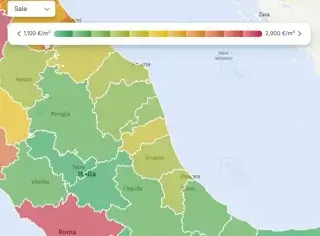 Housing Prices in Italy Reach a Two-Year High
 Travellers Increasingly Choose Cooler Scandinavia
 Serbia Property Sales Decline as Transaction Value Rises
Airbnb Must Face Los Angeles Wildfire Pricing Lawsuit

A California court has allowed Los Angeles to continue its lawsuit accusing Airbnb of enabling unlawful rental price increases following the January 2025 wildfires. The city links its allegations to more than 2,600 properties, but the ruling does not establish liability. It means only that the claims are legally sufficient to proceed to evidence gathering and further judicial review.
Airbnb failed to end the case at an early stage
California Superior Court Judge Robert Broadbelt rejected Airbnb’s request to dismiss the lawsuit. The company argued that hosts determined rental rates and should therefore bear responsibility for any prohibited increases.
The court found that this argument did not automatically defeat the city’s claims. Los Angeles alleges that Airbnb advertised the disputed prices and collected payments for bookings, even when hosts initially controlled the rates.
Reuters reported that the lawsuit concerns more than 2,600 properties and that the emergency declaration triggering the price restrictions was extended several times. The fires killed at least 31 people and destroyed or damaged more than 16,000 structures.
The decision does not establish that every listing violated the law. At this stage, the judge considered whether the city had presented a legally viable case rather than whether each allegation had been proven.
Los Angeles must still identify the earlier rental rate, the size and date of the increase and Airbnb’s role in calculating, displaying or collecting the final amount.
Los Angeles seeks penalties and consumer restitution
The City Attorney filed the action in July 2025. Los Angeles is seeking a permanent injunction against unlawful emergency rents, restitution for customers and civil penalties of up to $2,500 for each proven violation.
A separate part of the complaint challenges Airbnb’s statements that host identities and property locations had been verified. The city alleges that some verified accounts may have used false or nonexistent identities and that some property addresses were inaccurate or did not exist.
The action is registered as Los Angeles Superior Court case 25STCV21244. The court found both the pricing and verification allegations sufficient to continue.
The final financial exposure remains uncertain. It will depend on how the court defines a separate violation and how many listings, advertisements or completed bookings the city proves were unlawful.
Los Angeles must also establish which customers are entitled to refunds and calculate the portion of each payment that exceeded the legal maximum.
California generally caps emergency rent increases at 10%
California Penal Code Section 396 generally prohibits rental housing prices from rising by more than 10% after an emergency declaration. The rule covers both long-term housing and daily rentals offered through services such as Airbnb.
A property that was not previously rented or advertised is generally subject to a ceiling equal to 160% of the fair market rent determined by the US Department of Housing and Urban Development.
A landlord cannot accept a payment above the cap merely because an evacuee, prospective tenant or insurance company is willing to pay more.
Violations can lead to up to one year in county jail, a fine of up to $10,000, or both. Civil enforcement can also result in penalties of up to $2,500 per violation, mandatory restitution and an injunction, according to guidance from the California Attorney General’s Office.
An increase exceeding 10% is not automatically unlawful in every circumstance. A provider may attempt to show that it directly reflects documented increases in repair, labour or other permitted costs.
The statute does not allow landlords to disguise an excessive rent increase by adding cleaning, utilities or a shorter lease term without a legitimate underlying cost.
The fires created an immediate housing shortage
California declared an emergency on January 7, 2025, as the Palisades Fire and other blazes spread during dangerous wind conditions. Thousands of households entered the rental market at the same time after evacuating or losing their homes.
The sudden fall in housing supply coincided with an exceptional increase in demand. Associated Press documented examples including a downtown Los Angeles apartment whose monthly asking rent rose from $5,500 to $8,500 and a house relisted from $16,000 to $29,000. Some of those advertisements were subsequently removed.
Emergency pricing laws temporarily limit the market’s normal response to scarcity. Under ordinary conditions, stronger demand can support higher prices. After a disaster, housing is treated as an essential service because displaced consumers have limited time and few realistic alternatives.
This framework does not guarantee low prices. It is designed to prevent an abrupt transfer of disaster-related costs from property owners and platforms to households seeking immediate shelter.
The first ten days are central to the complaint
Los Angeles alleges that between January 7 and January 17, 2025, prices for at least 2,000 Airbnb properties increased by more than the permitted 10%.
The city connects some of those increases to Airbnb’s automated pricing feature, which adjusts nightly rates using demand and comparable listings.
On January 17, Airbnb disabled the tool in Los Angeles and Ventura counties after a request from California Attorney General Rob Bonta. The platform also began preventing some hosts from entering increases above the emergency limit.
The complaint says those measures reduced some rates, while other listings continued to display allegedly excessive prices in later weeks and months. Courthouse News Service reported the claims when the lawsuit was filed.
The period between the emergency declaration and the software change is likely to receive close scrutiny. Internal records may show how many prices were changed automatically, how many were adjusted manually and how many bookings produced completed payments.
The court may also consider whether Airbnb could reasonably have applied the restriction sooner and whether automated compliance was technically possible across thousands of listings.
Airbnb’s pricing algorithm is at the centre of the dispute
Airbnb’s Smart Pricing feature automatically adjusts nightly rates using demand, booking dates, listing characteristics and prices for comparable properties.
Hosts choose minimum and maximum rates, can disable the feature and may override its recommendation for individual dates.
Airbnb describes the tool as an optional service operating within boundaries established by the host. That position supports its argument that the host remains the ultimate price setter.
Los Angeles offers a broader interpretation. The city argues that when software calculated the rate, the platform displayed it and Airbnb processed the payment, the company became more than a passive publisher.
The distinction may determine liability. Airbnb has a stronger intermediary defence when a host manually entered the price. The city’s case becomes stronger when the rate was generated automatically without a new decision from the host.
The case may reshape digital marketplace rules
The dispute extends beyond short-term accommodation. Automated pricing is widely used by hotel platforms, ride services, ticket sellers and online retailers.
A ruling that links price calculation and payment processing to direct legal responsibility could require digital companies to monitor emergency declarations more actively.
Platforms may need automated databases showing which states, counties and cities have active price caps and how long those restrictions remain in force.
Compliance would be complex because emergencies can be declared at different levels of government and extended for different periods. Rules may also vary between housing, hotels, food, repairs and other essential services.
Automatic blocking carries its own risks. A system may prevent a lawful increase supported by documented costs or continue applying a restriction after the relevant emergency measure expires.
Verification claims create a separate risk
The allegations concerning verified hosts and property locations are not limited to the wildfire emergency. They relate to Airbnb’s normal operations and may have longer-term consequences.
Platforms can verify individual elements such as an identity document, telephone number or payment method without physically inspecting a property or confirming every detail displayed to customers.
The legal question is whether a reasonable consumer interprets the word “verified” as a broader guarantee and whether Airbnb clearly explains the limits of its checks.
Los Angeles must show that the language created a misleading impression. Airbnb is likely to argue that its verification process and limitations were adequately disclosed.
A ruling for the city could require the platform to change its labels, explain checks more precisely or conduct additional reviews of host names and property locations.
Airbnb disputes the claims and cites recovery assistance
Airbnb has called the lawsuit’s allegations inaccurate and said it supports Los Angeles’ recovery.
The company, Chief Executive Brian Chesky and the nonprofit Airbnb.org committed nearly $30 million to emergency accommodation and rebuilding programmes.
The support included free temporary housing for almost 24,000 people affected by the fires.
That assistance does not resolve the legal issues. The court will examine specific listings, rate changes, payments and Airbnb’s response to emergency restrictions.
The company therefore faces a reputational contradiction. Its platform provided accommodation to displaced households while also collecting fees from a market where the city says some prices were unlawful.
Internal records will shape the next stage
The ruling allows the parties to move into more extensive evidence gathering. Los Angeles may request price histories, algorithm settings, host warnings, internal instructions and transaction records.
Airbnb can challenge the city’s methodology and demand property-level evidence. It may show that some listings were inactive, inaccurately classified or subject to lawful changes.
Records from January 7 to January 17 will be particularly important. They may establish whether the software changed rates automatically and how quickly Airbnb could have introduced emergency controls.
The parties may also settle before trial. A settlement could include customer refunds, civil penalties, new pricing safeguards and changes to verification language without creating a final judicial precedent.
As International Investment experts report, the court has not found Airbnb liable, but it has rejected the platform’s most convenient position that host involvement automatically removes corporate responsibility. The central risk is the emergence of a new standard for algorithmic pricing: a service that calculates a rate, advertises it and collects payment may be expected to enforce emergency limits proactively. Los Angeles must still prove violations listing by listing and distinguish prohibited increases from lawful costs. Until that happens, the 2,600 properties represent the scale of the allegation rather than a verified measure of consumer harm.
FAQ on the Los Angeles Airbnb lawsuit
What did the court decide
The judge refused to dismiss the lawsuit at the preliminary stage. Los Angeles may continue the case, but Airbnb has not been found liable.
What is Airbnb accused of doing
The city alleges that the platform advertised and collected rental prices above emergency limits. It also challenges representations concerning verified hosts and property locations.
How many listings are involved
The current allegations concern more than 2,600 properties. Earlier statements referred to at least 2,000 and potentially more than 3,000 listings.
How much can rent rise during a California emergency
State law generally limits the increase to 10% above the previously advertised or charged rental price.
Can a price legally rise by more than 10%
It may be possible when the provider demonstrates a documented increase in costs or another statutory exception. Stronger demand alone is not sufficient.
What is Airbnb Smart Pricing
It is an automated feature that adjusts nightly rates using demand and other market factors. Hosts choose minimum and maximum rates and may disable or override the system.
Why is Los Angeles suing Airbnb rather than only hosts
The city argues that Airbnb sometimes calculated the rate, displayed it to customers and processed the payment. Airbnb says hosts remained in ultimate control.
What penalties could apply
A criminal violation can carry a fine of up to $10,000 and up to one year in county jail. Civil remedies may include penalties of up to $2,500 per violation, restitution and an injunction.
Will customers receive refunds
Los Angeles is seeking restitution for customers who allegedly paid unlawful rates. Eligibility and payment amounts will depend on proof or a settlement.
When will the lawsuit end
There is no fixed timetable. Evidence gathering, additional motions and a possible trial remain unless the parties reach an agreement.