







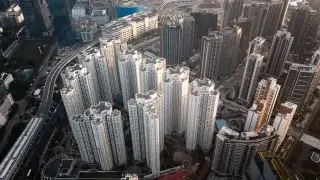
 Hong Kong Home Prices End 13-Month Rally
 Hot Summer Boosts UK Domestic Tourism
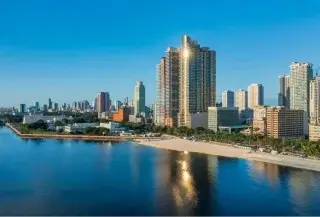 Manila Condo Inventory Hits Record as Values Weaken
 Cyberattack Paralyzes Real Estate Transactions in Romania
 Short-Term Rental Rates in Greece Rise to €200 per Night
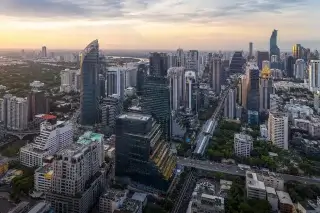 Asia-Pacific Property Investment Hits Record $92.5 Billion
Uzbekistan Property Transactions Rise by a Quarter
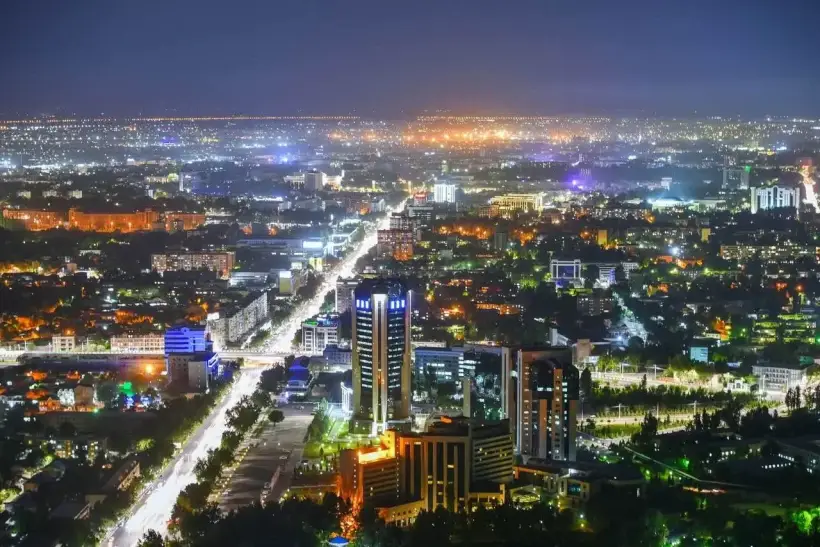
Uzbekistan registered more than 171,000 real estate purchase-and-sale transactions in January–June 2026, an increase of 25.3% from a year earlier. Activity strengthened in every region, while the official residential property price index rose by a much slower 4%. The half-year result was also affected by an exceptional March surge ahead of changes to settlement procedures for notarised transactions.
The market added about 34,500 transactions
The Center for Economic Research and Reforms reported more than 171,000 real estate purchase-and-sale transactions during the first half. The absolute increase was 34,500, implying approximately 136,500 agreements in the corresponding period of 2025. Daryo published the findings on August 2.
The figure should not be described as 171,000 apartments sold. It covers real estate transactions within the source’s reporting methodology, while the published half-year summary does not provide a full division between apartments, individual houses, commercial premises, land and other property.
The comparison measures the number of agreements rather than their combined value. The summary does not disclose the average transaction price, the floor area sold or a complete primary-versus-secondary-market breakdown.
June activity recovered after the spring correction
More than 25,000 transactions were completed in June. The total was 23% above May, 20.4% higher than in June 2025 and 24.9% above the June 2024 level.
Tashkent accounted for 30.8% of the national monthly total. Approximately 7,800 agreements were completed in the capital, an increase of 35.7% from a year earlier.
The strongest month-on-month increases were recorded in Bukhara at 50.1%, Navoi at 41.5% and Samarkand at 31.8%. Khorezm recorded the weakest increase at 0.9%.
In annual terms, Tashkent was followed by Syrdarya at 26.9%, Navoi at 26.3% and Karakalpakstan at 23.3%. Growth was more limited in the Tashkent region at 3.3%, Fergana at 3.6% and Jizzakh at 5.7%.
The monthly increase should be viewed against a relatively weak comparison base. Activity corrected in April and May following an unusually strong March, making June’s recovery partly a rebound from the spring decline.
Syrdarya and Tashkent led half-year growth
Every region recorded an annual increase in transaction numbers during the first six months. Syrdarya produced the fastest growth at 36.4%.
Tashkent followed with an increase of 34.9%, while Navoi gained 30%. More moderate results included 16.7% in Khorezm, 15.4% in Bukhara and 12.1% in Fergana.
Percentage growth does not indicate the absolute size of a regional market. A sharp increase in a smaller province may still represent fewer agreements than more moderate growth in the capital.
March activity lifted the half-year total
Uzbekistan recorded 110,051 real estate transactions in the first quarter, an increase of 48.4%. March alone accounted for 47,313 agreements, more than double the total recorded a year earlier.
Quarterly transaction growth reached 67% in Syrdarya, 64% in Tashkent, 56% in Andijan and 52% in Navoi. March activity rose by 144% in Syrdarya and by 138% in Namangan.
The monetary authority linked the exceptional acceleration to a new settlement procedure taking effect on April 1. Some buyers and sellers sought to complete agreements before the change.
This does not mean that every additional March transaction was shifted from a later month. It does mean that the 25.3% half-year increase should not automatically be treated as a sustainable annual growth rate.
Transaction escrow is not construction financing
From April 1, Uzbekistan introduced settlement through escrow accounts for notarised purchase-and-sale transactions involving real estate and motor vehicles. Buyers’ funds are held in a designated account and transferred to the seller after notarisation is completed.
The mechanism is intended to reduce financial and legal risks by preventing either party from completing its side of the exchange before the required conditions have been satisfied.
It should not be confused with escrow-based project financing for shared-equity construction. The report describes a potential future extension to that segment, under which buyers’ funds would remain protected while construction was financed through bank loans and developers’ capital.
The March surge was therefore associated with settlement changes for notarised agreements, not with a completed nationwide transition of all developers to project-finance escrow.
Mortgages supported first-quarter demand
Banks issued UZS 5.7 trillion of mortgage loans in January–March, a 29% increase from the corresponding period of 2025.
The percentage applies only to the first quarter. The reviewed sources do not provide a directly comparable confirmed mortgage-growth figure for the full first half, meaning it would be inaccurate to describe mortgage issuance as having risen by 29% over six months.
Real household incomes increased by 7.8%, supporting borrowers’ purchasing capacity alongside credit expansion.
The figures do not show that mortgages financed 29% of additional transactions. Lending is reported by monetary value, while market activity is measured by the number of agreements.
Housing construction expanded supply
Uzbekistan commissioned 3.3 million square metres of housing in the first quarter, an increase of 6.6%. Individual residential construction rose by 6.8% and provided the main contribution.
Construction-related investment increased from 7.4% to 10.8% of total investment. Growth in the multi-unit segment remained more subdued and was influenced by the completion schedules of large residential complexes.
About 2,900 multi-storey residential buildings remained under construction at the end of March. Samarkand, Tashkent, Bukhara and Khorezm were among the leading project locations.
A larger number of projects does not automatically guarantee sufficient supply in every location or price category. The data do not show the number of apartments, completion rates or delivery dates for all buildings.
Prices increased much more slowly than transactions
The official residential property price index increased by 1.3% from the previous quarter and by 4% from the second quarter of 2025.
Apartment prices rose by 5.5% year on year, while individual houses gained 2%. Primary-market apartments increased by 7.1% and secondary-market units by 4.2%.
Apartment prices in Tashkent rose by 3.9%, including growth of 5% in the primary market and 3.2% in the secondary segment.
Outside the capital, apartments gained an average of 7%. Primary-market housing increased by 8.7% and secondary-market units by 5.1%. Individual houses rose by 1.2% in Tashkent and 2.7% in the rest of the country.
Transaction growth of 25.3% therefore did not produce a comparable jump in housing prices. Supply expansion, changes in the mix of properties sold and the administrative March effect may all have contributed to the gap.
The housing index uses a revised methodology
Starting in the second quarter of 2026, Uzbekistan began compiling residential property price indices under an updated methodology. Values from 2024 onward were recalculated retrospectively using hedonic regression.
The approach adjusts for differences in characteristics such as floor area, location, building level and type of property. This helps distinguish genuine price movements from changes in the quality or composition of homes sold.
The revised official series should therefore not be directly combined with older estimates or simple averages calculated from property listings.
Tashkent asking prices reached UZS 16.5 million
An analysis of listings on major electronic platforms placed the average advertised price of an apartment in a Tashkent multi-unit building at UZS 16.5 million per square metre on July 1, up from UZS 16.4 million one month earlier.
The highest asking prices were recorded in Shaykhantakhur at UZS 25.3 million per square metre, Mirobod at UZS 23.2 million and Yakkasaray at UZS 20.5 million.
The lowest averages were found in Yangihayot at approximately UZS 11 million, Sergeli at UZS 11.45 million and Bektemir at UZS 11.5 million.
These are asking prices rather than completed transaction values. A seller’s advertised amount may be reduced during negotiations, while the composition of properties listed online changes over time.
The UZS 16.5 million average is therefore not directly comparable with the official 3.9% annual price increase in Tashkent.
A 14% policy rate constrains affordability
On July 29, the Central Bank kept its policy rate at 14%. The authority cited rapid domestic demand and persistent inflation pressure.
Headline inflation stood at 6.4% in June, while core inflation was 5.7%. Consumer prices declined by 0.1% in July, but annual inflation remained at 6.4%.
The policy rate is not the interest rate charged on an individual mortgage, but it influences banks’ funding costs and long-term lending conditions.
A high cost of money may restrict the number of households able to borrow even while the total volume of mortgage issuance is increasing. Affordability also depends on subsidies, down-payment requirements and household income.
Rapid activity does not yet prove a bubble
Transaction growth alone is insufficient to demonstrate that a property bubble has formed. A broader assessment would require price-to-income and price-to-rent ratios, household debt burdens, mortgage quality, investor purchases and unsold housing inventories.
The available indicators are mixed. Transactions and mortgage lending are expanding rapidly, while official prices are increasing more moderately and construction remains active.
The administrative effect seen in March creates additional uncertainty. Second-half data will provide a clearer indication of how much of the growth reflects sustained underlying demand.
As International Investment experts report, the 25.3% figure confirms strong activity but overstates the change in fundamental demand when viewed without the March surge. The most encouraging sign is that transaction growth has not yet produced a comparable increase in prices. The principal risks are concentrated in Tashkent and rapidly expanding regions where mortgages, migration and incomes may outpace the delivery of affordable housing. Market sustainability should be judged using second-half transactions, completed sale prices and borrower debt burdens rather than transaction totals or online listings in isolation.