







 Fines for Illegal Rentals in Spain Reach €800,000
 Australia’s Spring Auctions Rise but Remain Well Below 2025
 Number of Foreigners Holding Turkish Residence Permits Exceeds 1.27 Million
 Demand from Russian Tourists for Holidays in Georgia Rises by 20–25%
 Montenegro Property Buying Costs in 2026
 Four in Ten Companies Would Not Choose Slovakia
U.S. Embassy Warns of Security Risks in Albania
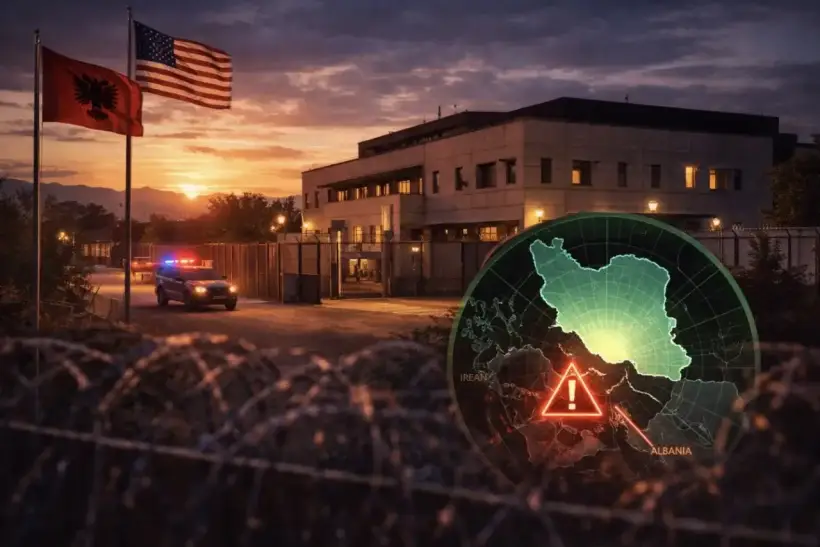
The U.S. Embassy in Tirana issued a new security alert
The U.S. Embassy in Tirana issued a security alert on April 1, 2026 warning that Iran-linked groups may target entities and people associated with the United States in Albania. The embassy page itself was returning a technical error at the time of checking, but the existence and core wording of the alert are corroborated by the headline and summary surfaced on Euronews Albania’s homepage, as well as by broader U.S. State Department and embassy warnings issued in late March.
The alert came amid a broader global escalation tied to Iran
The warning did not emerge in isolation. On March 22, the U.S. State Department issued a Worldwide Caution urging Americans worldwide, especially in the Middle East, to exercise increased caution. That notice explicitly said U.S. diplomatic facilities, including outside the Middle East, had already been targeted and that groups supportive of Iran may target other U.S. interests overseas or locations associated with the United States and Americans around the world. That framing makes the Albania alert part of a wider global security posture rather than a standalone local event.
Albania occupies a special place in the U.S. risk picture
Albania is particularly sensitive in this context because it hosts the Iranian opposition group MEK, whose Ashraf 3 base is located near Manëz, close to Durrës. American and international sources have long indicated that the presence of MEK makes Albania a visible point of friction with Tehran. OSAC’s Albania reporting specifically notes that Iran-related threats in the country include plotting against the resettled Iranian opposition group.
Recent cyberattacks deepened the sense of vulnerability
The new alert came only weeks after a fresh wave of incidents that Albanian reporting linked to Iran or Iran-affiliated actors. In March 2026, Balkan Insight reported on a new cyberattack against Albania’s parliament connected to Homeland Justice, a group widely treated in Albania as an Iranian proxy instrument. Tirana Times also said the incident revived one of Albania’s most serious national security concerns. In that context, the embassy alert looks less like an abrupt move and more like an escalation of an existing threat picture.
Albania remains a caution destination, not a highest-risk one
Despite the new embassy warning, the underlying U.S. Travel Advisory for Albania remains at Level 2, meaning Americans are advised to exercise increased caution rather than avoid travel altogether. Travel.State.gov cites crime as the main baseline reason for that rating. At the same time, OSAC assessed Tirana as a low-threat location for political violence directed at official U.S. interests, even though risk assessments are tougher when focused on terrorism or targeted anti-U.S. activity. That suggests Washington has not fundamentally reclassified Albania, but it is sharpening its warnings around a more specific threat vector.
What kinds of targets may have been in scope
Based on the wording captured by Euronews Albania, the embassy warned that Iran-linked groups may target entities associated with the United States. In U.S. security language, that can include diplomatic sites, American citizens, contractors, businesses, schools, cultural venues and other places linked to a visible U.S. presence. There has been no public indication of a specific imminent attack. The warning was framed as a preventive security alert.
In practical terms, the alert points to tighter precautions in and around Tirana
The warning was not accompanied by an evacuation order or a shutdown announcement, but alerts of this kind usually imply stronger internal security measures, a more cautious movement posture for embassy-linked personnel and advice for Americans to avoid unnecessary exposure in sensitive areas. Earlier in 2026, the U.S. Embassy in Tirana had already issued alerts tied to protests and advised Americans to avoid demonstrations, blockades and areas with a heavy police presence. The latest alert follows the same preventive logic, though this time the driver is external geopolitical tension rather than domestic unrest.
The warning reflects a new phase in the U.S.-Iran-Albania triangle
Albania has been under closer scrutiny for years because it combines strong alignment with Western security policy and the hosting of an exiled Iranian opposition network. In spring 2026, that background was intensified by the broader confrontation around Iran and parallel U.S. warnings worldwide. As a result, even a Balkan country far from the Middle East can draw a dedicated security alert if it contains facilities or communities that may be seen as symbolic or practical targets by Iran-linked actors.
As International Investment experts report, the U.S. Embassy warning in Tirana shows that Albania is becoming not only a Balkan security issue but also a Middle East-adjacent geopolitical risk point because of the mix of U.S. presence, cyber threat history and the MEK factor. For foreigners, investors and international businesses, that does not yet amount to a travel crisis in Albania, but it does mean a greater need for situational awareness, close monitoring of official alerts and extra caution around sites associated with the United States.
FAQ
What happened in Albania on April 1, 2026?
The U.S. Embassy in Tirana issued a security alert warning that Iran-linked groups may target entities and individuals associated with the United States in Albania.
Why did the United States issue such a warning for Albania?
Albania is especially sensitive because it hosts the Iranian opposition group MEK and has recently faced incidents, including cyberattacks, that Albanian reporting linked to Iran-affiliated actors.
Does this mean travel to Albania has become unsafe?
Not at the highest level. Albania’s U.S. Travel Advisory remains at Level 2, which means exercise increased caution rather than avoid travel.
Is the alert connected to the Iran conflict?
Yes. It fits into the broader Worldwide Caution issued by the State Department on March 22, 2026, warning that Iran-supportive groups may target U.S. interests globally.
What are the most important risks in Albania right now?
Alongside ordinary travel risks, the current focus is on targeted threats to U.S.-linked sites as well as cyber risks and possible action by Iran-linked proxy groups.