







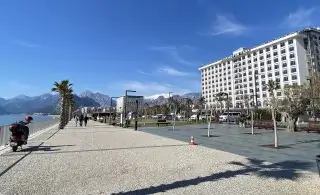
 Turkey Is Losing Its Cheap-Holiday Advantage
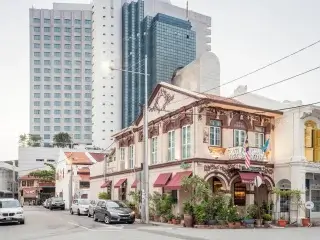 Development Is Rewriting Southeast Asia’s Historic Districts
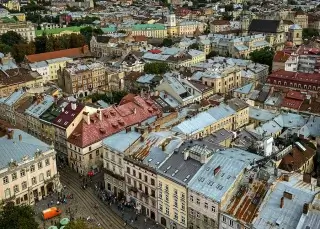 How Ukraine’s New-Build Housing Market Has Changed Over Four Years
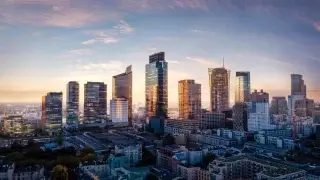 European Prime Rents Rise as Property Yields Turn Higher
 The Most Expensive Airlines in Europe in 2026
 Housing Prices in Italy Reach a Two-Year High
Construction Lifted Albania’s 2025 Growth
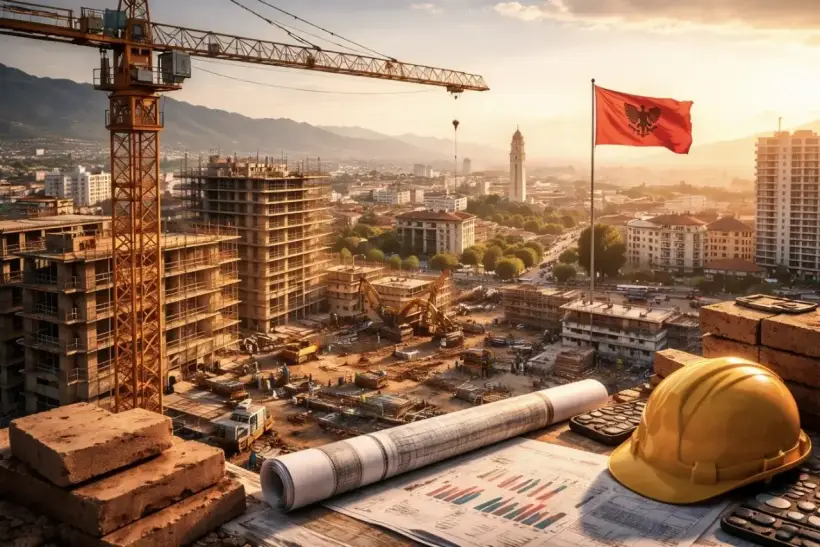
Albania’s economy expanded by 3.79% in 2025
Albania’s economy grew by 3.79% in 2025, according to INSTAT’s preliminary estimate released with fourth-quarter data. In October to December 2025, gross domestic product increased by 3.80% from a year earlier and by 0.88% quarter on quarter on a seasonally adjusted basis. The figures show that Albania maintained a solid growth pace, though slightly below the roughly 4% expansion seen in 2024.
Construction emerged as one of the main growth engines
Construction, public services, product taxes and investment were the main drivers of output in 2025. INSTAT said construction grew by 7.36%, contributing 1.17 percentage points to overall GDP growth. Public administration, education and health rose by 8.30%, adding another 1.02 percentage points. Net taxes on products increased by 12.02% and made the single largest statistical contribution to growth. Albanian Daily News and RTSH English, citing the same national accounts release, also highlighted construction as the leading real-economy driver behind the annual result.
Real estate and investment kept domestic demand firm
Related sectors also supported the broader expansion. Real estate activities rose by 6.25%, while financial and insurance services increased by 2.82%. Trade, transport, accommodation and food services grew by 1.14%. Together, those figures suggest that beyond construction, growth was underpinned by domestic demand, investment and resilience in the service economy. Trading Economics data also show a sharp rise in gross fixed capital formation at the end of 2025, consistent with stronger investment momentum.
Industry and agriculture weakened during the year
Not every sector ended 2025 in positive territory. INSTAT reported that information and communication fell by 3.55%, agriculture, forestry and fishing declined by 2.19%, and industry, electricity and water dropped by 1.59%. That means Albania’s 2025 growth profile was uneven and relied more heavily on construction, services and fiscal components than on industrial output or agriculture. For Albania, this is not entirely new, but it makes the question of diversification more important as global conditions remain uncertain.
Actual growth outperformed some earlier forecasts
The 3.79% result came in stronger than some earlier international projections. The World Bank’s country factsheet had projected 3.2% growth for 2025 and 3.1% for 2026, while the EBRD forecast 3.5% for both 2025 and 2026. In January 2026, SeeNews, citing the World Bank, reported an expectation of 3.7% growth for 2025 and 3.5% for 2026. Against that backdrop, INSTAT’s estimate suggests the economy ended 2025 somewhat stronger than part of the external forecasting consensus, even though 2026 projections still point to a modest slowdown.
The 2026 outlook remains positive but more moderate
International institutions still expect Albania to expand in 2026, though at a slower pace than in 2025. The World Bank sees growth in a range of roughly 3.1% to 3.5% depending on the publication and timing, the EBRD forecasts 3.5%, and earlier IMF projections pointed to around 3.6% growth in 2026. At the same time, the World Bank has warned that Albania remains exposed to global uncertainty, geopolitical tensions and weaker growth in the European Union, which remains the country’s main external economic partner.
As International Investment experts report, INSTAT’s figures show Albania ended 2025 in solid shape, but the structure of growth remains concentrated. Construction, public services and investment provided most of the support, while industry and agriculture were weaker. For investors, the key issue in 2026 will be less whether growth continues and more whether its quality broadens beyond construction and real estate into a wider base of productive sectors.
FAQ
How much did Albania’s economy grow in 2025?
According to INSTAT’s preliminary estimate, Albania’s GDP grew by 3.79% in 2025. Fourth-quarter annual growth was 3.80%.
Which sector was the main growth driver?
Construction was one of the main growth engines. It expanded by 7.36% and contributed 1.17 percentage points to total GDP growth.
What other sectors supported Albania’s economy?
Public administration, education and health, as well as real estate, finance and net taxes on products, all supported growth in 2025.
Which sectors contracted in 2025?
Information and communication, agriculture, and industry including electricity and water all recorded declines.
What is expected for Albania in 2026?
International institutions broadly expect Albania to keep growing in 2026, with projections ranging from about 3.1% to 3.6% depending on the source.