







read also
 Vietnam Mortgage Surge Pushes Homes Out of Reach
 Lithuanian Apartment Prices Accelerate Across Major Cities
 London Flats Lose Value Ahead of Leasehold Reform
 Construction of the Batumi–Sarpi Highway Begins in Georgia
 Baltic Property Investment Accelerates in 2026
 Hong Kong and Singapore Renew Their Expat Rivalry
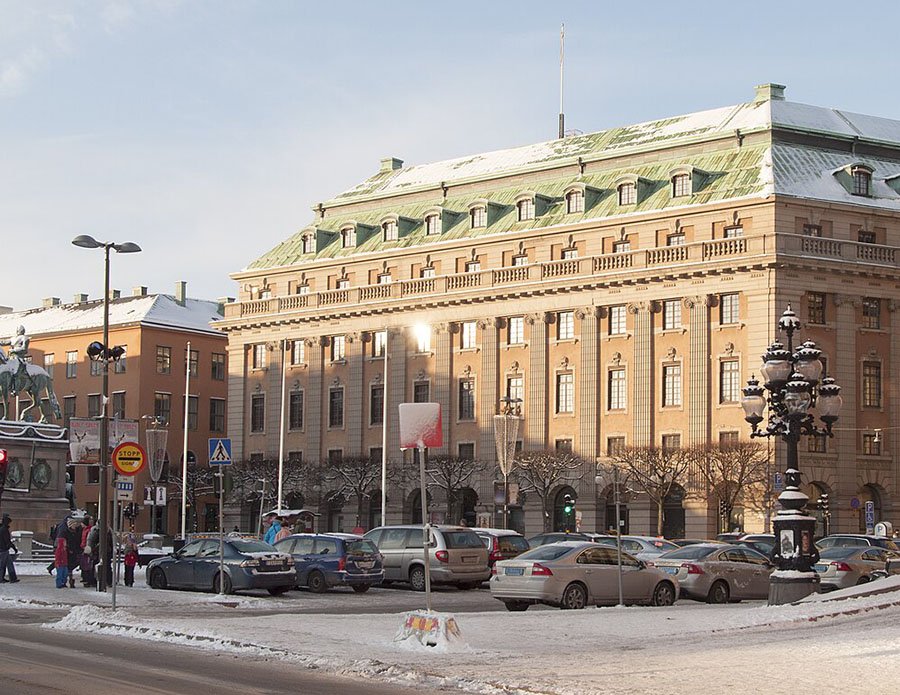
Photo: Wikimedia
Sweden’s central bank has kept interest rates unchanged, signaling confidence that the economic recovery is strengthening while inflation pressures continue to ease. The Riksbank maintained its key policy rate at 1.75%, reaffirming guidance that borrowing costs are likely to remain at this level until at least 2027.
Policy pause reflects improving conditions
The decision was fully in line with market expectations, with all economists surveyed by Bloomberg forecasting no change. Officials reiterated that if the outlook for inflation and economic activity remains intact, the policy rate will stay unchanged for an extended period.
This stance mirrors the broader approach adopted by the European Central Bank, which has also shifted into a holding pattern after a prolonged period of weak growth and elevated inflation.
Economic recovery gathers pace
After nearly three years of stagnation, Sweden’s economy is showing clearer signs of recovery. The Riksbank raised its forecast for economic growth next year to 2.9%, up from 2.7% projected in September. European Commission estimates suggest Sweden is on track to outpace average EU growth for the first time since the pandemic.
Despite the improved outlook, policymakers caution that it will take time for overall economic activity to return to normal levels.
Inflation expected to dip before rebounding
The central bank expects CPIF inflation, its preferred measure, to slow to 0.9% in 2026 before gradually rising back to the 2% target in 2027. This projected path gives policymakers room to maintain current settings without risking renewed price pressures.
The outlook supports the Riksbank’s view that patience is warranted as the economy stabilizes.
Krona strength underscores confidence
Following the decision, the Swedish krona traded around 10.89 per euro, holding earlier gains. The currency has appreciated nearly 5% against the euro this year and has emerged as the best-performing G10 currency in 2025.
Strong currency performance reflects growing investor confidence in Sweden’s economic prospects and the credibility of its monetary policy framework.
Stability over stimulus
The Riksbank has made clear that it is prioritizing long-term stability over short-term stimulus. By keeping rates steady, policymakers aim to anchor inflation expectations while allowing the recovery to mature organically.
As International Investment experts report, Sweden’s steady-rate strategy signals a shift toward consolidation after years of volatility. For investors, this implies predictable financing conditions, a resilient currency and reduced macroeconomic uncertainty, even as the scope for near-term monetary easing remains limited.