











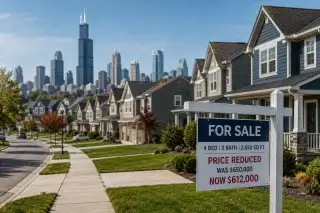

Wage Growth Improves Housing Affordability in Austria
Nominal price rise masks real decline
Austria’s real estate market presents a paradox at the beginning of 2026. While residential property prices increased by 2.1% in nominal terms in 2025, high inflation altered the real picture.
According to Statistics Austria, consumer inflation reached 3.8% during the same period, meaning property prices declined in real terms. Since the interest rate turnaround in autumn 2022, nominal prices have fallen by 3.3%, while the real decline amounts to approximately 16%.
At the same time, household incomes increased by around 19%. OeNB Governor Martin Kocher describes the situation as gradual stabilisation, noting a measurable improvement in housing affordability.
Vienna outpaces the regions
Nationwide, prices rose by 2.1% in 2025. In Vienna, growth reached 2.9%, while the rest of Austria recorded a 1.6% increase.
The divergence highlights structural differences between the capital and regional markets, even as overall conditions stabilise.
New builds remain price-resistant
A clear split persists between new construction and existing properties. Existing condominiums reacted more strongly to the ECB’s rate hikes. Between late 2022 and mid-2024, prices in Vienna fell by nearly 10% in this segment.
New developments proved more price-resistant due to high land and construction costs. However, transaction volumes dropped sharply, with new-build apartment sales falling by more than 60% at times. Since the ECB began cutting key interest rates in June 2024, activity has gradually improved.
ECB rate cuts support demand
Throughout 2025, the European Central Bank lowered its deposit rate in several steps, helping to stabilise mortgage rates for consumers. By early 2026, this contributed to renewed demand.
Nevertheless, the construction sector continues to face regulatory constraints, including strict lending requirements under Austria’s KIM regulation. With new construction stagnating, many potential buyers remain in the rental market, sustaining pressure on rents despite falling real purchase prices.
Buyers face improved but selective conditions
The gap between household income growth and real estate prices narrowed in 2025. Buyers with stable incomes now encounter more favourable affordability conditions than three years ago.
However, strict bank lending standards remain a decisive factor in determining effective market access.
As International Investment experts report, Austria’s housing market is undergoing a structural adjustment phase in which rising wages and declining real prices enhance affordability, but long-term stability will depend on ECB policy direction, mortgage regulation and the recovery of construction activity.