







 How Ukraine’s New-Build Housing Market Has Changed Over Four Years
 European Prime Rents Rise as Property Yields Turn Higher
 The Most Expensive Airlines in Europe in 2026
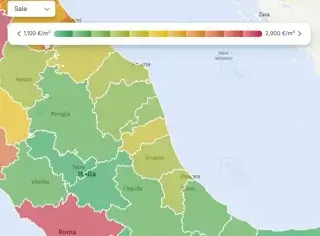 Housing Prices in Italy Reach a Two-Year High
 Travellers Increasingly Choose Cooler Scandinavia
 Serbia Property Sales Decline as Transaction Value Rises

Belgium backs controversial bill on police entry into homes
Belgium’s federal government has approved, at second reading, a draft law that would allow police officers to enter private homes together with the Immigration Office in order to detain certain irregular migrants. The decision was taken by the Council of Ministers on April 3, 2026, and the text has now been referred to the Council of State for a fresh opinion before a possible parliamentary debate. The measure is not yet law and remains part of an ongoing legislative process.
What the new Belgium migration bill would allow
According to the Belgian government’s official communication, the proposal amends Article 74/7 and inserts a new Article 74/7/1 into the Law of 15 December 1980 on access to the territory, residence, settlement and removal of foreign nationals. The mechanism would apply only to foreign nationals who are already subject to an enforceable removal measure in the broad sense, refuse to cooperate with its execution, and are considered a threat to public order or national security. Entry into a residence would require prior authorisation from an investigating judge.
Why Belgium revived the home-entry proposal
The issue has been politically explosive in Belgium for years. A similar proposal was debated in 2018 but failed amid strong political and public resistance. The government returned to the subject in July 2025, when ministers backed a draft law allowing judicially authorised home entry in return-enforcement cases, and has now advanced the file again after revisions and a second reading.
What ministers say about Belgium’s return policy
Asylum and Migration Minister Anneleen Van Bossuyt and Justice Minister Annelies Verlinden are presenting the bill as a way to restore credibility to Belgium’s return policy. In their official statements, the ministers argue that police and migration authorities are often unable to detain a person when that person refuses to open the door or shuts it in front of officers. The government says the new legal framework is designed to remove that barrier and make return decisions enforceable in practice. People detained during such an operation would be transferred immediately to a closed centre, according to the official communication.
Legal risks under the Belgian Constitution and the ECHR
The legal dimension is central to the controversy. Article 15 of the Belgian Constitution states that the home is inviolable and that no house search may take place except in cases provided for by law and in the form prescribed by law. Article 8 of the European Convention on Human Rights adds another layer of protection by guaranteeing the right to respect for private and family life, the home and correspondence. That is why the government’s case will depend heavily on whether the proposal can be shown to contain sufficient procedural safeguards and a proportionate limitation of rights.
Why critics say the Belgium migrant bill is controversial
Opponents argue that, even with judicial approval, the measure would mark a serious extension of state power into private homes. The Brussels Times reported that the Council of State had already issued critical opinions in the past and that a new assessment is expected before the draft reaches Parliament. The wider backdrop also matters: Amnesty International said in 2025 that Belgian authorities were persistently failing to meet reception obligations toward asylum seekers, adding to scrutiny of any new coercive migration measure.
What the proposal could mean for migration enforcement in Belgium
If Parliament ultimately adopts the bill, Belgium would gain a stronger enforcement tool for a narrowly defined category of irregular migrants facing return. For employers, relocation providers and foreign residents, the debate is another reminder that immigration compliance is becoming more consequential, especially where residence rights expire or removal orders are ignored. For now, however, the measure remains a draft bill whose final shape and legal durability will depend on the Council of State’s opinion and the parliamentary vote that follows.
As International Investment experts note, the Belgian proposal reflects a broader European turn toward tougher return enforcement, but the decisive issue is likely to be whether the government can persuade lawmakers and courts that entry into private homes is both narrowly targeted and legally proportionate.
FAQ
What happened in Belgium in April 2026?
On April 3, 2026, Belgium’s Council of Ministers approved at second reading a draft law allowing police to enter private homes in certain return-enforcement cases involving irregular migrants, subject to judicial authorisation.
Is the Belgian law already in force?
No. The text has been sent to the Council of State and still needs to go through Parliament.
Who would be affected by the measure?
It would apply only to foreign nationals under an enforceable removal order who refuse to cooperate and are deemed a threat to public order or national security.
Would police need a judge’s approval to enter a home?
Yes. The proposal requires prior authorisation from an investigating judge.
Why is the proposal controversial?
Because it directly touches the inviolability of the home under Article 15 of the Belgian Constitution and the protection of the home under Article 8 of the European Convention on Human Rights.
Has Belgium tried this before?
Yes. A similar proposal failed in 2018 after political resistance.