







 Turkey Is Losing Its Cheap-Holiday Advantage
 Development Is Rewriting Southeast Asia’s Historic Districts
 How Ukraine’s New-Build Housing Market Has Changed Over Four Years
 European Prime Rents Rise as Property Yields Turn Higher
 The Most Expensive Airlines in Europe in 2026
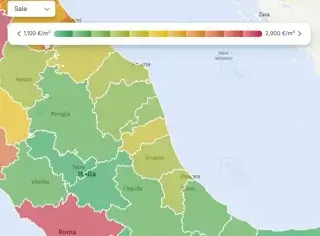 Housing Prices in Italy Reach a Two-Year High

Belgium’s top court has paused part of the crackdown
Belgium is pressing ahead with a hard-line migration policy even after its Constitutional Court temporarily suspended part of the country’s new asylum and family reunification restrictions on February 26, 2026. The court said some provisions may conflict with EU law and decided to send preliminary questions to the Court of Justice of the European Union before issuing a final ruling on the merits.
The contested measures are part of Belgium’s 2025 migration overhaul, introduced under a broader strategy that the country’s own Immigration Office describes as the “strictest migration policy ever.” On its official information page, the agency says reception centres are full, that no reception places remain available, and that the government is combining tighter rules on irregular stay with a tougher stance on new arrivals.
The reception restrictions at the centre of the legal dispute
One of the main disputed provisions concerns material assistance for people who had already obtained international protection in another EU member state and then applied for asylum in Belgium. The Constitutional Court’s explanatory note states that such applicants could be refused material aid in Belgium under the contested rules. The court stressed that for most asylum seekers, public reception is the only way to maintain living conditions compatible with human dignity while their case is examined, and that removing that right can cause very serious harm that cannot later be repaired.
The court also focused on another measure: the removal of the possibility of granting reception in the form of financial support in specific circumstances. According to the court note, that change could affect applicants left without a place in the overloaded Fedasil network, people staying at private addresses with relatives, and applicants contesting the adequacy of their assigned accommodation on health grounds. That is one of the reasons the court ordered a temporary suspension.
Why the Belgian court questioned the law under EU rules
The legal dispute turns on whether an asylum claim lodged in Belgium by a person who already holds protection in another EU country can be treated as a “subsequent application” under EU law. The Constitutional Court noted that Article 20 of Directive 2013/33/EU sets out exhaustively the situations in which a member state may refuse material aid to an asylum applicant. It said there is doubt as to whether the Belgian rule fits within that framework, and because the Court of Justice has not yet ruled on this specific issue, Belgium’s judges decided to seek an EU interpretation.
That distinction matters because the measure has not yet been definitively struck down. The temporary suspension means the court identified both a serious legal question and a risk of difficult-to-repair harm, but the final outcome will now depend on how the EU’s top court interprets the relevant directives. Belga reported that only after the Luxembourg court rules will Belgium’s Constitutional Court decide whether the measures can remain in force or must be annulled.
The Belgian government is not changing course
Despite the court setback, the Belgian federal government has shown no sign of retreat. Asylum and Migration Minister Anneleen Van Bossuyt said after the ruling that the legislation had been carefully drafted and was, in her view, fully compatible with European rules. Belga reported that she described the suspension as a temporary procedural step rather than a final judgment on the substance of the case.
That stance fits the government’s wider political line. Belgium’s Immigration Office openly says the country is pursuing the “strictest migration policy ever,” while material close to the minister’s position argues that the policy of refusing reception to people already protected elsewhere in the EU should continue. ETIAS also reported that the government believes the approach is compatible with EU law and expects the upcoming EU Pact on Migration and Asylum to strengthen its legal footing.
The EU migration pact is becoming part of Belgium’s strategy
Belgium’s reliance on future EU rules is not accidental. The European Commission says the Pact on Migration and Asylum entered into force on June 11, 2024 and will start applying after a two-year transition period, meaning in June 2026. That places the Belgian dispute just months before the new EU-wide framework becomes operational.
In early March 2026, Belgium’s Council of Ministers approved at second reading two draft bills to urgently implement the pact in domestic law. EMN Belgium reported that one bill covers the application or transposition of eight pact instruments, while the other concerns procedures before the Council for Alien Law Litigation. That shows Belgium is not merely defending current restrictions but actively building a national legal architecture around the coming EU regime.
What the case means for Belgium’s asylum system
The significance of the dispute goes well beyond one reception rule. Belgium’s accommodation system remains under heavy strain: the Immigration Office says there are no reception places left, while Fedasil states that Belgium has about 100 reception centres accounting for roughly three quarters of total reception capacity. In that context, restrictions on access to material support serve not only as a legal question but also as a practical management tool for an overloaded system.
At the same time, the case highlights the limits of national tightening inside EU law. Belgium’s court said it was not for it to decide how another member state applies its asylum obligations, but it also stressed that Belgian authorities must assess whether such people need asylum in Belgium. That means the argument that assistance can simply be denied because a person already obtained protection elsewhere in the EU is not legally settled even under a very restrictive domestic migration policy.
As International Investment experts note, the Belgian case matters not only as a domestic legal dispute but as a signal of how EU states are testing the outer limits of national asylum restrictions ahead of the full rollout of the Pact on Migration and Asylum in June 2026. If the Court of Justice supports the Belgian court’s doubts, room for unilateral reception limits may narrow. If the EU interpretation moves closer to Brussels’ position, Belgium will gain a stronger legal basis for maintaining its current hard-line approach.
FAQ on Belgium’s asylum restrictions
What did Belgium’s Constitutional Court decide
On February 26, 2026, it temporarily suspended parts of the tougher asylum and family reunification rules, said some measures may conflict with EU law, and referred questions to the Court of Justice of the European Union.
Which measures are under dispute
The main issues are restrictions on material aid for people already granted international protection in another EU country and the removal of the option to provide reception through financial support in specific circumstances.
Has Belgium abandoned its tougher migration policy
No. The government and Minister Anneleen Van Bossuyt continue to argue that the policy is legally sound, and official messaging still promotes the country’s toughest-ever migration line.
Why does the EU Pact on Migration and Asylum matter here
Because the new EU rules begin applying in June 2026, and Belgium is already moving urgent draft laws through government to implement them. Authorities expect that framework to reinforce their legal position.
Why is reception capacity such a big issue in Belgium
Because the system is under heavy pressure. Belgium’s Immigration Office says no reception places are left, while Fedasil describes a large but stretched reception network.