







 How Ukraine’s New-Build Housing Market Has Changed Over Four Years
 European Prime Rents Rise as Property Yields Turn Higher
 The Most Expensive Airlines in Europe in 2026
 Housing Prices in Italy Reach a Two-Year High
 Travellers Increasingly Choose Cooler Scandinavia
 Serbia Property Sales Decline as Transaction Value Rises
UK homebuyer demand slumps as mortgage costs rise
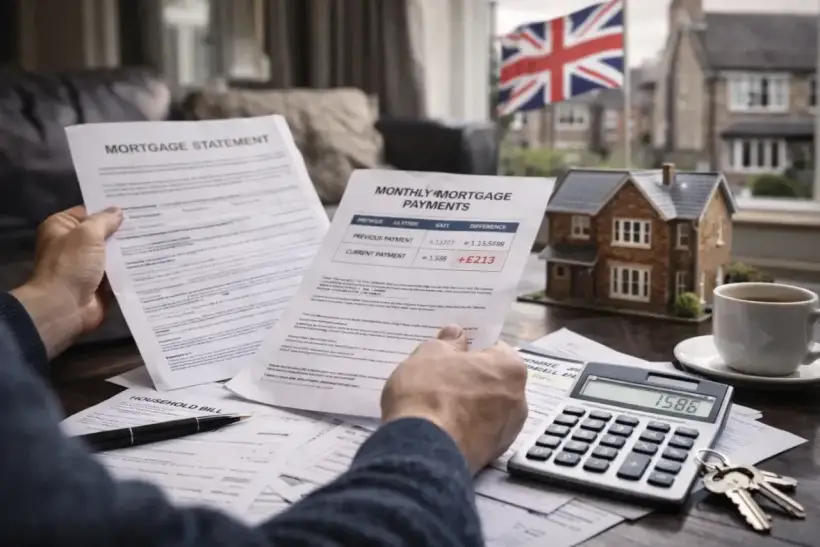
RICS reports a sharp drop in buyer interest in March
The UK housing market lost momentum again in March after a brief period of firmer expectations at the start of the year. The March 2026 UK Residential Market Survey, published by RICS on April 9, showed a clear deterioration in buyer activity and sales sentiment. Third-party reporting based on the fresh RICS release said the net balance for new buyer enquiries fell to minus 39% from minus 29% in February, the weakest reading since August 2023. The net balance for agreed sales also worsened sharply, dropping to minus 34% from minus 13% a month earlier.
That means March was not simply another soft month, but a meaningful downside turn after the more stable tone seen earlier in 2026. In January, RICS had said the market may be entering the early stages of recovery, and in February it was still describing a subdued but not collapsing market, with new buyer enquiries at minus 26% and agreed sales at minus 12%. By April, that tentative stabilization had effectively been interrupted by higher borrowing costs and a darker macro backdrop.
Rising mortgage rates have hit UK buyers again
The main reason for the weaker mood is the renewed rise in mortgage costs. Moneyfacts says fixed mortgage rates in the UK jumped sharply after the start of the Middle East conflict, and by March 25 the average two-year fixed mortgage rate had moved back above the average five-year fixed rate. That inversion is unusual and reflects a market that has become much more nervous about the short-term outlook. At the start of 2026, Moneyfacts had been reporting an average two-year fixed rate of 4.83%, down sharply from 5.48% at the start of 2025, but that earlier improvement was partly reversed as the geopolitical shock hit funding expectations.
For the UK housing market, this matters because buyers react more to the monthly mortgage payment than to the sticker price of a home alone. Even if house prices are not yet collapsing, a higher mortgage rate immediately reduces affordability and narrows the range of homes that households can realistically buy. The March RICS survey therefore looks less like a sentiment wobble and more like a direct affordability response to rising borrowing costs. That interpretation is consistent across Bloomberg, RICS-linked coverage and mortgage-industry reporting.
The Bank of England has not hiked again, but the market still feels expensive money
Formally, the Bank of England did not raise rates in March. The Monetary Policy Committee voted unanimously on March 18 to keep Bank Rate at 3.75%. But the Bank’s own statement said the conflict in the Middle East had caused a significant increase in global energy and commodity prices, which would affect households’ fuel and utility bills and push up business costs. In other words, the problem for housing is not a fresh policy tightening that has already happened, but the market’s reassessment of how long rates may stay relatively restrictive.
That change in expectations matters quickly. At the end of 2025 and the start of 2026, the housing market had been hoping for gradually cheaper mortgages as monetary conditions eased. The March geopolitical shock forced buyers, lenders and brokers to rethink that scenario. As a result, the market suffered not a new rate hike, but a new rate shock through expectations and repricing. In the UK housing market, that is often enough to slow demand materially.
Short-term price expectations have deteriorated sharply
Weaker buyer demand has also hit near-term price expectations. The Business Times, citing the March RICS release, reported that surveyors’ expectations for house prices over the coming three months dropped to minus 43% from minus 19% previously. That is an important shift because it shows professional sentiment moving from softness to a more distinctly negative short-term outlook. Longer-term expectations are not yet fully collapsing, but the earlier modest optimism has clearly faded.
This sits in contrast to some mortgage-lender house-price series. At the end of March, Bloomberg reported that Nationwide had seen UK house prices rise at the fastest pace in 15 months. But the same report cautioned that the surge came just as the Iran-driven energy shock was beginning to cloud the outlook. In other words, the market delivered a stronger headline price print at the same time as survey-based demand and forward expectations deteriorated. That combination usually signals a market entering turbulence, not one enjoying a clean rebound.
The UK housing market is once again being driven more by credit costs than by structural undersupply
Britain’s structural housing shortage has not disappeared, but it has moved into the background again. In March 2026, borrowing costs became the key filter for transactions. Even when underlying demand exists, households pull back if they are unsure where mortgage rates will settle and whether they can comfortably service a loan. The weakness in buyer enquiries therefore looks like an affordability-and-financing problem rather than a collapse in the desire to own homes.
That logic was already visible before March. In February, RICS said the housing market was still struggling for momentum, with buyer demand dipping amid renewed concerns over the interest-rate outlook. March simply made that fragility much more visible.
What this means for buyers, sellers and investors in 2026
For buyers, the result is a more difficult and anxious market in which affordability calculations matter more than fear of missing out on rising prices. For sellers, it means a longer transaction cycle and greater sensitivity of demand to each change in mortgage pricing. For investors, especially in buy-to-let, it signals that returns depend increasingly on debt costs and on the ability to absorb higher monthly financing expenses.
As International Investment experts note, the March RICS data do not yet point to a full-blown housing crisis in the UK, but they do show that the market has reached a point where recovery can once again be derailed by the cost of credit. If mortgage rates stabilize and the Bank of England does not need to keep money tight for longer, buyer demand may recover partially. But if the energy shock continues to feed inflation and bond-market pressure, 2026 may turn into a year of weak demand, cautious buyers and soft downward pressure on UK house prices.
FAQ on the UK housing market
Why did UK homebuyer demand fall in March 2026
Because mortgage rates rose sharply and geopolitical and inflation uncertainty weakened buyer confidence. That is the core message of the March RICS survey.
How bad were the latest RICS readings
According to reporting on the March survey, the net balance for new buyer enquiries fell to minus 39% and the net balance for agreed sales to minus 34%, with buyer demand at its weakest since August 2023.
Did the Bank of England raise rates again
No. In March 2026, the Bank of England kept Bank Rate unchanged at 3.75%, while warning that the Middle East conflict had increased inflation risks through energy prices.
What is happening to UK mortgage rates
Moneyfacts says fixed mortgage rates rose sharply after the start of the Middle East conflict, and the average two-year fixed rate moved back above the average five-year rate.
Are UK house prices already falling sharply
Not uniformly. Near-term price expectations have worsened substantially, but some lender-based price indices were still showing growth in March, which points to a volatile and conflicted market rather than a single clear price trend.