







 Turkey Is Losing Its Cheap-Holiday Advantage
 Development Is Rewriting Southeast Asia’s Historic Districts
 How Ukraine’s New-Build Housing Market Has Changed Over Four Years
 European Prime Rents Rise as Property Yields Turn Higher
 The Most Expensive Airlines in Europe in 2026
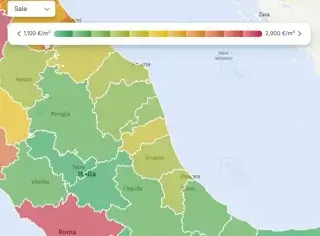 Housing Prices in Italy Reach a Two-Year High
British Housebuilders Await a Turnaround

British housebuilders remain at one of the most difficult points in the housing cycle: demand for new homes is constrained by expensive mortgages, weak affordability and cautious buyers, while construction costs remain high because of materials, energy and bureaucracy. A sector recovery is possible, but it depends not on one factor, but on a simultaneous improvement in rates, planning, margins and buyer confidence.
The new-build market is stuck between demand and rates
British housebuilders entered mid-2026 with a contradictory picture. On one hand, structural demand for housing in the UK remains high: the country lacks homes, rents are expensive, population pressure is concentrated around major cities, and the political agenda is built around sharply increasing supply. On the other hand, real buyers face mortgage costs that remain too high for a broad sales recovery.
Bloomberg asked what could turn British housebuilders around. The answer depends on what kind of turnaround is considered sustainable. Housebuilder shares can rebound before home sales recover. But a lasting improvement in the sector requires buyers to afford mortgages again, banks to lend more actively, sites to become economically viable, and the planning system to issue more permissions.
The market is now in an intermediate phase. Mortgage approvals show signs of life, but house prices have stopped rising convincingly. Developers are managing land banks cautiously, reducing risky land purchases, offering buyer incentives and trying to protect margins. This is not a collapse, but it is not a full recovery either.
House prices have already lost momentum
Recent indexes show that the UK housing market has cooled again. Halifax said the average house price fell by 0.1% in May to £298,806, while annual growth was only 0.5%. Nationwide recorded a sharper monthly decline of 0.6% and a slowdown in annual growth to 1.7% from 3.0% in April.
For housebuilders, this is an important signal. New homes usually carry a premium to existing properties because they include modern standards, warranties, energy efficiency and marketing value. If the wider market loses momentum, buyers find it harder to accept new-build prices, especially with high mortgage costs.
Weak prices also affect land valuation. A developer buys land today, builds over several years and sells completed homes in the future. If expectations for future prices worsen, sites become less attractive. That forces companies to reassess land buying, slow project launches and demand a higher margin of safety.
Mortgage approvals offer hope, but not guaranteed demand
Bank of England data look better than price indexes. In April 2026, net mortgage approvals for house purchases rose to 65,900, above the roughly 63,100 average over the previous six months. That shows some buyers have not left the market entirely and are willing to transact at the right price.
But a mortgage approval is not the same as mass demand for new homes. A buyer may obtain approval and still avoid a purchase because of price, job uncertainty, utility costs, tax changes or fear that the property will fall in value after purchase. For new homes, credit availability matters, but confidence in future income is just as important.
Mortgage rates also remain above the levels to which the market became accustomed before the inflation shock. Even if the Bank of England’s base rate is below its peaks, fixed mortgage products depend on market expectations for inflation and bond yields. Any new jump in energy prices or geopolitical anxiety can quickly feed into financing costs.
Affordability is still the main brake
The main problem for UK housing is not the absence of a desire to buy, but the gap between prices, incomes and rates. Years of cheap money lifted prices so far that higher mortgage costs have made monthly payments unaffordable for many households. First-time buyers are hit especially hard because they need to save a deposit while paying high rents.
For developers, this creates an unpleasant choice. They can cut prices, but that hurts margins and the value of land banks. They can offer incentives such as mortgage contributions, legal-cost support, upgrades or deposit help, but that is also a hidden price reduction. They can hold prices, but sales then move slowly.
Until affordability improves, the sector’s recovery will be uneven. More resilient regions are likely to be those where homes are cheaper relative to incomes and supply is tight. Weaker markets include London, the South East and expensive commuter areas where mortgage burdens are especially high.
Developers are reducing risk and protecting balance sheets
Large housebuilders have already adapted to the weak cycle. Bellway expects to deliver 9,300–9,500 homes this year and report underlying operating profit of £320–330 million, but it is also facing lower sales per site, higher costs and a smaller order book. These signals point to a cautious volume recovery, not a return to previous profitability.
Taylor Wimpey, Persimmon, Barratt Redrow, Berkeley and other major players are also operating cautiously. Companies with strong balance sheets, large land banks and cost discipline are better placed to weather the cycle. But even they are not rushing into aggressive land purchases without confidence in demand and margins.
For investors, this matters. Housebuilder shares may look cheap relative to book value, but low valuations reflect market doubts about the future profitability of land assets. If homes sell slowly and construction costs rise, a land bank becomes not only an asset, but also a source of capital risk.
Planning reform became the central political promise
The UK government has made housebuilding one of its central economic themes. It has promised to build 1.5 million homes during the parliamentary term and has announced planning reform, including mandatory higher housing targets for local authorities, a definition of the grey belt and funding for additional planning officers.
The grey belt refers to parts of the green belt that have lower environmental or public value, such as previously developed or poorly used sites. The government’s idea is to open some of these areas for development under rules on affordable housing, infrastructure and green space.
For housebuilders, planning reform could be one of the most important turnaround factors. If permissions are issued faster, companies can plan projects better, reduce administrative costs and convert land into saleable homes more quickly. But planning reform does not immediately solve the buyer problem: a site can be approved, but it cannot be built profitably if mortgages are too expensive and costs are rising.
The 1.5 million homes target still looks difficult
The political target of building 1.5 million homes creates optimism, but also the risk of excessive expectations. To deliver it, the UK needs construction rates not sustained for decades. The problem is not only permissions. The country needs labour, infrastructure, grid connections, roads, schools, water systems, materials, finance and solvent demand.
Full Fact estimated that from July 2024 to March 2026, about 342,100 homes were added in England, around 22.8% of the 1.5 million target. This shows that the pace needs to accelerate. Even if such estimates differ from official completion statistics, the broad conclusion is the same: the current pace is not enough.
For housebuilders, the government target is useful because it increases political pressure on the planning system. But it does not guarantee profit. Developers will build only where projects deliver acceptable returns. If the state wants more homes, it must address not only permissions, but also site viability.
Construction costs remain the second problem after mortgages
Even if buyer demand improves, developers still face high build costs. Materials, energy, labour, insurance, financing, environmental requirements and infrastructure contributions all raise construction expenses. Geopolitical shocks quickly reach materials and margins through energy and logistics.
A housebuilder cannot pass costs to buyers indefinitely. If new-home prices rise faster than incomes, sales slow. If prices are held steady, margins fall. Sector recovery therefore requires not only lower mortgage rates, but also stabilisation in construction costs.
The situation is especially difficult for small and medium-sized builders. Large companies have access to capital, land banks and suppliers. Smaller developers depend more heavily on bank finance, local permissions and individual projects. If the government wants to increase supply, it will need to support not only the biggest listed companies, but also smaller builders.
Housebuilder shares may recover before the housing market
Stock markets usually look forward. Housebuilder shares can begin to rise before sales and profits recover in company reports. Investors need signs that the worst of the cycle has passed: mortgage rates stabilising, house prices no longer falling, planning reform accelerating and companies avoiding sharp land write-downs.
That is why Bloomberg’s question about a turnaround can be split into two scenarios. A short-term share-price recovery is possible if bond yields fall, expectations for Bank of England easing return and mortgage offers improve. A fundamental business recovery requires stronger sales, higher margins and more confident demand for new homes.
The market already differentiates between companies. Developers with strong balance sheets, transparent land banks and disciplined dividend policies are viewed more favourably. Companies with heavy exposure to expensive regions, weak margins or difficult sites remain under greater pressure.
Rental pressure supports demand, but not automatically sales
High rents should theoretically push people toward buying. In the UK, that mechanism does not fully work. If rents are high, households find it harder to save for deposits. If mortgages are expensive, buying can still be more costly than renting, even for people who want to own.
For housebuilders, this is a paradox. Housing shortage supports long-term demand, but it does not automatically turn into near-term sales. Many potential buyers remain in rental housing because they cannot pass affordability tests. Banks assess income, expenses, deposits, debt burdens and payment resilience.
Some demand may shift to build-to-rent, where institutional investors build homes specifically for rental. That can support construction activity, but it does not replace mass sales to private buyers, which remain central to the model of many listed housebuilders.
What would really turn the sector around
A sustainable turnaround in British housebuilding requires several conditions to coincide. First, mortgage rates must fall or at least stabilise at a level buyers see as acceptable. Second, house prices must stop falling to restore confidence in purchases. Third, construction costs must stabilise, otherwise higher sales will not translate into profit.
Fourth, planning reform must move from political statements to actual permissions and infrastructure connections. Fifth, the state must support affordability in ways that do not simply push prices higher again. Stimulating demand without increasing supply would risk another round of housing inflation.
Finally, investors must see that developers are not merely surviving a weak cycle but can again earn returns on land and construction. The key indicators are sales per site, average selling prices, margins, completions, buyer incentives and land-bank quality.
The UK housing market needs a combination, not one solution
The British housebuilding sector is not broken, but its old model has become less comfortable. Cheap mortgage money once allowed buyers to accept high prices and developers to profit from rising land and house values. That mechanism now works less well: money is more expensive, buyers are more cautious, the state demands more homes and construction costs remain high.
The paradox of the UK market is that the country needs new homes, but not every needed home can be built profitably. The supply shortage supports the sector’s long-term investment story, but near-term returns depend on mortgage rates, costs and planning decisions. The turnaround is therefore likely to be gradual rather than sudden.
As experts at International Investment report, British housebuilders need not one catalyst but a chain of improvements for a durable recovery: affordable mortgages, stable prices, real planning reform and controlled build costs. The critical risk is that the government may accelerate permissions without solving the problem of solvent demand. For investors, the main conclusion is to watch not only the political target of 1.5 million homes, but also sales per site, mortgage rates, margins and the ability of developers to turn land banks into profitable projects.