











Britain Cuts Business Rates for Pubs and Music Venues
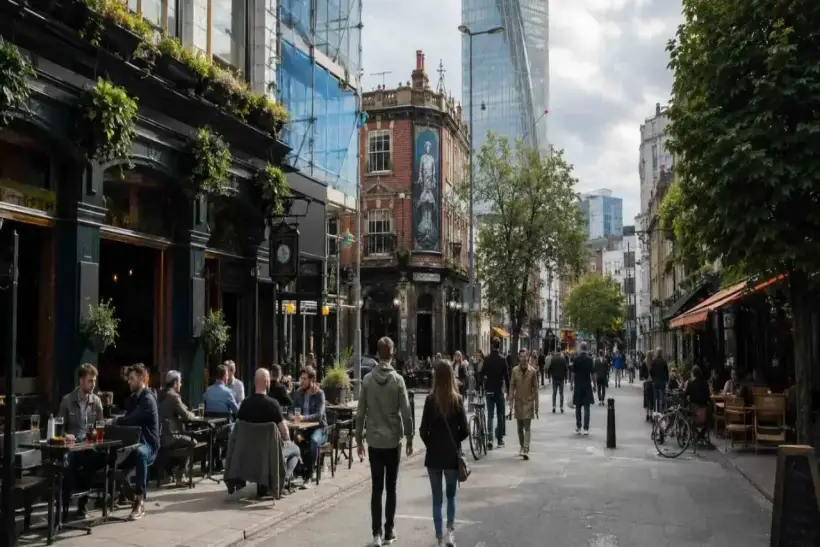
The UK government will cut business-rates bills by 20% from April 2027 for eligible pubs, social clubs and live-music venues in England. Almost 32,000 properties are expected to benefit, while a typical pub will save an estimated £1,100 a year. The £100 million annual package will supplement existing support, although the final eligibility rules and calculation method have yet to be published.
Andy Burnham announces new support for pubs
Prime Minister Andy Burnham unveiled the measure on July 23, 2026, three days after taking office. The reduction is one of the new government’s first economic policies and forms part of its programme to support high streets and locally focused businesses.
From April 2027, eligible pubs, social clubs and live-music venues in England are due to receive a 20% reduction in their business-rates bills. The government expects almost 32,000 properties to benefit.
A typical pub is projected to save about £1,100 during the 2027/28 financial year, equivalent to approximately £92 a month. The programme is expected to cost around £100 million annually.
The largest live-music venues will be excluded. The government will disclose the relevant rateable-value threshold, full eligibility requirements and delivery mechanism at the Budget.
The 20% cut will supplement existing relief
Pubs and live-music venues already receive targeted assistance. Eligible properties are entitled to a 15% reduction in their bills during the 2026/27 financial year.
From April 1, 2027, until March 31, 2029, their bills are also due to be frozen in real terms, meaning they should not rise faster than inflation. The government describes the new 20% reduction as additional support on top of those previously announced measures.
That does not mean businesses will automatically receive a simultaneous 35% discount. The 15% relief applies to 2026/27, while the new cut begins in 2027/28. It is intended to operate alongside the previously promised real-terms freeze, although the detailed billing sequence has not yet been released.
Under the current scheme, a qualifying pub must be occupied, open to the general public, allow drinks to be purchased at a bar and permit customers to drink without ordering food. A live-music venue must be used mainly for performances before an audience.
Nightclubs are not yet guaranteed relief
The government’s wording requires careful interpretation. The announcement refers specifically to social clubs, which does not automatically include every nightclub.
Under the current 2026/27 rules, properties used mainly as nightclubs or theatres are not treated as live-music venues. Restaurants, cafés, hotels, casinos, cinemas and festival sites are also excluded from the definition of a pub.
Local authorities can determine difficult cases. A working men’s club or another membership-based community venue may qualify where it effectively operates as a pub for local residents.
The new policy introduces social clubs as a separate category, but the updated rules have not been published. It is therefore too early to conclude that conventional dance clubs, DJ-led venues and all late-night bars will receive the 20% reduction.
How business rates are calculated in England
Business rates are a property tax charged on most non-domestic premises. A property’s bill begins with its rateable value, which broadly represents the annual rent it could command on the open market at a specified valuation date.
The local authority multiplies that value by a government-set multiplier before applying mandatory and discretionary relief. The charge is therefore driven mainly by the property rather than the company’s revenue or profit.
England has used five multipliers since April 2026. Qualifying retail, hospitality and leisure properties valued below £51,000 use a multiplier of 38.2 pence per pound. Eligible properties valued between £51,000 and £499,999 use a 43-pence multiplier.
Non-qualifying properties use rates of 43.2 pence or 48 pence depending on their value. All properties with rateable values of at least £500,000 are subject to the high-value multiplier of 50.8 pence.
The two retail, hospitality and leisure multipliers are five pence below their national equivalents. The government estimates that the permanent reduction benefits more than 750,000 properties and is worth close to £1 billion annually.
Actual savings will vary between properties
The stated £1,100 saving is an estimate for a typical pub rather than a fixed payment. A venue with a smaller liability will receive a lower cash benefit, while a property with a larger eligible bill may save more.
The final amount will also depend on transitional protection, small-business support and other locally administered relief. Several forms of support may apply to the same property, but they are deducted in a prescribed order.
For a small pub, £1,100 could cover part of an insurance, energy or maintenance bill. For a large city-centre business employing dozens of people, the amount will be modest compared with total payroll and property costs.
The exclusion threshold for the biggest music venues remains unknown. Operators cannot yet establish whether an expansion, refurbishment or new valuation could remove their entitlement.
The package will be funded through other reforms
The government says the £100 million annual package will be fully funded. One source will be a review of relief granted to businesses ministers believe do not make a positive contribution to local communities.
Vape shops were cited as an example. This is currently a proposal to reconsider existing relief rather than a confirmed special tax on those retailers. The government has not published a full list of affected businesses or an estimate of the revenue expected from each measure.
Ministers also plan to strengthen the tax responsibilities of online marketplaces. A consultation is considering whether platforms should become responsible for value-added tax on sales by UK-based businesses when the goods are located in Britain at the point of sale.
The consultation closes on August 18, 2026, and covers retail goods and takeaway food. The reform has not yet been adopted. The government says any resulting revenue will be reinvested in improvements to the business-rates system, but it has not provided a detailed funding breakdown for the pub package.
Pub closures accelerated in early 2026
The announcement follows a renewed increase in closures. A total of 161 pubs shut across England, Scotland and Wales during the first three months of 2026, equivalent to almost two a day.
That compared with 128 closures in the same period of 2025, representing a 26% increase. The industry association linked the closures to more than 2,400 lost jobs, approximately half of them held by younger workers.
Britain recorded 336 net pub closures during 2025. Over five years, the number fell by almost 2,200, from 46,829 in 2020 to 44,656 in 2025.
The British Beer and Pub Association estimates that the sector contributes more than £34 billion to the economy and supports over one million jobs. These are industry estimates rather than official government statistics.
Grassroots music venues operate on narrow margins
The position of small independent music venues is especially fragile. Their average profit margin was 2.5% in 2025, and more than half reported no profit.
The sector lost around 6,000 jobs, a 19% contraction in employment. Thirty grassroots venues closed permanently during the year.
Regular professional touring disappeared from 175 UK towns and cities with a combined population of about 25 million. The loss of venues reduces opportunities for emerging performers and makes regional touring more expensive.
Music Venue Trust estimates that grassroots venues contribute more than £500 million annually to the UK economy. It says narrow margins leave many operators without reserves to absorb an unexpected increase in costs. The figures are based on the organisation’s sector research rather than national official statistics.
Night-time operators expected steep bill increases
Night-time businesses had warned of sharp increases in property-tax bills before the new support was announced.
A survey of 345 operators found that about half expected business rates to rise by at least 50%. Almost 20% anticipated increases of between 76% and 100%.
Around 87% planned to raise prices, while 75% were considering reductions in staff hours or employment. Respondents estimated that operating costs had increased by 30% to 40% since 2020.
They identified higher minimum wages, employer national-insurance contributions, alcohol duties and property valuations as major sources of pressure.
The Night Time Industries Association conducted the research as a flash poll. Its findings measure operator expectations and should not be treated as official data on bills already issued.
Restaurants and hotels remain outside the discount
The additional 20% reduction does not apply across the hospitality industry. Restaurants, cafés and hotels may qualify for the lower sector multipliers, but they have not been included in the newly announced targeted discount.
That creates different tax outcomes for businesses with similar cost structures. A pub and restaurant on the same street may pay comparable rents, wages, insurance and utility bills, while only the pub receives the additional reduction.
UKHospitality had called for reform covering the entire sector before the policy was adopted. It argued that challenges facing high streets affect pubs, restaurants, cafés and hotels and supported reducing hospitality’s value-added tax rate from 20% to 10%.
The cut provides limited breathing space
The tax reduction will improve the position of some businesses facing further increases in operating costs. For a small venue with a narrow margin, a saving of about £1,100 may influence decisions on staffing, maintenance and continued trading.
The measure does not reduce rateable values or directly address wages, employer contributions, rent, energy, insurance, supply costs or alcohol duty. It also provides no guaranteed additional support for restaurants, hotels or conventional nightclubs.
The Prime Minister has described the measure as an initial step. The government plans to return to broader business-rates reform, including Small Business Rates Relief, at the Budget.
As International Investment experts report, the reduction will offer pubs and small cultural venues useful but limited breathing space. An average annual saving of £1,100 remains modest beside increases in labour, rent, utilities and insurance. Selective relief also leaves restaurants, cafés, hotels and parts of the night-time economy at a disadvantage. The policy’s investment value will depend on the details published at the Budget: without a clear threshold for major venues, a definition of qualifying social clubs and a precise calculation method, operators cannot reliably forecast their future liabilities.