







 How Ukraine’s New-Build Housing Market Has Changed Over Four Years
 European Prime Rents Rise as Property Yields Turn Higher
 The Most Expensive Airlines in Europe in 2026
 Housing Prices in Italy Reach a Two-Year High
 Travellers Increasingly Choose Cooler Scandinavia
 Serbia Property Sales Decline as Transaction Value Rises
Bulgaria housing loses its euro boost
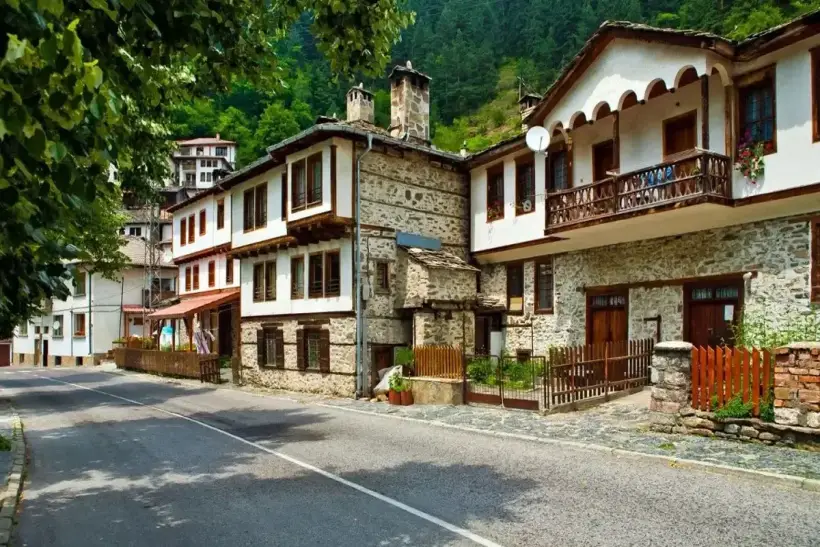
Bulgaria’s property market is cooling after the euro rush
Bulgaria’s residential property market is showing signs of cooling in spring 2026 after the burst of activity that accompanied the country’s move into the euro area. Novinite reported that transactions fell by around 10% at the start of the year, while listings rose by more than 25%, lengthening selling times and shifting the market toward a more balanced position between buyers and sellers. The report links that change to the fading “eurozone effect,” as many buyers had rushed into property in 2025 expecting Bulgaria’s euro adoption to trigger another sharp rise in prices.
That key event has now already happened. Bulgaria officially adopted the euro on January 1, 2026 and became the euro area’s 21st member, according to the European Commission. That matters because the logic of buying “before the euro arrives and prices jump” no longer works as an independent market catalyst. Once the transition became a fact rather than an expectation, part of the speculative urgency disappeared.
Why the “euro effect” has started to fade
The main reason for the cooling is that a meaningful part of the anticipated price adjustment appears to have happened in advance. Novinite says that in 2025 euro-area expectations drove both end-user demand and investment buying, as people tried to secure assets before a potential repricing. After the actual switch to the euro, that motivation weakened, and the market began to return to a more ordinary decision-making pattern in which buyers focus on location, infrastructure, financing costs and quality of life rather than just the currency transition.
That makes the current phase look less like a downturn driven by panic and more like a normalization after overheating. The Novinite report explicitly describes it as a return to equilibrium, with more sellers entering the market, more choice for buyers and a slower pace of commitment. In other words, what is fading is not necessarily the market itself, but the event-driven momentum that had previously accelerated purchases.
Mortgage lending in Bulgaria is still expanding strongly
Cooling transactions do not mean credit support has vanished. On the contrary, mortgage lending in Bulgaria is still growing rapidly. Bulgarian News Agency, citing Bulgarian National Bank data, said housing loans to households reached EUR 17.299 billion at the end of February 2026, up 27.8% from a year earlier. That suggests the market is still benefiting from accessible financing even as buyers become more selective.
Novinite also reported that mortgage activity was up by about 14% in the early part of the year and that the average interest rate remained around 2.47%, with some offers even below that level. I was not able to independently verify that exact 2.47% figure from a separate primary release in a directly readable format, so it should be treated as a market statistic cited by the outlet. Still, the broader pattern matches BNB commentary showing that housing loans continue to be the main contributor to household credit growth and that low interest rates remain an important support factor.
Bulgaria’s housing market is cooling after one of the EU’s strongest booms
It is important to understand the longer backdrop. Novinite noted in a separate report on April 8 that housing prices in Bulgaria had surged by 157% between 2015 and the end of 2025, one of the strongest increases in the EU. That means the current cooling is coming after a very strong boom rather than after a flat decade.
Official statistics also confirm that the base level of the market remains high. Bulgaria’s National Statistical Institute says its House Price Index is compiled from full transaction prices and, since 2022, uses administrative source data to improve coverage. That means the market entered 2026 after a long run-up in residential prices, so a correction in sentiment is more likely to show up first in transaction volumes and time-on-market than in an abrupt collapse in prices.
Buyers are shifting from speculation toward quality-of-life decisions
Novinite points to a change in buyer priorities. While a chunk of earlier demand was driven by euro expectations and the desire to lock in assets before further price increases, current buyers are paying more attention to the living environment, infrastructure and overall quality of life. That is a significant shift because it suggests the market is moving away from short-term momentum buying and toward more selective end-user demand.
That type of shift naturally slows the market down. An investor buying ahead of a major event tends to move quickly. A household comparing neighborhoods, transport access and long-term suitability takes longer. That helps explain why the market can simultaneously see more listings, fewer transactions and still-healthy credit growth.
Some Bulgarian property segments remain overheated
Even in a broader cooling market, not every segment normalizes at the same speed. Novinite says garage spaces in Sofia remain especially expensive, with prices ranging from EUR 50,000 to EUR 100,000 and some deals going even higher. That shows that scarce urban micro-segments can remain overheated even when the mainstream residential market becomes calmer.
That contrast is typical of a late-cycle market. Broad buyer enthusiasm fades first, while physically limited assets with chronic urban scarcity can continue to command steep premiums. In Sofia’s case, dense urban form and limited parking supply help explain why this niche remains exceptionally expensive.
What the 2026 cooling means for Bulgaria’s property outlook
The main conclusion for 2026 is that Bulgaria’s property market appears to be moving into a normalization phase rather than an outright downturn. On one side, the euro has already been introduced, so the old speculative catalyst is exhausted. On the other, mortgage lending remains strong, and the market is still supported by the cumulative effects of a powerful multiyear price boom and relatively attractive borrowing conditions. The practical signs of this new phase are not crash pricing, but slower transactions, more listings and more deliberate buyer behavior.
As International Investment experts note, Bulgaria is now going through a classic post-event repricing of expectations. Once the euro became reality, the emotional component of demand faded and the market returned to fundamentals. If mortgage funding remains inexpensive and macro-financial stability holds, the most likely path is more moderate price growth with more selective demand. But if financing costs begin to rise, the combination of higher supply and calmer buyer psychology could push the market into a longer sideways phase.
FAQ on Bulgaria’s housing market
Why is Bulgaria’s housing market cooling in 2026
Because the “euro effect” is fading. Many buyers accelerated purchases in 2025 ahead of the euro transition, and after January 1, 2026 that event-driven urgency weakened.
Have transactions really fallen
According to the market estimate cited by Novinite, transactions were down by around 10% early in 2026 while listings rose by more than 25%. That is a market-based assessment rather than a direct official state statistic.
Is mortgage lending still growing in Bulgaria
Yes. BNB data cited by BTA show housing loans to households rose 27.8% year on year by the end of February 2026, reaching EUR 17.299 billion.
Does cooling mean Bulgarian home prices are about to fall sharply
Not necessarily. The available evidence points more to a rebalancing after a very strong multiyear boom and the fading of euro-related speculative demand than to an outright collapse.
Which segment remains especially expensive
Novinite highlights garage and parking spaces in Sofia, where prices range from EUR 50,000 to EUR 100,000 and sometimes even higher.