







 Turkey Is Losing Its Cheap-Holiday Advantage
 Development Is Rewriting Southeast Asia’s Historic Districts
 How Ukraine’s New-Build Housing Market Has Changed Over Four Years
 European Prime Rents Rise as Property Yields Turn Higher
 The Most Expensive Airlines in Europe in 2026
 Housing Prices in Italy Reach a Two-Year High
Youth exodus is reshaping Bulgaria’s minority in Serbia
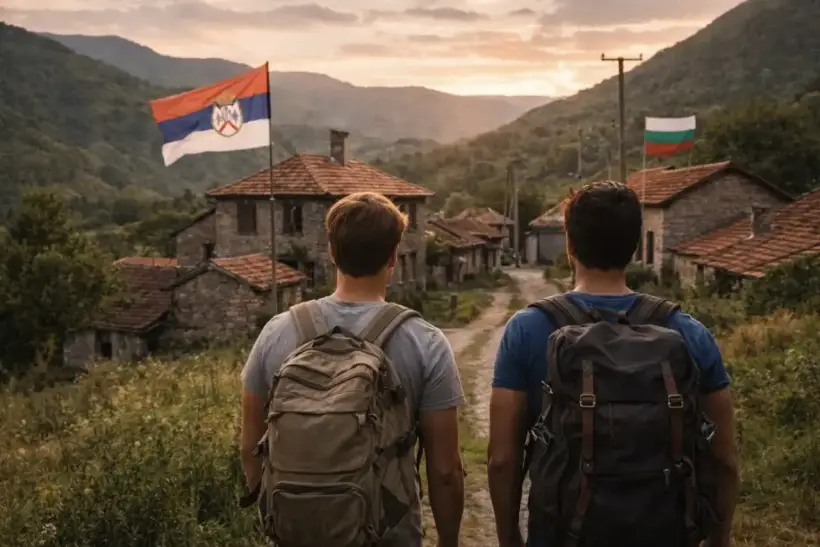
The Western Outlands are continuing to lose young people
The migration of young Bulgarians from Bosilegrad and Tsaribrod is no longer a temporary wave but a structural process. In the BNR report, Ivan Nikolov, head of the Cultural and Information Centre in Bosilegrad, says young people are leaving en masse for Sofia mainly to study, work and build a future in Bulgaria, and that most of them do not return once they relocate. In his account, the lack of professional opportunities on the Serbian side has made this outflow largely self-reinforcing.
The demographic figures support the scale of the decline. BNR traces the population trend of Bulgarians in these areas from about 36,000 in 1981 to 25,214 in 1991, then 18,543 in 2011, and finally 12,918 in the most recent official census cited for 2021. Even allowing for shifts in administrative framing and census categories over time, the direction is unmistakable: Bulgaria’s historic minority in Serbia’s eastern borderlands has been shrinking for decades.
Serbia’s latest census points to a faster demographic contraction
The most recent total of 12,918 Bulgarians in Serbia matters not just as a census headline but as evidence of an accelerating contraction. BNR uses the 2021 census figure, while aggregated ethnic-statistics sources reproduce the same level for the latest census round. Those same data show that Bulgarians still form a majority in Bosilegrad and remain the largest ethnic group in Dimitrovgrad, which Bulgarian discourse often calls Tsaribrod, but their numerical base is thinning.
The projections are even more alarming. BNR says the Statistical Office of the Republic of Serbia projects that within the next two decades the Bulgarian population could fall to around 1,100 in Bosilegrad and 2,200 in Tsaribrod. Serbia’s statistics office does publish municipal population projections for 2022–2052, which makes such forecasts institutionally plausible, although the methodology behind the figures quoted by BNR is not spelled out in the visible article. The numbers are therefore best treated as an officially sourced projection relayed by BNR rather than as a direct standalone statistical release.
Why young Bulgarians are leaving Bosilegrad and Tsaribrod
The labor market sits at the center of the problem. Nikolov tells BNR that young people leave not only for university education in Bulgaria but for a realistic chance to remain there permanently because Serbia offers them little room for professional realization. He links that directly to the absence of serious investment and to the failure to build a business environment capable of sustaining local livelihoods in Bosilegrad.
Geography deepens the imbalance even within the minority’s own territory. According to Nikolov, Tsaribrod is 20 to 30 kilometers closer to Sofia, and it has developed a partial commuting pattern in which several hundred people cross daily for work in Bulgaria and return in the evening. Bosilegrad has no comparable labor-market buffer because the nearest Bulgarian urban center, Kyustendil, offers fewer opportunities, so working-age residents are more likely to leave directly for Sofia and stay there.
Bulgarian citizenship is becoming a migration channel, not just a symbol
BNR also highlights a second shift: growing demand for Bulgarian citizenship. In the report, that is presented less as a symbolic affirmation of identity and more as a practical route into education, mobility and long-term settlement in Bulgaria. Citizenship and related administrative procedures are increasingly part of the migration pathway itself.
That makes the demographic problem deeper than a simple population decline. Once education, legal status and labor-market integration all start to align toward Bulgaria, migration becomes less temporary and more final. The result is a drain of human capital that reduces the size of the community, weakens local demand and further erodes the economic viability of the region. This conclusion follows directly from BNR’s account of how education, work and citizenship now interact.
Administrative barriers on the Bulgarian side also matter
The BNR report is notable because it does not put the entire burden on Serbia alone. Nikolov also points to difficulties on the Bulgarian side, including residence-permit procedures and other requirements that, he says, have helped create a black market in address registrations. That is significant because it shows that even when Bulgaria functions as the natural destination for this minority, the legal and bureaucratic path into work and settlement remains imperfect.
Politically, that creates a contradiction. Bulgaria presents itself as committed to compatriots abroad, but the infrastructure for legal integration, temporary work and residence regularization does not always match the scale of movement. Migration continues, but often through more fragmented and less transparent channels. That does not reduce Bulgaria’s pull. It makes the process more complicated and costly.
The issue is now linked to Serbia’s EU accession path
BNR also includes an official Bulgarian position. Yordan Parvanov from Bulgaria’s foreign ministry said high unemployment and poor healthcare in the Western Outlands remain serious concerns and that the issue is directly tied to Serbia’s fulfillment of the Copenhagen criteria for EU membership. That matters because the demographic erosion of the Bulgarian minority is no longer framed only as a bilateral grievance but as part of the wider EU enlargement conversation.
The broader institutional setting makes that link more credible. In its 2025 Serbia Report, the European Commission said progress in the area of fundamental rights remained limited and that the environment for civil society and inclusive public dialogue had deteriorated. The report is not exclusively about the Bulgarian minority, but it does show that concerns about minority rights, local development and democratic standards sit inside a wider assessment of Serbia’s compatibility with EU expectations.
This is now a story of regional hollowing out, not only minority decline
When the young leave in large numbers, the effects go far beyond identity statistics. The loss of younger cohorts means fewer births, weaker local business activity, staffing pressure in education and healthcare, and faster aging across the territory. BNR’s report captures exactly that kind of cumulative erosion: the outflow continues, while the mechanisms that could reverse it have not appeared.
The strongest long-term risk is that within one or two decades the issue will no longer be the preservation of a living minority community, but the survival of a residual population in two shrinking municipalities. The forecast figures relayed by BNR point precisely toward that scenario. If Bosilegrad and Tsaribrod are left with only a few thousand Bulgarians combined, that would represent not just decline, but the demographic exhaustion of a historic borderland community.
As International Investment experts note, the story of the Bulgarian minority in Serbia’s Western Outlands increasingly looks less like a question of memory alone and more like one of regional economics, cross-border labor mobility and Serbia’s fit with European standards. Without jobs, a workable frontier commuting regime and simpler legal channels for temporary work and residence in Bulgaria, the current migration flow is likely to keep turning into irreversible depopulation.
FAQ
What are the Western Outlands referred to in the article
In Bulgarian public discourse, the term generally refers to the Bosilegrad and Tsaribrod/Dimitrovgrad areas in today’s Serbia, where a historic Bulgarian community lives.
How many Bulgarians remain in Serbia according to the latest figures
BNR cites 12,918 Bulgarians in Serbia from the latest official census wave, and aggregated ethnic-statistics sources reproduce the same figure.
Why are young Bulgarians leaving Bosilegrad and Tsaribrod
According to the BNR report, the main drivers are education, better work opportunities, higher pay in Bulgaria and the lack of meaningful professional prospects on the Serbian side of the border.
Do they return after studying in Bulgaria
According to Ivan Nikolov, most do not. Many aim to finish university in Bulgaria and settle there permanently.
How is this linked to Serbia’s EU path
A Bulgarian foreign ministry representative told BNR that unemployment, weak services and the treatment of the minority are tied to Serbia’s fulfillment of the Copenhagen criteria and therefore to its EU accession process.