







read also
 Vietnam Mortgage Surge Pushes Homes Out of Reach
 Lithuanian Apartment Prices Accelerate Across Major Cities
 London Flats Lose Value Ahead of Leasehold Reform
 Construction of the Batumi–Sarpi Highway Begins in Georgia
 Baltic Property Investment Accelerates in 2026
 Hong Kong and Singapore Renew Their Expat Rivalry
Business / Real Estate / Investments / Migration / News / Reviews / Montenegro / Real Estate Montenegro / Tourism Montenegro 15.12.2025
Montenegro Residence Permit: Amendments Softened After Business Criticism
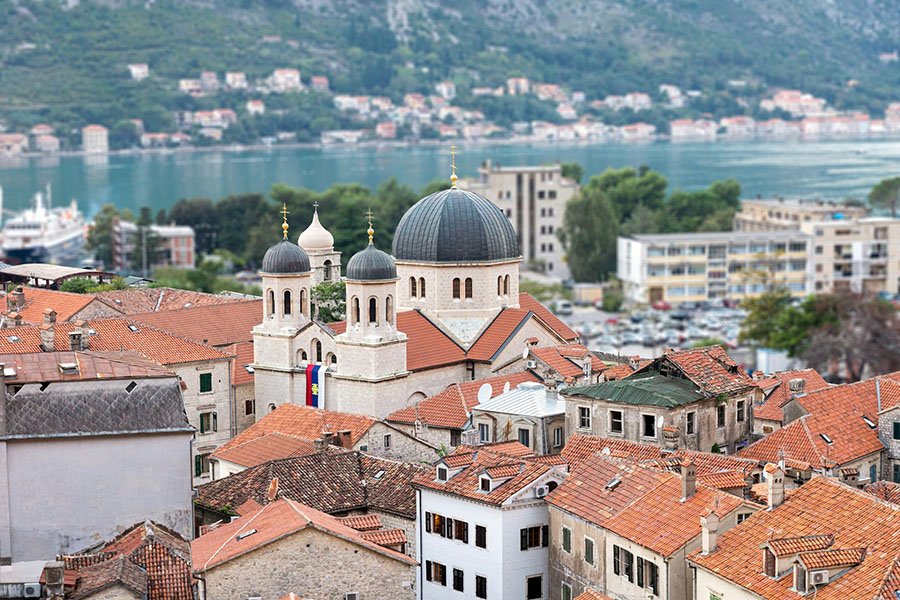
Photo: Unsplash
Montenegrin authorities have softened a draft law concerning the granting and extension of temporary residence. Some previously proposed requirements have been removed, although the amendments still introduce rules that are stricter than those currently in force. The changes concern residence based on business activity, employment, and property ownership, writes Vijesti.
Companies: one employee and a €5,000 tax
Initially, the government proposed requiring foreigners who obtain or extend temporary residence through company ownership to hire at least two Montenegrin citizens. Representatives of foreign investors and business associations pointed out that this condition would be difficult to meet and could become a serious barrier to entrepreneurial activity.
After additional analyses, the authorities abandoned this requirement and revised their approach. Under the new version of the law, to obtain and extend temporary residence it is sufficient for a company to have one employee, who does not have to hold Montenegrin citizenship. The key requirement is proof of payment of taxes and salary contributions exceeding €5,000 per year.
The explanatory notes state that this level of tax obligations corresponds to a net monthly salary of about €1,600 and is used as an indicator of genuine economic activity. According to the government and the Ministry of the Interior, the tax burden makes it possible to more objectively distinguish operating businesses from companies created solely to obtain residence status. A transitional mechanism is provided separately: foreigners who began the procedure for obtaining or extending a residence permit under the previous rules will be able to complete it on the old terms, but the extension period may not exceed 12 months.
Citizens of the European Union, the United Kingdom, Switzerland, Norway, and Iceland are exempt from the requirement to meet the minimum tax payment threshold. The Ministry of the Interior emphasizes that the updated rules should not become an obstacle for those who genuinely conduct business in Montenegro.
Real estate: €200,000 for a residence permit
Lawmakers have retained the requirement for a minimum property value that gives the right to obtain and extend a Montenegrin temporary residence permit. The threshold is set at €200,000 and does not apply to citizens of the EU, the United Kingdom, Switzerland, Norway, and Iceland.
Previously, the Law on Foreigners contained no financial requirements: the status could be obtained regardless of the property’s value. The criterion has now been made uniform and easily verifiable — the value will be determined based on the property tax assessment. In 2022, about 4,000 people obtained residence permits on this basis, around 4,100 in 2023, and 4,529 in 2024. From January to November 2025, 5,260 such permits were approved.
The authorities note that the new measure is aimed at reducing the risk of abuse, strengthening oversight, and ensuring more consistent application of the law. Officials also expect the changes to encourage investment in the real estate market, although previously it was precisely the absence of a price threshold that attracted some foreign buyers.
In pursuit of EU accession
Work on the amendments lasted almost four years. The authorities emphasize that the updated provisions have been aligned with European Union directives and are viewed as a necessary step to advance accession negotiations with the EU. This concerns meeting the requirements of two key chapters — “Justice, Freedom and Security” and “Free Movement of Workers”.
The new rules are intended to close existing loopholes and restrict access to residence status for those who do not conduct real business or fail to comply with legal requirements. The authorities stress that the goal of the changes is to grant resident status only to those who are genuinely involved in the country’s economy and operate within the legal framework. Against the backdrop of tighter control, Montenegro has also cancelled visa-free travel for four countries.
According to current data, about 30,000 foreigners hold permanent residence permits in the country, and around 70,000 have temporary ones. Approximately 40,000 of them are officially employed in Montenegro, highlighting the economic importance of this group while simultaneously increasing the need for stricter oversight.
The Ministry of Foreign Affairs, financial authorities, the tax service, and the police have intensified data exchange to identify violations. Particular attention is paid to companies owned by foreigners that are deemed inactive or illiquid: in the absence of legal grounds for further stay, procedures to revoke residence permits are initiated.
What this means for investors
Analysts at International Investment note that discussions about tighter regulation have already led to changes in the volume of foreign direct investment. Over the first eight months of 2025, the figure, on the one hand, exceeded the level of the same period in 2024 by 3.46%, reaching €5,595.58 million. On the other hand, net inflows declined by 4.75% to €314.39 million, as the outflow of funds from the country increased. At the same time, the most active Russian investors dropped out of the top five and fell to seventh place.
Further tightening of regulation may lead to higher costs for investors, negatively affecting project returns. An additional restraining factor remains limited market transparency: a significant number of unregistered real estate properties and inactive companies persist in the country. Under these conditions, the key challenge for Montenegro is to strike a balance between control and investment attractiveness, as excessive barriers risk accelerating capital outflows without addressing the market’s systemic problems.