







 Vietnam Mortgage Surge Pushes Homes Out of Reach
 Lithuanian Apartment Prices Accelerate Across Major Cities
 London Flats Lose Value Ahead of Leasehold Reform
 Construction of the Batumi–Sarpi Highway Begins in Georgia
 Baltic Property Investment Accelerates in 2026
 Hong Kong and Singapore Renew Their Expat Rivalry
Gulf Conflict Disrupts Nordic Corporate Supply Chains
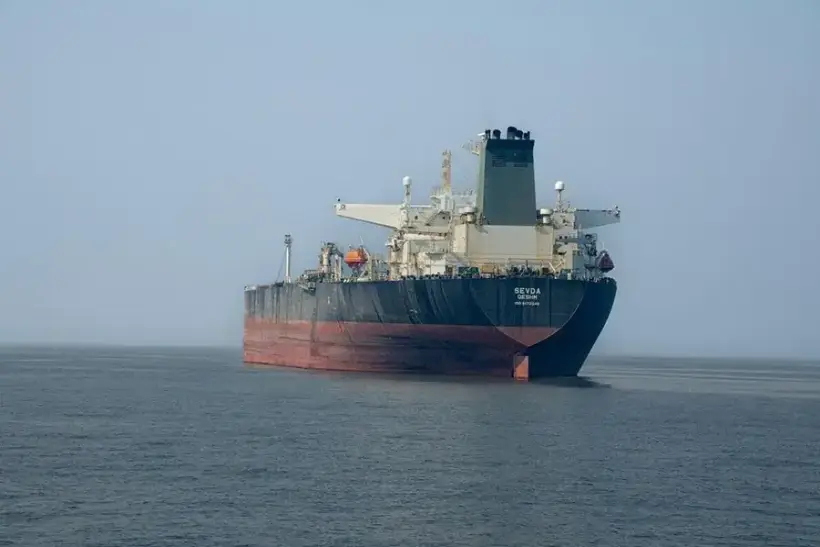
Middle East crisis forces Nordic companies to rethink strategies
The conflict involving Iran is beginning to reshape the strategies of major Nordic multinational companies as disruptions spread across global supply chains. Firms in shipping, aviation and heavy industry are already facing logistical bottlenecks, energy shortages and operational interruptions.
The situation highlights how dependent global trade remains on strategic transportation corridors, particularly the Strait of Hormuz, one of the most important maritime routes for global energy and cargo flows.
Maersk suspends shipping bookings across the region
Danish shipping giant AP Moller–Maersk has suspended cargo bookings for routes linking Asia with the Middle East as well as services connecting the region with Europe.
The decision followed the near standstill of maritime traffic through the Strait of Hormuz, a key artery for global oil, gas and container shipping.
Maersk has also halted transits at most Persian Gulf ports and introduced emergency freight surcharges for shipments in several countries across the region. The measures reflect rising security risks and operational uncertainty for international shipping.
Norsk Hydro cuts aluminum production amid gas shortages
Norwegian aluminum producer Norsk Hydro has also been affected by the crisis. The company has started a controlled shutdown of aluminum production at the Qatalum plant in Qatar because of a shortage of natural gas.
The shutdown is expected to last through the month, and if the plant fully closes it could take between six months and a year to restart operations.
Analysts note that Norsk Hydro’s reliance on renewable energy sources at other production sites may help cushion the impact of energy disruptions.
Finnair cancels flights through Middle East hubs
Finland’s national carrier Finnair is also adjusting its operational strategy. After Russian airspace closed in 2022, the airline shifted to a geographically more balanced route network connecting Europe with Asia, India, North America and the Middle East.
This strategy relied heavily on transit hubs in Doha and Dubai. However, amid rising geopolitical tensions, Finnair has canceled all flights through those airports until at least the end of March.
For Finnair the disruption represents another major challenge after years of restructuring its long-haul network.
Energy producers benefit from rising oil prices
While some Nordic companies are facing operational challenges, others are benefiting from the geopolitical crisis. Norwegian energy company Equinor has seen strong stock market gains during the week.
Its shares have risen more than 30% since the beginning of the year as rising oil and gas prices boost investor expectations for higher revenues.
Equinor’s limited exposure to the Middle East also reduces direct geopolitical risks to its operations.
Sweden prepares for financial security risks
Meanwhile, Nordic governments are taking precautionary measures to strengthen economic resilience. Sweden’s central bank has warned that the country’s highly digital payment system could be vulnerable to cyberattacks or hybrid warfare.
With around 90% of transactions taking place electronically, the Riksbank has advised citizens to keep about one week’s worth of cash at home, roughly 1,000 Swedish kronor per person.
The guidance forms part of broader preparedness measures introduced by the government in recent years to strengthen resilience in the event of geopolitical tensions or infrastructure disruptions.
As International Investment experts report, the Middle East conflict once again illustrates how deeply global supply chains are interconnected. Even companies based in geographically distant regions such as Northern Europe are forced to rapidly adjust strategies as disruptions spread across shipping routes, energy supplies and aviation networks.