







read also
 Australia’s Spring Auctions Rise but Remain Well Below 2025
 Number of Foreigners Holding Turkish Residence Permits Exceeds 1.27 Million
 Demand from Russian Tourists for Holidays in Georgia Rises by 20–25%
 Montenegro Property Buying Costs in 2026
 Four in Ten Companies Would Not Choose Slovakia
 Gulf Countries Prepare Unified Tourist Visa
The EU Prepares Unified Rules to Regulate Short-Term Housing Rentals
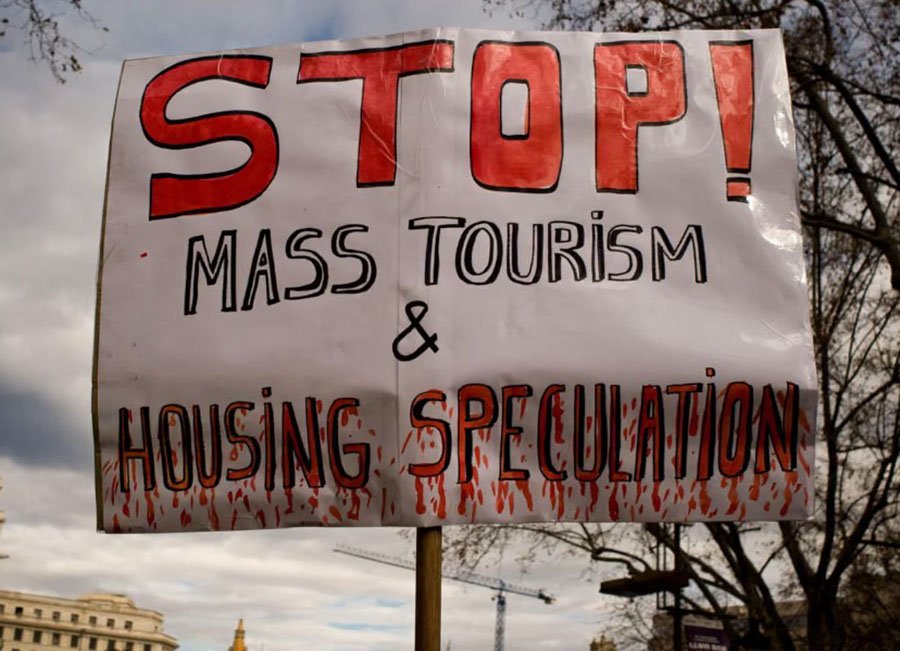
Photo: The Guardian
The European Commission is preparing the first EU-wide rules to regulate short-term housing rentals as part of efforts to address the shortage of affordable homes, writes The Guardian. Brussels believes that rising prices and rental rates have increased pressure on major EU cities, pushing young people, families, and key workers out of the housing market. The new initiative is intended to provide local authorities with a clear legal basis for restrictions without the risk of legal disputes at the EU level.
New rules
The shortage of affordable apartments has become a pan-European challenge affecting social resilience and political stability. EU Commissioner for Housing Dan Jørgensen warned that the lack of solutions in this area creates space for the rise of extremist political forces. The new legislation is expected to regulate the short-term rental market via online platforms, including Airbnb and Booking.com. The European Commission plans to complete the preparation of the relevant rules by the end of 2026.
The initiative does not envisage a ban on tourist rentals. The law should provide cities and countries with legal certainty when introducing restrictions in conditions of housing shortages and rising rents, while reducing the risk of legal disputes at the EU level. A separate part of the plan addresses speculation in the real estate market, including analysis of price dynamics and ownership structures to assess the impact of investment demand on housing affordability and rental levels.
Protecting cities
One of the key objectives of the new regulation is to protect cities and regions from legal conflicts when attempting to limit short-term rentals. Municipal authorities are increasingly facing lawsuits from industry associations and online platforms that challenge local restrictions, citing EU rules on the freedom to provide services.
Barcelona is a notable example, where authorities plan to ban tourist apartment rentals by 2028. This decision is already being challenged by associations representing the interests of Airbnb and Expedia, which argue that such measures violate EU law. Against this backdrop, the European Commission intends to create an EU-wide legal framework that would allow cities to act without the risk of legal uncertainty.
The new legislation provides for a list of permissible measures for areas facing acute housing shortages. Municipal authorities will be able to introduce restrictions on short-term rentals, including limits on the number of nights a property can be rented to tourists. At the same time, cities, regions, and states will not be obliged to apply such measures; the approach aims to expand options for action where housing shortages have become particularly acute, without imposing universal bans and while taking into account differences between markets.
Financing affordable housing
The European Commission intends to give member states greater flexibility in using subsidies and financial incentives to support the construction of affordable housing. This involves easing fiscal and regulatory constraints so that countries can more actively support projects in this segment without risking violations of EU rules.
Barcelona’s mayor Jaume Collboni compared rising housing costs to a “new pandemic.” Together with the leaders of 16 other European cities, he urged the EU to help mobilise at least €300bn per year from public and private sources to promote the construction of affordable housing. The European Union did not support this proposal. Instead, the focus is on national programmes and the participation of financial institutions. European public and regional banks have already announced their intention to invest up to €375bn in social and affordable housing by 2029.
As part of a broader deregulation policy under the banner of “simplification,” the European Commission has pledged to audit existing EU rules. The aim is to identify requirements that create excessive administrative burdens for small and medium-sized construction companies and slow the delivery of new housing projects.
Reaction to the initiative
The plan was positively received by Social Democrats, for whom affordable housing became a key condition for supporting Ursula von der Leyen’s second term as President of the European Commission. S&D group leader Iratxe García Pérez called the initiative a historic step in response to a social crisis and urged swift and ambitious implementation backed by large-scale investment.
Nikolina Brnjac, the European People’s Party spokesperson on housing, welcomed the Commission’s emphasis on cutting red tape and accelerating housebuilding. She noted that administrative barriers often delay project implementation and constrain the growth of housing supply.
At the same time, the initiative drew criticism from the Greens. Finnish MEP Maria Ohisalo said the plan remains a framework and lacks sufficiently decisive measures to address real estate speculation, which plays one of the key roles in the housing crisis.
Scale of the crisis
According to Eurostat, between 2010 and 2024 housing prices across the EU rose by an average of 53%, while rents increased by 25%, compared with a 39% rise in overall prices. However, the averages mask sharp differences between countries. The steepest increase in rents over this period was recorded in Estonia, where they surged by 208%. Significant rises were also seen in Lithuania (177%), Ireland (108%), and Hungary (107%).
City residents face the heaviest burden. Nearly 10% of the EU population in 2024 lived in households where total housing costs exceeded 40% of disposable income. The highest rates were recorded in Greece (29%) and Denmark (23%).
Implications for investors
Analysts at International Investment note that tightening regulation in the rental market is now being observed across many European countries and beyond. Authorities are increasingly introducing moratoria on tourist rentals, raising taxes, expanding the list of mandatory requirements, and revising registration rules for properties used in short-term rentals.
For investors, this means higher operating costs and reduced income predictability, and in some jurisdictions the risk of partial or complete loss of rental revenue. Against this backdrop, the key factor is no longer just asset yield but the resilience of the chosen model to regulatory change. The short-term rental market is entering a phase in which success will increasingly depend on the ability to adapt to new rules rather than on tourist demand alone. The residential market may lose attractiveness for this type of business, while globally there is already a trend of investors shifting toward the hotel sector, particularly in branded luxury segments.