







 Vietnam Mortgage Surge Pushes Homes Out of Reach
 Lithuanian Apartment Prices Accelerate Across Major Cities
 London Flats Lose Value Ahead of Leasehold Reform
 Construction of the Batumi–Sarpi Highway Begins in Georgia
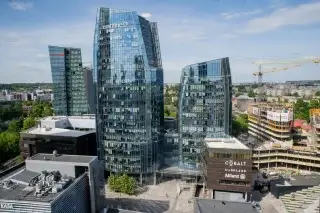 Baltic Property Investment Accelerates in 2026
 Hong Kong and Singapore Renew Their Expat Rivalry
Global hotel investment to accelerate in 2026: JLL forecast

Large-scale transactions above $250 million are returning to the market
The global hotel real estate market is entering a new phase following the recovery of recent years, according to JLL’s Global Hotel Investment Outlook report. Investor activity is strengthening, and transaction volumes are expected to continue growing in 2026. Improved financing conditions and a high level of available capital are supporting the return of large-scale transactions.
Hotel real estate investment increased after the downturn
In 2025, the global hotel real estate market demonstrated a strong recovery. Direct investment volumes rose by 22% compared to the 2023 low. The Americas showed the strongest performance, with transaction volumes increasing by 27%. Europe, the Middle East, and Africa recorded a 4% increase. Investment activity in the Asia Pacific region declined by 20%, although strong industry fundamentals are creating conditions for a rebound.
Revenue per available room (RevPAR) growth is slowing after several years of above-average performance, but results remain uneven across markets. In cities that recovered earlier from the pandemic, including Miami, growth has stabilized. At the same time, San Francisco and several Asia Pacific markets recorded significant gains in 2025.
Hotels accounted for approximately 8% of total global commercial real estate investment in 2025. This exceeded the long-term average and confirmed renewed institutional investor interest in the hotel sector.
Travel demand and capital availability support hotel investment
Industry fundamentals continue to support investment growth. Global air passenger traffic is projected to increase by 4.9% year-over-year. The Asia Pacific region is expected to lead with 7.3% growth, driven by strong travel demand in India, China, and Vietnam.
Limited new construction is also supporting the market. In most major U.S. cities, hotel development pipelines remain below 2% of existing room supply. Slower expansion of supply supports the performance of existing properties and enhances their attractiveness to investors.
Financial market conditions have also improved. Lender activity has increased, and borrowing terms have become more favorable. At the same time, a significant volume of available capital remains in the market, creating conditions for increased transaction activity and further investment growth.
Investment in luxury hotels and resorts becomes a priority
Investors are increasingly focusing on high-quality hotel assets, including luxury resorts and trophy properties. This interest is driven by limited supply and sustained demand for unique, irreplaceable assets. Institutional investors view such properties as long-term investments with strong value preservation potential.
Major international events are also expected to drive additional demand. The 2026 FIFA World Cup and the 250th anniversary of U.S. independence are projected to significantly increase hotel occupancy in host cities. This enhances the investment appeal of properties in key tourism and business destinations.
In Europe, investor interest in high-quality branded hotels continues to grow. Rising global wealth and private capital activity are increasing demand for premium assets. Limited development opportunities, combined with strong investor interest, are supporting acquisitions and strategic repositioning of existing hotels.
Hotel investment in Asia and Europe attracts global capital
The Asia Pacific region presents mixed but promising investment dynamics. Japan stands out as a key market and is expected to account for 35% to 40% of total regional hotel transaction volumes in 2026. Additional evidence of investor interest includes Goldman Sachs launching a $500 million investment fund targeting hotel acquisitions in Japan.
Singapore continues to serve as a stable investment destination, while India demonstrates strong growth potential driven by expanding domestic demand and a growing middle class. Overall, the region benefits from rising passenger traffic, increasing incomes, and stronger cross-border investment activity.
Investor activity is also strengthening across Europe, particularly in high-quality hotel assets. International capital continues to flow into major cities, where limited new development and sustained demand support asset values. These factors are creating conditions for further investment growth and the formation of a new cycle.
Key strategic trends shaping the hotel investment market
Investors are increasingly focusing on high-quality hotel assets in prime locations. Uneven RevPAR performance is creating clear market leaders, driving capital concentration in the strongest-performing properties.
Large-scale transactions are expected to increase. Improved financing conditions are enabling investors to execute higher-value deals, with transactions above $250 million projected to rise significantly.
International capital continues to expand its presence in the hotel real estate market. The strongest inflows are observed in the UK and European markets, where hotels are viewed as strategic long-term investments.
Private equity firms are also increasing activity. Substantial undeployed capital allows them to acquire hotel assets with value-add potential, including properties available below replacement cost, as well as participate in portfolio acquisitions and repositioning strategies.
Hotel investment outlook: expert perspectives
Kevin Davis, CEO of JLL’s Hotels & Hospitality Group in the Americas, stated that investors are increasingly viewing hotels as an attractive asset class due to their resilience and competitive returns. Dan Peek, President of the same division, noted that the hotel market has reached an inflection point, where favorable supply-demand dynamics, improved financing conditions, and strong capital availability are creating the foundation for a new long-term investment cycle.
Will Duffey, Head of JLL’s Hotels & Hospitality operations in Europe, the Middle East, and Africa, emphasized that investors are focusing on high-quality assets. Limited new construction and rising global wealth continue to support demand for such properties.
Nihat Ercan, Head of JLL’s Hotels & Hospitality division in Asia Pacific, highlighted that rising passenger traffic and increasing incomes are creating conditions for continued investment growth and market expansion.
High returns in emerging hotel investment markets
Analysts at International Investment note the growing attractiveness of branded hotel investments managed by professional operators. Such assets provide more stable operating performance due to centralized management, global distribution systems, and strong brand recognition, which reduces risk and improves income predictability. As a result, branded hotels are increasingly attracting institutional capital and are viewed as one of the most resilient segments of commercial real estate.
Emerging markets offer the highest return potential, supported by growing tourism demand and limited supply of modern hotel properties. One of Georgia’s largest hotel developments, Wyndham Grand Batumi Gonio, offers a guaranteed return of 10%, with potential returns reaching 19% or higher as the property achieves stabilized operational performance.