







 Vietnam Mortgage Surge Pushes Homes Out of Reach
 Lithuanian Apartment Prices Accelerate Across Major Cities
 London Flats Lose Value Ahead of Leasehold Reform
 Construction of the Batumi–Sarpi Highway Begins in Georgia
 Baltic Property Investment Accelerates in 2026
 Hong Kong and Singapore Renew Their Expat Rivalry
Two New International Airports to Be Built in Israel
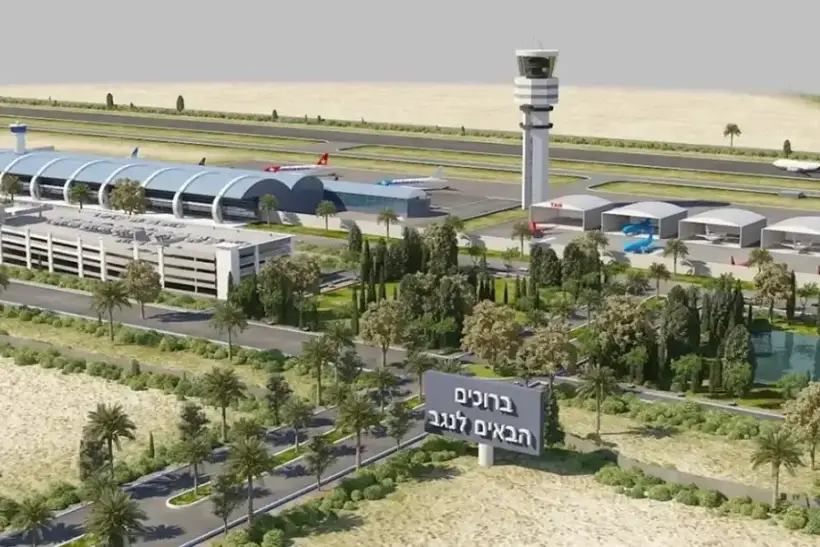
Ben Gurion to Be Relieved by New Terminals in the South and North
The Israeli government has approved a plan to build two international airports — one in the southern Negev region and another in the north of the country, in the Ramat David area. The decision aims to relieve pressure on Ben Gurion Airport, which is approaching its capacity limit. The projects will be advanced in parallel due to the expected growth in passenger traffic, The Times of Israel reports.
Southern Project in the Ziklag Area
One of the airports is planned for construction near the archaeological site of Ziklag, between the cities of Rahat and Netivot, not far from Beersheba. It will serve as a complementary facility to Ben Gurion Airport and is expected to redistribute part of the passenger flow. An alternative location near the Nevatim airbase had initially been considered, but the plan was rejected amid concerns that a large civilian airport could restrict the maneuverability of military aircraft.
The selected site has also raised concerns among experts, as it is located close to the Gaza Strip and may intersect with military and civilian flight paths, potentially placing additional strain on airspace. Nevertheless, the location was approved by the authorities.
Economic Aspects of Construction in the Negev
According to technical documentation by Netivei Israel, the southern airport is designed to handle 10 million passengers annually and up to 70,000 aircraft movements per year. The construction cost is estimated at 7 billion shekels — approximately $1.9 billion at the current exchange rate.
The facility is planned as a relatively compact airport and is not intended to serve as a full replacement for Ben Gurion. The area between Rahat and Netivot currently lacks the necessary transport and engineering infrastructure, which implies additional investment in roads, railway links, and utilities.
Prime Minister Benjamin Netanyahu stated that the project will provide momentum for the development of the Negev, particularly in employment, transport accessibility, and tourism. It also предусматривает развитие supporting infrastructure, including roads and railway connections, as well as business development near the future aviation hub.
Northern Aviation Hub in Ramat David
The second airport will be located in the Ramat David area in northern Israel. It will serve as an additional international gateway and help redistribute passenger flows between regions. The project is intended to meet growing demand from both tourists and Israeli citizens traveling abroad.
Municipal leaders in northern Israel have previously called for the construction of an airport at this site, stating that the Ramat David project could create approximately 11,000 new jobs and significantly increase inbound tourism. The airport is expected to provide direct international flights for more than 4 million residents of northern Israel, including the Haifa district, by 2035.
Reasons Behind the Decision and Capacity Outlook
The construction of two international airports is intended to prepare the country for further passenger growth and create a reserve aviation infrastructure. In a joint government statement, officials noted that Ben Gurion Airport is approaching its maximum capacity — around 40 million passengers per year.
Relevant ministries warn that delays could lead to an aviation capacity crisis affecting the economy, tourism, and international connectivity.
Security considerations are also seen as an important factor, according to Isranews.tv. Dependence on a single central airport is viewed as a strategic risk. The two new facilities are expected to provide backup capacity in emergency situations and strengthen the resilience of the overall aviation system.
The approval concludes years of debate over establishing additional facilities to relieve the country’s main gateway. The decision предусматривает ускорение planning procedures and the parallel advancement of both projects. Implementation is expected in the 2030s.
Conclusion
Analysts at International Investment note that the decision to build new international airports has been made under challenging circumstances. Israel remains a country facing significant geopolitical tensions and ongoing risks of terrorist attacks and military escalations. These factors continue to influence the transportation system and the country’s international perception.
Nevertheless, the government continues to invest in infrastructure and expand aviation capacity, demonstrating a long-term strategic approach. Israel still attracts millions of tourists annually, and the airport projects confirm sustained demand for international connectivity and institutional resilience. Travelers, however, are advised to follow official guidance and assess the current security situation when planning trips.