







 How Ukraine’s New-Build Housing Market Has Changed Over Four Years
 European Prime Rents Rise as Property Yields Turn Higher
 The Most Expensive Airlines in Europe in 2026
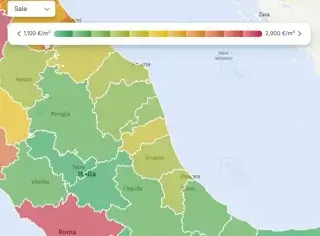 Housing Prices in Italy Reach a Two-Year High
 Travellers Increasingly Choose Cooler Scandinavia
 Serbia Property Sales Decline as Transaction Value Rises
Norway Keeps Capital Buffer. Norges Bank decision in January 2026

At its meeting on 21 January 2026, Norges Bank’s Monetary Policy and Financial Stability Committee decided to keep the countercyclical capital buffer rate unchanged at 2.5%. The level remains at the upper end of the standard range and signals the central bank’s intention to preserve strong resilience in the financial system amid persistent global uncertainty.
Purpose of the countercyclical capital buffer
The countercyclical capital buffer is designed to strengthen banks’ solvency and reduce the risk that banks amplify an economic downturn by cutting back lending. Norges Bank normally sets the buffer in the upper part of the 0–2.5% range and lowers it only if a downturn threatens to cause a marked contraction in credit supply. In periods of particularly elevated cyclical vulnerabilities, the buffer can be set above 2.5%.
Heightened global risks remain
According to Norges Bank, the international economic outlook remains highly uncertain. Rising geopolitical tensions and the threat of higher US tariffs on Norwegian and other European goods represent additional downside risks. While the direct impact of announced measures is expected to be limited, an escalation of trade conflicts could amplify negative effects on both the Norwegian and global economy.
Equity markets have seen some recent declines, yet major indices remain high and risk premia low. In an interconnected global financial system, such conditions mean that shocks can be transmitted rapidly, increasing the risk of stress in Norway’s financial sector.
Credit conditions remain supportive
Norges Bank’s lending survey for the fourth quarter of 2025 shows broadly unchanged credit standards and stable demand from households and firms, a trend banks expect to continue into the first quarter of 2026. Bond market activity was high in 2025 due to large volumes maturing, while corporate credit spreads remain close to their ten-year averages. Overall, the central bank concludes that households and firms continue to have ample access to credit.
Household debt grows more slowly than income
A key positive development is that household debt has increased more slowly than income in recent years. Debt-to-income ratios have declined across most household groups, particularly among those with the highest debt burdens. Although household credit growth picked up to 4.5% year-on-year in November 2025, it remains below pre-pandemic levels and reflects a rebound after weaker economic growth.
Lower debt-to-income ratios reduce households’ vulnerability to interest rate increases and income losses, though risks could rise again if financial conditions loosen and house prices and borrowing accelerate.
Commercial real estate shows stability with pockets of stress
Corporate credit growth stood at 2.2% in November 2025, well below the ten-year average, reflecting weak mainland business investment. While the overall share of bankruptcies in 2025 was close to the long-term average, bankruptcies among real estate developers increased notably, particularly among firms with high bank debt. Norges Bank expects somewhat higher bank losses on exposures to real estate development in 2026.
Commercial property prices rose early in 2025 but have since flattened, and most transactions in the prime Oslo market last year were completed without leverage, supporting financial stability.
Strong and resilient banking system
Norwegian banks remain highly profitable and comfortably meet capital and liquidity requirements. Loan losses are low, and stress tests indicate that banks can absorb substantial credit losses while maintaining lending. The countercyclical capital buffer is therefore viewed as a key tool in preserving the robustness of the financial system.
International Investment expert conclusion
As International Investment experts report, Norges Bank’s decision to keep the countercyclical capital buffer at 2.5% underscores confidence in the strength of Norway’s banking sector while acknowledging elevated external risks. For investors, the message is one of stability: regulatory policy remains cautious, supportive of resilience, and alert to emerging vulnerabilities.