







 Turkey Is Losing Its Cheap-Holiday Advantage
 Development Is Rewriting Southeast Asia’s Historic Districts
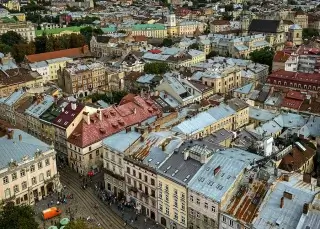 How Ukraine’s New-Build Housing Market Has Changed Over Four Years
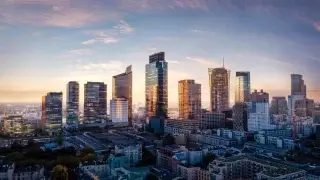 European Prime Rents Rise as Property Yields Turn Higher
 The Most Expensive Airlines in Europe in 2026
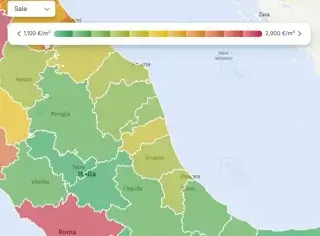 Housing Prices in Italy Reach a Two-Year High
Russia’s Economy in 2025–2026: Slowing Growth and Industrial Decline
Russia’s GDP growth fell to 1% in 2025, down from 4.9% in 2024. In January 2026, economic activity declined by 2.1% amid challenges in the manufacturing sector. High interest rates and a strengthening ruble helped curb inflation but cooled investment and consumer demand. The Eurasian Development Bank (EDB) noted in its March review that the economic paradigm is shifting: the period of high growth is over, with tight monetary policy and structural constraints coming to the forefront.
Industry and Domestic Demand
In 2025, industrial output increased by 1.3%, driven mainly by manufacturing, engineering, and metalworking. Production of chemical products and pharmaceuticals rose due to active import substitution. The extractive sector remained in decline, limiting overall growth.
At the beginning of 2026, a 3% contraction in manufacturing outweighed moderate growth in agriculture (+1.1%) and consumer-oriented sectors (+1.9%), leading to a 2.1% drop in overall economic activity. Domestic demand grew by 1.3%, but expensive loans restrained both purchases and overall consumption growth.
Investment and Capital Expenditures
Gross fixed capital formation increased by 1.7% in 2025, supported by budgetary spending and national projects, whose financing grew 1.8 times. Access to long-term credit remained limited (16.1%), while industrial capacity utilization fell from 80.8% to 77.9%, reflecting the slowdown in business activity.
At the start of 2026, investments remain moderate. Reductions in the key interest rate and rising global oil and gas prices provide potential for renewed capital spending, but weak demand and limited credit access continue to constrain investment dynamics.
Monetary Policy and Labor Market
Inflation slowed to 5.6% in 2025 but rose to 6% in January 2026 due to one-off factors such as tax increases and tariff adjustments. Subsequent data indicate easing price pressures, with household inflation expectations falling to 13.1%. The Bank of Russia reduced the key rate to 15.5%, but real interest rates remained high, around 10%, keeping credit costly.
The labor market shows signs of cooling: the number of job vacancies fell by 7.7%, wage growth slowed, and underemployment rose to 4% of the total workforce.
Foreign Trade and Budget
The current account surplus fell by a third to $41.4 billion (3.5% of GDP) in 2025. Merchandise exports decreased by 3.3%, while the services trade deficit grew by 26.6%. The ruble strengthened due to export revenues and reduced capital outflows, rising an additional 2% against the dollar in February 2026.
The federal budget recorded a deficit of 5.6 trillion rubles (2.6% of GDP) versus 3.5 trillion rubles (1.7% of GDP) in 2024. Declines in oil and gas revenues were offset by growth in other sectors. Rising global oil and gas prices (+30% and +60% in March 2026) and adjustments to the budget rule provide conditions for temporarily higher revenues and deficit containment in Q2 2026.
Position of Russian Authorities
President Vladimir Putin described the slowdown in economic growth in December as a deliberate measure—a price for fighting inflation and maintaining macroeconomic stability—highlighting that cumulative growth over three years reached 9.7%.
Deputy Prime Minister Alexander Novak linked the slowdown to the effects of tight monetary and fiscal policy, noting that inflation fell to 5.6% in 2025, outperforming the forecast of 6.8%. Minister of Economic Development Maksim Reshetnikov did not rule out further deceleration, emphasizing that GDP growth is expected to recover only by the end of 2026. Additional price pressures were caused by the VAT increase to 22% and the postponement of food price increases from December to January.
He noted that fiscal constraints, declining enterprise profitability, and slowing economic activity and investment present challenges for returning Russia to a sustainable growth trajectory. These issues must be addressed amid uncertainty, including growing sanctions, trade disputes, and geopolitical conflicts.
Former Finance Minister Mikhail Zadornov stated that, given current conditions—tight monetary policy and geopolitical tensions—Russia’s GDP in 2026 is unlikely to exceed 1%, with acceleration possible only if external conditions change.
Conclusion
Russia enters 2026 with structural challenges and the dampening effect of high key rates. EDB economists observe similar trends in Belarus, where strong growth is giving way to stagnation. Investment in Russia is becoming increasingly risky, particularly for foreign capital.
In contrast, other regional countries are experiencing positive trends. Central Asia and Armenia continue to see economic growth, while Georgia’s GDP surged by 7.9% in 2025, with foreign direct investment rising by 7.6%. The country remains safe and stable, attracting tourists and business investment.
Russia’s prospects largely depend on the evolution of the geopolitical situation, according to analysts at International Investment. Restrictions, sanctions, and the impact of armed conflict are beginning to negatively affect the economy and could intensify if conditions do not change. Under these circumstances, investments appear more attractive in countries with more stable economic and political environments.