







 Vietnam Mortgage Surge Pushes Homes Out of Reach
 Lithuanian Apartment Prices Accelerate Across Major Cities
 London Flats Lose Value Ahead of Leasehold Reform
 Construction of the Batumi–Sarpi Highway Begins in Georgia
 Baltic Property Investment Accelerates in 2026
 Hong Kong and Singapore Renew Their Expat Rivalry
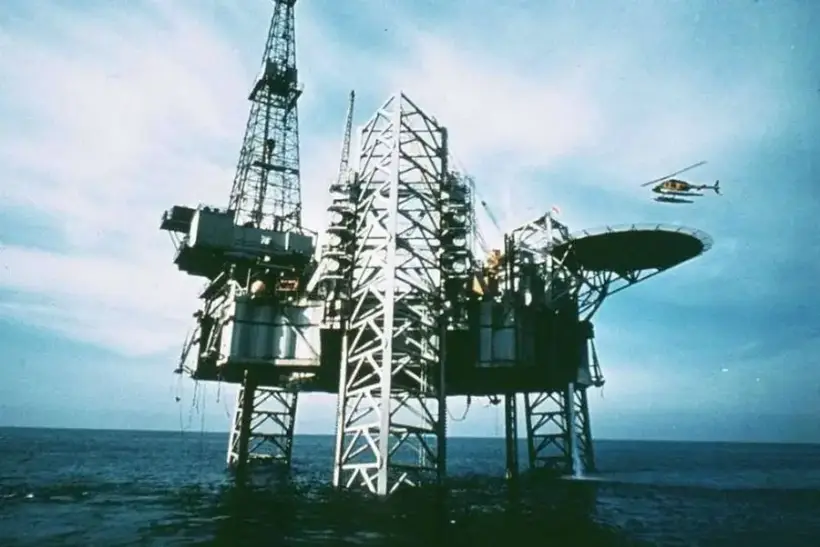
The crisis around the Strait of Hormuz is reshaping the global economy
The escalation of conflict in the Middle East has begun to directly impact the global oil industry. Major Gulf players — Saudi Arabia and Kuwait — have announced forced production cuts, and Iraq is also introducing restrictions. Previously, such measures were taken as part of coordinated OPEC+ decisions; the current reductions are the result of an acute logistical crisis caused by the blockade of the Strait of Hormuz.
Kuwait: Force Majeure on Shipments
Kuwait was among the first producers in the region to announce production cuts, according to Reuters. The state-owned Kuwait Petroleum Corporation began reducing oil output at selected fields, describing it as a “strictly preventive measure” prompted by rising regional tensions and attacks on local infrastructure. At the same time, the company declared force majeure on exports, a step typically taken when contract fulfillment becomes impossible due to circumstances beyond the supplier’s control.
The main reason was a sharp reduction in shipping through the Strait of Hormuz. Threats to tanker safety forced some shipping companies to temporarily limit operations in the region. This caused export disruptions and forced Kuwait to cut production, with storage tanks becoming full. If the situation persists, further tightening of production may follow.
Before the crisis, Kuwait produced about 2.6 million barrels of oil per day, remaining one of the largest producers within OPEC.
Saudi Arabia: Storage Facilities Filling Up
The world’s largest oil exporter, Saudi Arabia, could not avoid the effects of the crisis either. Saudi Aramco has begun reducing output at two oil fields due to rapidly filling storage facilities and shipping disruptions through the Strait of Hormuz.
The Ju’aymah terminal on the country’s east coast was already experiencing capacity issues as of March 1, according to Kayrros co-founder and chief analyst Antoine Halff. A similar situation is observed at the largest oil hub, Ras Tanura, where four of the six main storage tanks are already full.
Despite a developed infrastructure and alternative routes, including pipelines to Red Sea ports, Saudi Arabia cannot fully compensate for the restrictions on exports through the Gulf.
Iraq: Limited Storage Capacity
Similar risks are emerging for other regional exporters. Iraq has already begun cutting production at its largest fields due to the Strait of Hormuz closure. The country’s storage capacity is extremely limited: free space at the Basrah terminal is estimated at less than two days of export.
Analysts note that Iraq’s low storage infrastructure is a structural vulnerability. In case of a prolonged blockade, this could trigger a chain reaction, with similar issues arising for other regional producers.
Overall, onshore storage capacity across the five major Arab Gulf producers is estimated at about 350 million barrels, but actual operational capacity is significantly lower. According to Kayrros, tanks rarely operate above 80% of nominal capacity.
As of early March, observed crude stockpiles in these countries were about 175 million barrels, indicating that available storage space is quickly diminishing in case of further export disruptions.
Strait of Hormuz: A Vulnerable Node for Global Energy
The Strait of Hormuz is one of the most strategically important routes for global energy trade. This narrow sea corridor connects the Persian Gulf with the Indian Ocean and is used for exporting oil from Saudi Arabia, Kuwait, Iraq, the UAE, and other regional countries.
Around one-fifth of global oil exports pass through the strait, so any threats to shipping security in the area quickly disrupt the energy market.
The situation in March 2026 confirms once again how dependent the global oil market is on the stability of this key transport route.
Market Reaction and Rising Prices
Production cuts and export disruptions have already affected price dynamics. Amid the conflict escalation, oil prices surpassed $100 per barrel, reaching one of the highest levels in recent years.
Investors are reacting not only to the actual reduction in output but also to risks of further supply interruptions. Even limited export cuts from Gulf countries can significantly impact the global market, as the region remains one of the key oil suppliers.
G7 countries are discussing the possible use of strategic petroleum reserves to stabilize the market and prevent further price increases.
Potential Consequences for Global Energy
Analysts at International Investment note that production cuts could spread to other regional countries. Export infrastructure in Gulf states is closely linked, so disruptions at a single transport node can affect the entire regional market.
Beyond short-term price fluctuations, the current crisis highlights the need to diversify oil export routes. This involves developing pipelines and alternative ports to supply oil bypassing the Strait of Hormuz.
However, such projects require significant investment and time. In the near term, the global energy system will likely remain sensitive to geopolitical risks in the Persian Gulf region.