







 Vietnam Mortgage Surge Pushes Homes Out of Reach
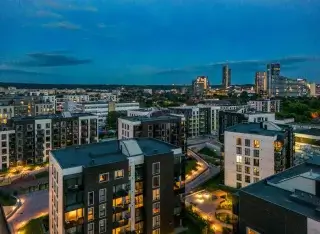 Lithuanian Apartment Prices Accelerate Across Major Cities
 London Flats Lose Value Ahead of Leasehold Reform
 Construction of the Batumi–Sarpi Highway Begins in Georgia
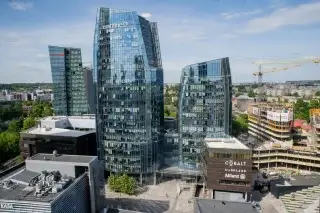 Baltic Property Investment Accelerates in 2026
 Hong Kong and Singapore Renew Their Expat Rivalry
Sweden Property Market Enters Recovery Phase

Sweden’s commercial property market showed clear signs of stabilisation in Q4 2025, marking a shift toward recovery after the volatile period of 2022–2024. According to Cushman & Wakefield’s MarketBeat Sweden report, activity across logistics, residential, retail and office sectors reflects cautious but strengthening fundamentals.
Economic Recovery and Investment Growth in Sweden
Sweden entered a recovery phase in late 2025, supported by domestic demand and improving business confidence. Transaction volume reached SEK 61.5 billion in Q4, bringing the full-year total to SEK 171.2 billion, up 26% year on year.
Residential assets accounted for 22% of Q4 investment activity, followed by industrial and logistics properties at 15%. Prime office yields compressed to 3.85%, while logistics at 4.85%, residential at 3.85% and shopping centre yields at 4.45% remained stable.
Logistics: Supply Moderation and Vacancy Trends
Logistics completions totalled 137,550 sq m in Q4, primarily in regional cities. Full-year supply remained below 0.5 million sq m following the substantial development pipeline of 2022–2024.
Vacancy fell in regional cities to 9.5%, while remaining stable in Stockholm at 11.5%, Gothenburg at 6.5% and Öresund at 5.5%. Prime yields held firm at 4.85% in Stockholm and Gothenburg, 5.20% in Öresund and 5.40% in regional cities. Rents remained unchanged across all major markets.
Residential: Investment Growth and Early Construction Recovery
Residential investment reached SEK 13.4 billion in Q4, representing 22% of quarterly transaction volume. For the full year, residential investment rose 26% to SEK 49 billion.
Prime yields remained stable at 3.85% in Stockholm, 4.45% in Gothenburg and 4.60% in Malmö, while regulated rents were unchanged. Construction starts showed early signs of recovery, increasing by 10% year on year. The presumption-rent reforms scheduled for 2026 are expected to support new residential development.
Retail: Sales Growth and Yield Compression
Although consumer sentiment remained subdued, trade confidence strengthened on improving sales expectations. High street rents increased, while shopping centre and retail park rents held steady.
Retail investment reached SEK 4.9 billion in Q4 and SEK 15.3 billion for 2025, up 40% year on year. Prime yields compressed to 3.95% for high street assets and 5.80% for retail parks, while shopping centre yields remained stable at 4.45%. Retail sales rose strongly year on year, driven by an 8.5% increase in durable goods.
Office Market: Lower Completions and Diverging Vacancy
Office completions in H2 2025 totalled 25,000 sq m, down 71% year on year, bringing total 2025 deliveries to 124,000 sq m. CBD vacancy in Stockholm fell to 7.5%, remained at 15.0% in Gothenburg and increased to 10.0% in Malmö, while overall vacancy rose across metropolitan areas.
Prime CBD rents remained stable in Stockholm and Malmö, while Gothenburg increased to SEK 4,500 per sq m. CBD yields compressed to 3.85%, while Gothenburg and Malmö held steady at 4.50% and 4.85% respectively.
In Stockholm specifically, no completions were recorded in H2, leaving full-year deliveries at 74,000 sq m. Overall vacancy increased to 18.5%, driven by decentralised submarkets at 23.0%, while CBD vacancy declined and City Centre levels remained stable. Prime rents held at SEK 9,800 in the CBD, SEK 6,200 in City Centre and SEK 4,000 in decentralised areas.
As reported by experts at International Investment, Sweden’s commercial property market in 2025 reflects a transition from correction to stabilisation, with investment growth and prime yield compression signalling renewed investor confidence across core segments.