







 Vietnam Mortgage Surge Pushes Homes Out of Reach
 Lithuanian Apartment Prices Accelerate Across Major Cities
 London Flats Lose Value Ahead of Leasehold Reform
 Construction of the Batumi–Sarpi Highway Begins in Georgia
 Baltic Property Investment Accelerates in 2026
 Hong Kong and Singapore Renew Their Expat Rivalry
Fuel Panic in India: Price Surge and Queues at Petrol Stations
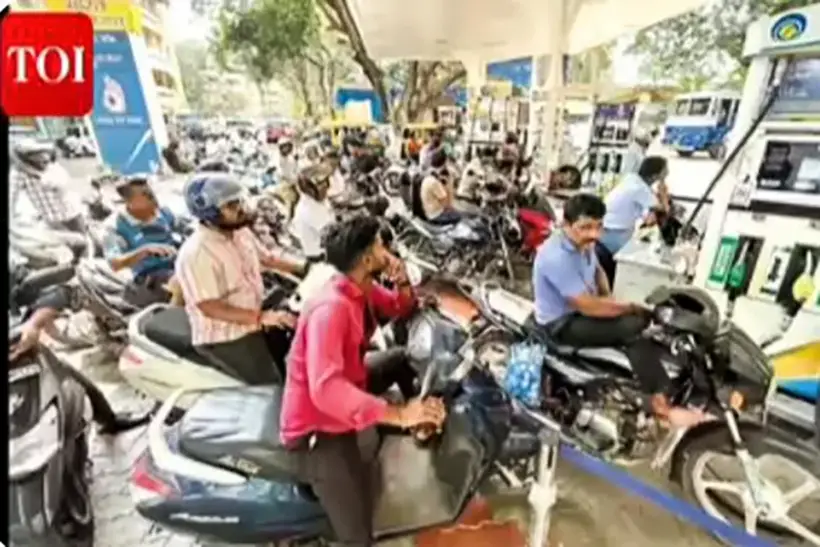
Panic buying in India has triggered a sharp surge in demand. In some petrol stations, daily sales of petrol and diesel exceeded regular levels by 2–2.5 times. The cause was rumors of possible supply disruptions due to the escalation of the conflict in West Asia, reports Times of India.
Panic Petrol Purchases in Goa
The petrol station near Caranzalem Beach in Goa typically serves around 200 motorists per day, but during the first half of March 25, the number of visitors reached 400. This resulted in long queues, with vehicles lining up outside the station premises. Many drivers filled their tanks and stocked fuel in jerry cans, including for use in home generators.
A station employee reported that by 6:00 PM fuel had run out, leaving some drivers unable to refuel. He added that prices at this station remain at 96 INR ($1.04) per litre for petrol and 88 INR ($0.95) for diesel.
Meanwhile, the cost of premium petrol in Goa has risen to nearly 105 INR ($1.14) per litre. This fuel is sold under the Speed, Power, and XP95 brands and previously cost around 103 INR ($1.11) per litre. Due to the sharp rise in crude oil prices, Indian Oil, Bharat Petroleum Corporation Ltd (BPCL), and Hindustan Petroleum Corporation Ltd (HPCL) increased tariffs by 2.09–2.35 INR ($0.023–0.025) per litre. Final prices vary slightly depending on the fuel retailer and station location in Goa.
Fuel Shortages in Other Regions of India
Panic buying is also observed in other parts of the country. Long queues form for petrol and gas, and some stations have had to display “No Fuel” signs.
Hyderabad and Maharashtra
In Hyderabad, nearly 40% of petrol stations ran out of fuel. In Telangana, Civil Supplies Minister N. Uttam Kumar Reddy noted that the state has enough petrol and diesel for at least three months, but rapid sales combined with slow depot deliveries caused temporary shortages.
In Maharashtra, the Vidarbha region consumed more than twice its usual daily quota of petrol and diesel, leading to mass depletion of fuel at stations. Industry representatives explained that credit system disruptions create payment issues and delay timely deliveries.
LPG Shortages in Chennai
In Chennai, after stockpiling purchases, liquefied petroleum gas (LPG) shortages are already being felt, directly affecting small businesses. Hundreds of small cafés and tea stalls are facing supply disruptions, forcing owners to temporarily close or raise prices on basic items such as tea, coffee, and snacks.
Prices for commercial LPG cylinders on the black market have risen from 3,000 to 7,000 INR ($32.46–75.74), making them almost unaffordable for small enterprises. In areas such as Nungambakkam, Vadapalani, T. Nagar, Velachery, Pallavaram, and Tambaram, many establishments have had to limit menus or reduce production volumes.
Strengthening Fuel Market Oversight in India
Petrol and Diesel
The Government of India has stated that the domestic fuel market is fully supplied: all petrol stations are operating normally, and petrol and diesel stocks are sufficient. Officials explained that isolated cases of panic buying were caused by the spread of misinformation and that queues were temporary. Official reports also note that refineries are operating at high capacity with adequate crude inventories, domestic LPG production has increased, and excise duties on petrol and diesel have been reduced by 10 INR per litre. Additionally, export duties on diesel and aviation turbine fuel (ATF) have been imposed to prioritize domestic consumption.
Gas Supply
The gas sector remains stable, according to authorities: 100% of supplies are directed to domestic (PNG) and transport (CNG) sectors, while industry receives about 80% of average consumption. Supplies for fertilizer production are maintained at 70–75% of six-month averages, with additional LNG and RLNG cargoes being sourced. Over 290,000 new gas connections were added in March.
LPG deliveries are running smoothly: more than 5.5 million cylinder refills occur daily, with commercial distribution increased to 70% of pre-crisis levels. Furthermore, two LPG carriers carrying around 94,000 tonnes are en route to India, and port infrastructure is functioning without congestion.
Impact on Economy, Tourism, and Infrastructure
Analysts at International Investment note that rising fuel demand and LPG supply disruptions significantly affect regional economies, impacting transportation, logistics, hospitality, and foodservice sectors. Higher costs increase expenses for transport and goods, which in turn affect pricing for consumers and businesses.
The tourism sector is particularly sensitive to limited petrol availability: disruptions complicate travel to attractions, the operation of tours, and recreational activities, reducing revenue for resort regions. Even short-term interruptions can affect the reputation of tourist destinations and visitor flows.