







 Vietnam Mortgage Surge Pushes Homes Out of Reach
 Lithuanian Apartment Prices Accelerate Across Major Cities
 London Flats Lose Value Ahead of Leasehold Reform
 Construction of the Batumi–Sarpi Highway Begins in Georgia
 Baltic Property Investment Accelerates in 2026
 Hong Kong and Singapore Renew Their Expat Rivalry
Oil Tanker Hit Off Dubai Coast as Iran Tensions Escalate
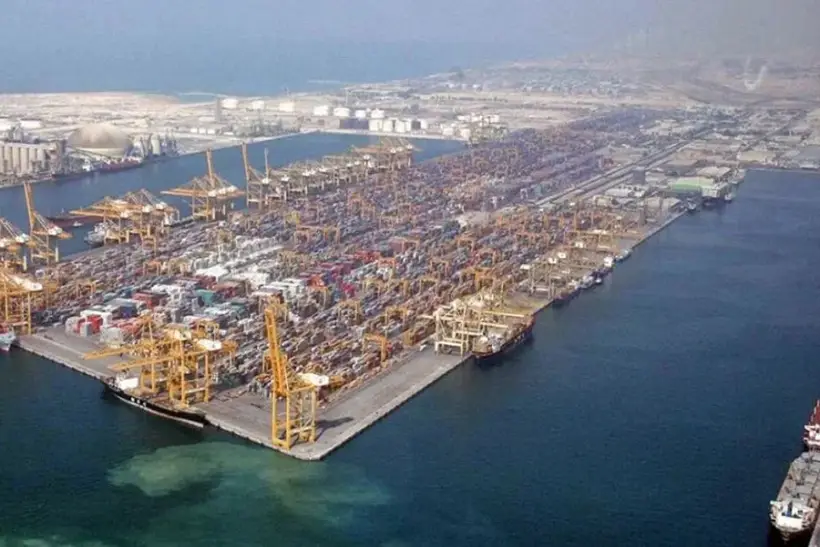
Порт Дубая
A giant Kuwaiti oil tanker carrying more than $200 million worth of crude caught fire near Dubai, Reuters reports. The attack took place on the morning of March 31, 2026, following a warning by U.S. President Donald Trump that Washington would destroy Iran’s energy infrastructure if Tehran failed to reopen the Strait of Hormuz by April 6.
Attack Timeline: Fire Aboard Al-Salmi
In the early hours of March 31, the fully loaded Kuwaiti tanker Al-Salmi was attacked off the coast of Dubai. The vessel, capable of carrying around two million barrels of oil worth approximately $200 million, sustained structural damage, after which a fire broke out on board. Kuwait Petroleum Corp confirmed the incident.
The fire was quickly brought under control. According to KUNA, the tanker was fully loaded at the time of the attack, raising concerns about a potential oil spill in coastal waters. However, official reports say no leakage has been detected and the crew was unharmed. This was not an isolated incident—the attack on Al-Salmi is part of a broader series of attacks on commercial vessels using cruise missiles and maritime drones.
Market Reaction: Historic Price Surge
The war in the Middle East and attacks on civilian shipping are putting pressure on global markets. On Monday (March 30), the average retail gasoline price in the United States exceeded $4 per gallon for the first time in more than three years, according to GasBuddy. Amid tightening global supplies, benchmark Brent crude surged by 56% this month—its largest increase on record—exceeding $113 per barrel.
Supply constraints and fears of disruptions in transit through the Strait of Hormuz—through which about one-fifth of global oil and liquefied natural gas exports pass—have become a key driver of market volatility. The situation is also turning into a serious political challenge for Donald Trump, who had promised voters cheaper fuel and energy dominance. With U.S. midterm elections scheduled for November, rising household fuel costs are directly impacting Republican approval ratings.
Negotiations or Escalation?
President Donald Trump warned that Washington is ready to “eliminate” Iran’s energy infrastructure, including oil fields and facilities on Khark Island, if Tehran does not reopen the Strait of Hormuz by April 6. The U.S. has indicated it is in contact with a more “reasonable regime” in an effort to end the conflict. Iran, for its part, said it had received proposals from the United States via intermediaries—including after consultations involving the foreign ministers of Pakistan, Egypt, Saudi Arabia, and Turkey—but described them as “unrealistic, illogical, and excessive.”
At the same time, the U.S. is expanding its military presence in the region. Thousands of troops from the elite 82nd Airborne Division have been deployed to the Middle East, broadening the administration’s strategic options, including the possibility of a ground operation. The White House is seeking an additional $200 billion in war funding, while Trump is considering a plan under which Arab monarchies would bear the costs. Both proposals face strong opposition in Congress.
Conclusion
Analysts at International Investment note that the conflict in the Middle East has moved beyond a localized confrontation. Within a month, hostilities have spread across much of the region, affecting key transport and energy hubs. Explosions and attacks have been reported in Israel, Iran, the UAE, Saudi Arabia, Kuwait, and Lebanon, while incidents such as the interception of an Iranian missile over Turkish territory highlight the risk of further geographic escalation.
For the global economy, the main threat is not just the current oil price level—above $113 per barrel—but the high volatility and uncertainty surrounding the Strait of Hormuz. About one-fifth of global oil and LNG supplies pass through this route, and any blockade could trigger a price spike to $150–200 per barrel and cause severe disruptions to global logistics.
Gulf countries, long perceived as relatively safe destinations for investment, business, and tourism, are now facing a reassessment of that status. Rising security risks and instability are already influencing investor and traveler behavior, redirecting flows toward more predictable jurisdictions.