







 Vietnam Mortgage Surge Pushes Homes Out of Reach
 Lithuanian Apartment Prices Accelerate Across Major Cities
 London Flats Lose Value Ahead of Leasehold Reform
 Construction of the Batumi–Sarpi Highway Begins in Georgia
 Baltic Property Investment Accelerates in 2026
 Hong Kong and Singapore Renew Their Expat Rivalry
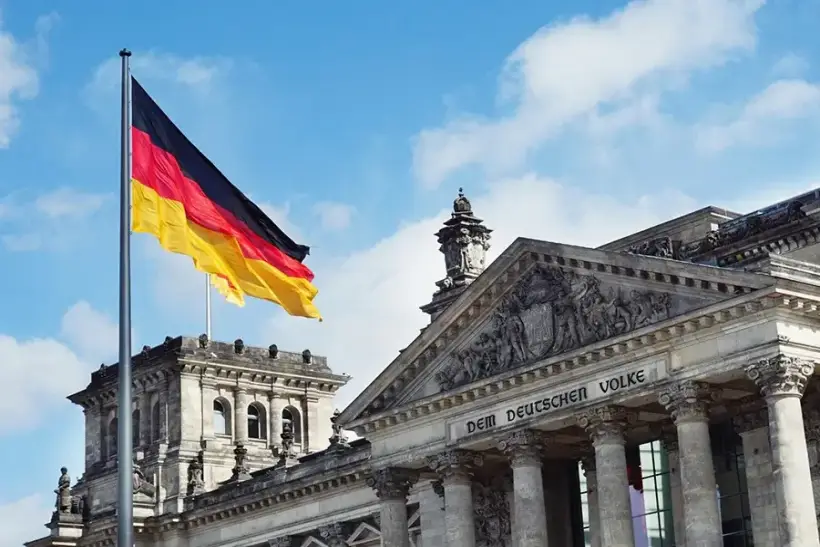
Germany is weighing a windfall tax on oil companies as fuel prices climb, but no final decision has been taken. The debate has intensified after a sharp rise in crude and retail fuel prices, while Berlin is already moving ahead with faster retail-market measures, including limits on how often petrol stations can raise prices. Deutsche Welle reported on the discussion, and the main points are supported by Reuters, Bloomberg, ADAC and the Bundeskartellamt.
Why the windfall tax debate has returned in Germany
The immediate trigger was a new energy shock across Europe. AP reported that euro-area inflation accelerated to 2.5% in March, with energy costs playing a major role after the escalation around Iran and disruptions linked to Middle East supply routes. Against that backdrop, the German government began looking for ways to cushion households and transport-heavy sectors without immediately resorting to broad and expensive subsidies.
Finance Minister Lars Klingbeil has asked officials to examine additional consumer-relief measures, including a windfall tax on oil companies, Reuters reported. Bloomberg said the ministry was studying an excess-profit levy that would capture part of the earnings generated by crisis-driven oil price gains and redirect the proceeds to consumer support. One option under discussion was to use the revenue to raise commuter allowances for workers facing higher transport costs.
How sharply fuel prices have risen in Germany
The increase in fuel prices has been severe enough to stand out in the data. ADAC said average diesel prices in March 2026 reached €2.164 per litre, the highest monthly average ever recorded by the motoring group. Average Super E10 prices came in at €2.022 per litre. ADAC noted that the previous diesel record had been set in March 2022, shortly after Russia’s full-scale invasion of Ukraine.
Other market indicators based on the European Commission’s oil bulletin also showed German fuel prices near extreme levels by the end of March, with petrol at about €2.13 per litre and diesel at about €2.29 per litre. While daily and monthly averages differ, the broader pattern is the same: fuel became markedly more expensive in Germany in early 2026 and moved close to historic highs.
What Berlin is already prepared to implement
Unlike the windfall tax, which remains under political review, Germany’s retail-market intervention is much more concrete. The Bundeskartellamt said it welcomed draft legislation that would allow petrol stations to raise prices only once per day, at noon. Price cuts would remain possible at any time. The authority also said compliance would be monitored automatically through real-time data from the Market Transparency Unit for Fuels once the law takes effect.
Bloomberg reported that violations could be punished with fines of as much as €100,000 and that antitrust oversight would be tightened by shifting the burden of proof onto fuel suppliers. That signals Berlin is first trying to curb sharp retail swings and strengthen enforcement before moving to a tougher tax-based intervention.
Which precedent the government is using
The proposal is not being built from scratch. The European Union already created a temporary excess-profit mechanism during the 2022 energy crisis. Under Council Regulation 2022/1854, taxable profits in the oil, gas, coal and refinery sectors in 2022 and or 2023 were subject to a solidarity contribution if they exceeded the reference profit level by more than 20%. The minimum rate was set at 33%, and the European Commission later confirmed that structure in its review of the measure.
Bloomberg said Germany’s finance ministry is now revisiting a similar design. That is why the current debate is less about inventing a new tax and more about adapting an existing crisis-era European template to another surge in fuel prices.
Why the measure remains politically sensitive
The issue is not only economic but also political. Reuters and Bloomberg both indicated that a windfall tax could face resistance from conservative coalition partners, while some ministers have warned against reacting too quickly to the price spike. That means the tax should still be described as an option under consideration rather than an adopted policy. It is being discussed alongside retail fuel-price controls and other targeted relief tools.
Germany is also part of a wider European debate. AP and Reuters reported that several EU countries have pushed for a renewed bloc-level instrument to capture excess energy profits as oil and gas prices feed back into inflation and household costs. The German discussion is therefore part of a broader argument over how the burden of a renewed energy shock should be divided between companies, governments and consumers.
As International Investment experts note, the more likely near-term outcome is tighter fuel-retail regulation and selective consumer relief, while a full windfall tax in Germany will depend on coalition bargaining and on whether oil and pump prices remain unusually high for several more months.
FAQ
What is Germany’s proposed windfall tax
It is a potential levy on excess profits earned by oil or energy companies during a price shock. In Germany, as of April 6, 2026, it remains under discussion and has not been adopted.
Why is Germany discussing it now
Because petrol and diesel prices rose sharply during the latest energy shock, while inflation in the euro area also picked up.
Has Germany already approved the tax
No. The measure is being reviewed politically and administratively, but it is not law at this stage.
What has the German government already decided on fuel prices
Berlin is moving ahead with rules that would allow petrol stations to raise prices only once a day and is also strengthening antitrust oversight in the fuel market.
Is there an EU precedent for this kind of measure
Yes. In 2022 the EU introduced a temporary solidarity contribution on surplus profits in the fossil-fuel sector, with a minimum rate of 33% above a defined profit threshold.