












Spain’s housing market to be reshaped with €7 billion plan
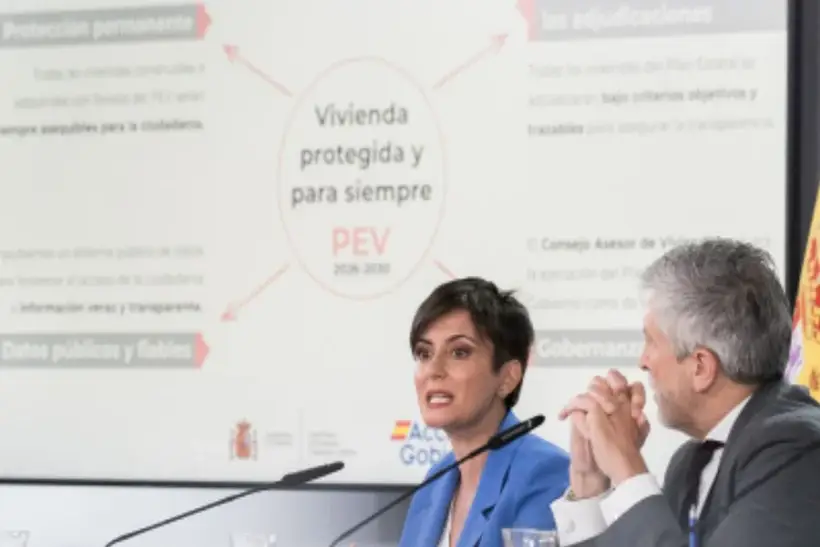
The Spanish government is preparing to approve a housing market transformation plan for 2026–2030 with a budget of €7 billion, El País reports. New regulatory and support rules have been developed, and an expansion of the affordable housing stock is planned. Housing Minister Isabel Rodríguez noted that the project is designed to establish a long-term model for the construction and preservation of social housing.
Protection of social housing in Spain
This is the first plan developed after the approval of the Housing Law. It recognizes the state’s right to intervene in policies under the jurisdiction of autonomous communities. Until now, the ministry had acted as a “cash register” for distributing funds, as Isabel Rodríguez noted, without maintaining long-term control over outcomes.
The government believes that Spain’s housing market issues are mainly linked to the gradual privatization of the existing social housing stock. The key idea of the program is to establish permanent protection for such housing and prevent its later privatization or removal from the regulated segment. Over the past 45 years, around 2.7 million social housing units have been built in the country. Spain could have matched other European countries on this indicator, but a significant part of the stock has gradually fallen outside protection mechanisms, Democrata notes.
Program governance structure
The total funding of the 2026–2030 housing program amounts to €7 billion. Funds are distributed between the central government (60%) and the autonomous communities (40%). Regional participation becomes a mandatory condition for accessing public resources. This structure creates a two-level governance model for the program.
Around 40% of the budget will be allocated to the construction of new housing and the acquisition of social housing assets. Another 30% will go to renovation, focusing on energy efficiency, accessibility, and urban renewal. The remaining 30% is intended for citizen support measures, including assistance programs for renting and purchasing housing, as well as dedicated support for young people.
Authorities emphasize that only initiatives meeting established affordable housing parameters and approved formats will be eligible for funding.
Affordable housing construction in Spain
The plan provides up to €85,000 per unit for the construction of public housing or public–private partnership projects. An additional subsidy of up to €8,500 per apartment is granted when industrial construction methods are used, bringing total support to €93,500 per unit.
Priority is given to housing that will be integrated into a permanently protected rental system. For apartments of around 85 sqm with a garage and storage room, the indicative rent level is set at €900 per month. Sales of newly built housing are allowed only in municipalities with fewer than 10,000 inhabitants, and such properties must retain permanent protection status.
Other subsidized works include:
- land development for construction — €8,000 per unit, provided that at least 40% of future housing is allocated to the protected stock;
- construction in high-demand areas (“strained territories”) — €8,500, increasing total funding to up to €102,000 per unit when combined with industrial methods.
Housing transfer and rental schemes in Spain
Authorities plan to cover up to 70% of the cost for private owners, and up to 85% in high-demand areas. Such housing is intended for subsequent rental at affordable rates. The benchmark is lower than in new construction schemes — €800 per month for a similar 85 sqm unit.
Payments of up to €17,000 are also provided for private owners who transfer housing to public administration for affordable rental. The maximum rent in this case is even lower — €600. In high-demand areas, subsidies may reach €25,000. Renovation of such rental housing can receive up to €12,000 in public support.
Housing renovation in Spain
The program includes support for structural building repairs, accessibility improvements, and energy efficiency upgrades. Funding is distributed as follows:
- structural renovation of buildings — €8,000;
- accessibility improvements — €13,000;
- energy-efficient renovation — €20,500.
For renovations in historic centers or protected buildings, funding of up to €30,000 is available. The same amount can be granted for vacant properties (empty for two years or more), provided they are later rented out for five years. Higher support of €35,000 is available for works in rural areas.
Support measures for buyers and tenants in Spain
The project includes targeted support measures for tenants and homebuyers, depending on location, age, and income level.
Young tenants will receive rental subsidies of up to €300 per month, with autonomous communities able to adjust the amount based on local conditions.
For people under 35 purchasing housing in rural areas, support may reach €15,000. A basic payment of €250 is provided for low-income groups.
Outlook for Spain’s real estate market
The decision to implement the new plan follows several months of negotiations with various public administrations and autonomous communities. A wide range of materials was reviewed starting from September 2025, when the main directions of the program were presented.
Analysts at International Investment note that the reforms effectively confirm Spain’s shift toward a stricter model of housing market regulation, with an emphasis on long-term protection of affordable housing. Authorities aim to increase supply while slowing the contraction of the social housing segment.
The initiative has broad public support, with protests in recent years linked to rising rental and housing purchase prices. These demonstrations have often been directed against tourism flows and foreign investors, which many Spaniards believe contribute to price increases.
In addition, profitability regulations in certain segments of the real estate market are being tightened. In some locations, this reduces rental yields, while in others it effectively limits the ability to generate income from both short-term and long-term rentals.
FAQ: Spain Housing Plan 2026–2030
What is the new Spain housing plan?
It is a government program for 2026–2030 aimed at expanding affordable housing, regulating the rental market, and supporting the construction, purchase, and renovation of real estate.
How much funding is allocated to the program?
The total budget amounts to €7 billion. Funds are distributed between the central government (60%) and the autonomous communities (40%).
What is permanent protection of social housing?
It is a rule under which housing built with public participation retains its affordable status and cannot be transferred to the free market or privatized.
What support measures are provided for housing construction?
The government allocates up to €85,000 per housing unit, and up to €93,500 when industrial construction methods are used. In some cases, support may reach €102,000.
Are there any restrictions on selling new housing?
Sales are allowed only in small municipalities (fewer than 10,000 residents), and the housing must retain permanent protection status.
What support is available for tenants?
Young tenants may receive up to €300 per month. A basic payment of €250 is also provided for low-income citizens.
How does the state regulate the rental market?
The program introduces rental subsidies and cost-control mechanisms within affordable housing schemes, as well as incentives to transfer private housing into the rental stock.
What is provided for housing renovation?
Subsidies include up to €8,000 for structural repairs, up to €13,000 for accessibility improvements, and up to €20,500 for energy-efficient renovation. In some cases, support may reach €35,000.
How might the real estate market change?
Stronger state regulation is expected, along with an increase in the share of affordable housing and stricter rules for properties built with public funding.