







 Turkey Is Losing Its Cheap-Holiday Advantage
 Development Is Rewriting Southeast Asia’s Historic Districts
 How Ukraine’s New-Build Housing Market Has Changed Over Four Years
 European Prime Rents Rise as Property Yields Turn Higher
 The Most Expensive Airlines in Europe in 2026
 Housing Prices in Italy Reach a Two-Year High
Hormuz crisis increases risks for the Malacca Strait and global trade
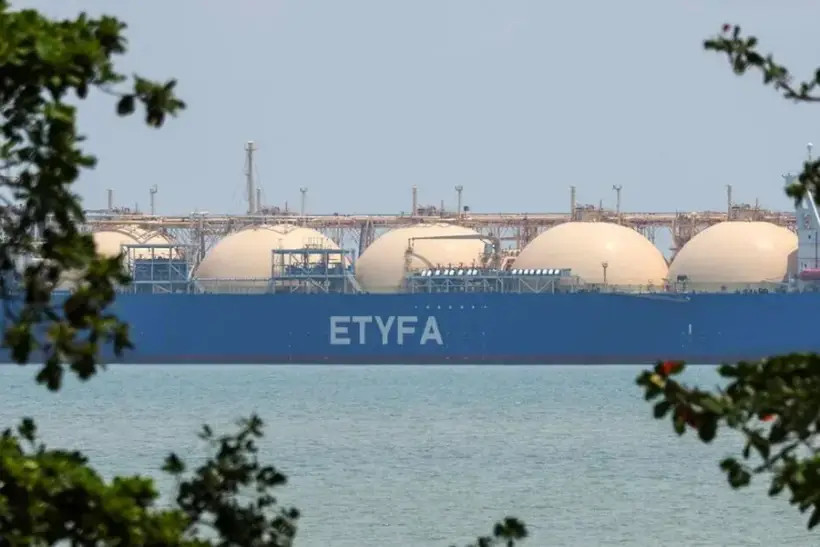
The crisis in the Strait of Hormuz has drawn renewed attention to other key maritime routes in global trade. In particular, concerns are growing over the vulnerability of the Malacca Strait, through which more than one-fifth of global maritime trade flows and a significant share of energy supplies to East Asia, Bloomberg reports. Experts warn that disruptions in such chokepoints could quickly affect the entire international logistics system.
Importance of the Malacca Strait for global trade
The Malacca Strait connects the Indian Ocean with the South China Sea and forms the shortest sea route between the Middle East and East Asia. It runs between the Malay Peninsula and the island of Sumatra, with its southern exit near Singapore.
More than one-fifth of global maritime trade passes through this route. Around 94,300 vessels used the strait in 2024, rising to more than 102,500 in 2025, highlighting both its scale and growing pressure. In the first half of 2025, about 23.2 million barrels of oil per day were transported through the Malacca Strait, according to the U.S. Energy Information Administration. This exceeds the Strait of Hormuz over the same period, which handled about 20.9 million barrels.
A significant share of cargo also includes liquefied natural gas, coal, raw materials, and industrial goods, supporting energy supply and production in major East Asian economies, including China, Japan, and South Korea.
International status and governance of the Malacca Strait
Indonesia, Malaysia, and Singapore border the Malacca Strait. They exercise sovereignty over their territorial waters under the UN Convention on the Law of the Sea, up to 12 nautical miles.
Since 1971, the three countries have operated under a tripartite coordination mechanism covering maritime safety and risk management. At the same time, the strait retains its status as an international waterway, ensuring the right of transit passage without interruption or obstruction.
Regional states are not allowed to restrict transit or impose charges for passage itself, except for specific services. Thailand is also involved in coordination efforts, including anti-piracy operations and joint patrols. In Thailand, concerns over risks have revived discussion of a land bridge project of highways and railways across the southern peninsula. This would bypass the strait and shorten transit times, but it is considered highly complex both logistically and financially.
Vulnerability of a key chokepoint
At certain points, the Malacca Strait narrows to just 2.7 kilometers, making it one of the most sensitive maritime corridors in the world. High traffic density increases the risk of navigational incidents, including collisions and groundings, especially in the busiest areas.
Even localized disruptions can slow vessel traffic and raise shipping costs. Piracy and armed robbery remain additional risks. In 2025, 108 such incidents were recorded in the Malacca and Singapore straits.
Alternative routes exist but are less efficient. The Sunda Strait is limited by shallow waters and volcanic activity, while routes via Lombok and Makassar significantly increase distance and costs. As a result, any restrictions in the Malacca Strait quickly affect global supply chains.
China and the “Malacca Dilemma”
China is among the countries most dependent on the stability of the Malacca Strait. It is the world’s largest oil importer, with a significant share of imports transported by sea via this route. This dependence has shaped Beijing’s concept of the “Malacca Dilemma” — the risk of disruption or blockage of a key supply route in the event of geopolitical conflict. The term emerged in the early 2000s and remains widely used in expert discussions.
In response, Beijing is developing alternative supply routes, including pipelines from Central Asia and Russia, as well as infrastructure projects under the Belt and Road Initiative, including overland routes through Myanmar. However, maritime deliveries remain the backbone of China’s energy supply. Additional challenges are created by geopolitical rivalry between China and the United States in the region and tensions in the South China Sea.
Political discussions and regional response
The escalation in the Strait of Hormuz has triggered discussions about potential risks in Southeast Asia as well. Indonesian Finance Minister Purbaya Yudhi Sadewa stated on April 22 that transit fees for ships passing through the strategically important Malacca Strait should be considered. The proposal was withdrawn within 24 hours but raised concerns among market participants.
Singapore and Malaysia have publicly reaffirmed their commitment to free and uninterrupted navigation. Both countries stressed that maintaining an open passage through the strait remains a priority for regional stability and global trade.
Indonesian authorities are also considering a U.S. proposal to expand access for military aircraft to the country’s airspace. Opinions remain divided, with concerns raised about national sovereignty.
The “shadow fleet” carrying Iranian oil
Competition for influence over maritime routes in the Indo-Pacific region is intensifying, and Southeast Asian waterways are increasingly viewed as part of a broader global trade and security system.
Additional tension comes from the use of regional waters for operations of the so-called “shadow fleet,” involved in transporting Iranian oil in circumvention of sanctions. Some of these supplies ultimately reach Asian markets, including China.
In April, Chairman of the U.S. Joint Chiefs of Staff Dan Caine stated that American forces would “actively pursue” vessels supporting Iran, including oil carriers.
Conclusion
Analysts at International Investment note that the Malacca Strait remains one of the key components of the global logistics system, through which energy and goods flow between the Middle East and East Asia. Its importance has increased following the conflict in the Middle East and disruptions in the Strait of Hormuz.
The war has further highlighted vulnerabilities in maritime routes. Questions of their security are increasingly moving beyond regional discussions and becoming part of global economic stability, directly affecting supply chains, energy markets, and the balance of world trade.