







 Turkey Is Losing Its Cheap-Holiday Advantage
 Development Is Rewriting Southeast Asia’s Historic Districts
 How Ukraine’s New-Build Housing Market Has Changed Over Four Years
 European Prime Rents Rise as Property Yields Turn Higher
 The Most Expensive Airlines in Europe in 2026
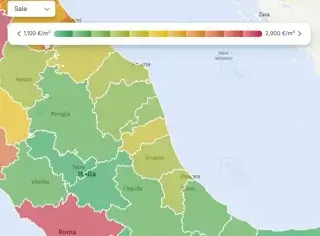 Housing Prices in Italy Reach a Two-Year High
Hungary Holds Rate After Forint Rally

Hungary entered late April with a stronger currency, lower political risk pricing and a central bank still unwilling to rush into monetary easing. According to Bloomberg, the National Bank of Hungary is expected to keep its benchmark interest rate unchanged despite the post-election rally in the forint and investor hopes that a new political cycle could improve relations with the European Union.
At its latest published meeting, the Monetary Council kept the base rate at 6.25%, the overnight deposit rate at 5.25% and the overnight lending rate at 7.25%. The central bank said it would continue to ensure positive real interest rates, meaning rates above inflation, to reach the inflation target sustainably.
The forint rally reflects reform hopes
The forint strengthened sharply after the parliamentary election as investors priced in lower political uncertainty and the possibility of renewed foreign capital inflows. Euronews reported that EUR/HUF fell to 366.64, the Hungarian currency’s strongest level against the euro since April 2022.
A stronger currency matters for inflation because it lowers the local-currency cost of imports, including fuel, food and industrial goods. But that alone is not enough for the central bank to ease quickly. Hungary remains exposed to energy prices, fiscal policy and investor appetite for Central European emerging-market assets.
Election result reshapes market pricing
Politics has become central to Hungary’s market outlook. The Guardian reported that the opposition Tisza party, led by Péter Magyar, was projected to win 138 of 199 parliamentary seats with 98.74% of votes counted, ending Viktor Orbán’s 16-year rule.
For investors, the result is not just a change of government. It raises the prospect of a reset with Brussels. Some European Union funds for Hungary had been frozen over rule-of-law disputes. If the new government accelerates negotiations, EU financing could support the budget, external balances and confidence in the forint.
Inflation still limits rate cuts
Despite the currency rally, the National Bank of Hungary is not signalling an aggressive easing cycle. In February, it cut the base rate by 25 basis points to 6.25% after annual inflation slowed to 2.1%, below the 3% target. Bloomberg noted at the time that it was the first cut in almost 18 months, but the move came with cautious language focused on protecting currency stability.
The risk is that cutting too quickly could reduce the appeal of forint assets. Hungary remains sensitive to external financing conditions and imported energy costs, so the current pause looks less like a refusal to ease and more like an attempt to keep expectations anchored.
Why the rate matters for investors
The base rate is the key price of money in the economy. It affects bond yields, bank loans, deposits, mortgages and the appeal of the national currency. A relatively high rate combined with a stable currency can attract carry-trade investors, who borrow in lower-yielding currencies and buy higher-yielding assets.
That mechanism has been important for Hungary. Bloomberg previously reported that the forint had been popular with carry-trade investors and that expectations of unlocked EU funds after the election supported bullish positioning.
Markets wait for policy delivery
Hungary’s next phase will depend on government formation, negotiations with the European Union and the durability of lower inflation. If the forint holds its gains and inflation remains near target, the central bank may have room for cautious rate cuts later in 2026.
But higher gas and oil prices, delays in EU funding or renewed fiscal pressure could change the path. That is why the central bank is likely to hold rates while markets reassess Hungary’s political risk after the election.
As reported by International Investment experts, Hungary’s case shows that a currency rally alone is not enough to justify rapid rate cuts. For long-term investors, the core issue is no longer one central-bank meeting, but whether the new government can turn its political mandate into institutional reform, access to EU funding and a durable decline in Hungary’s risk premium.
FAQ in English
Why is Hungary’s central bank not cutting rates after the forint rally?
Because the bank is watching inflation risks, energy prices, fiscal policy and the durability of capital inflows, not only the exchange rate.
What is the base rate?
The base rate is the central bank’s key interest rate. It influences borrowing costs, deposit yields, bond markets and demand for the national currency.
Why did the forint strengthen after the election?
Investors expect lower political uncertainty, better relations with the European Union and the possible release of EU funds.
What matters next for Hungary’s economy?
The main factors are talks with the European Union, inflation, fiscal policy and the new government’s ability to restore investor confidence.