







 Turkey Is Losing Its Cheap-Holiday Advantage
 Development Is Rewriting Southeast Asia’s Historic Districts
 How Ukraine’s New-Build Housing Market Has Changed Over Four Years
 European Prime Rents Rise as Property Yields Turn Higher
 The Most Expensive Airlines in Europe in 2026
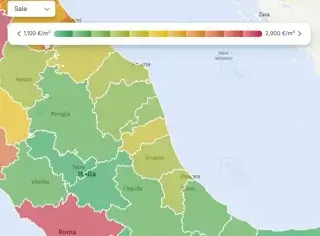 Housing Prices in Italy Reach a Two-Year High
Netherlands Faces Backlash Over Wealth Tax Plan

The Dutch government is moving forward with a major overhaul of its wealth taxation system, triggering strong opposition from investors, business groups and parts of the political spectrum. The reform aims to shift taxation toward actual returns on assets and could include taxation of unrealized gains, marking one of Europe’s most ambitious fiscal experiments.
Box 3 reform shifts taxation toward real returns
At the core of the reform is the Box 3 system, which governs how personal wealth from savings and investments is taxed. In February 2026, the Dutch lower house approved legislation introducing a new framework based on actual returns, with implementation targeted for 2028.
The reform follows a landmark Supreme Court ruling that found the previous system—based on assumed returns—violated property rights because it taxed income that was never actually earned.
The new model seeks to align taxation with real income flows, including interest, dividends and capital growth.
Unrealized gains tax becomes central controversy
The most contentious element is the potential taxation of unrealized capital gains, meaning increases in asset value that have not yet been converted into cash.
Policy discussions indicate that total effective taxation on asset returns could reach around 36%, depending on the structure adopted.
Critics argue that such a system may force investors to sell assets to meet tax obligations, raising concerns about liquidity and market stability. Analysts describe the Dutch reform as a real-world test of mark-to-market taxation at scale.
Business and political resistance intensifies
The proposal has sparked opposition from business associations and several political parties, which warn that taxing unrealized gains could undermine long-term investment incentives.
Debate is ongoing within parliament, with alternative proposals including a traditional capital gains tax applied only upon sale of assets.
At the same time, broader international experience adds to the controversy. Many advanced economies have moved away from wealth taxes due to administrative complexity and the risk of capital flight.
Potential impact on investment environment
The Netherlands has long been seen as a stable and investor-friendly jurisdiction, but the proposed changes may alter that perception.
A shift to taxation based on actual and potentially unrealized returns introduces greater volatility in tax liabilities and increases reliance on asset valuation.
Legal and political uncertainty remains high, as final legislation is still under discussion and subject to amendment before implementation.
According to experts at International Investment, the Dutch reform represents a turning point in European tax policy, combining legal correction with experimental fiscal design. The critical takeaway is that while the system aims to improve fairness, it risks undermining predictability and could accelerate capital reallocation across jurisdictions.
FAQ
What is Box 3 in the Netherlands?
It is the part of income tax that applies to savings and investments.
Why was the system changed?
The previous model taxed assumed returns and was ruled unconstitutional.
What are unrealized gains?
They are increases in asset value that have not yet been sold.
When will the new system start?
The reform is expected to take effect in 2028.
Why is there opposition?
Concerns include liquidity risks, higher tax burdens and uncertainty.