







 Israel Cuts Rate to 3.25% for Third Meeting
 Russian and Belarusian Owners List More Latvian Property
 Georgian Law Enforcement Busts Scammers Posing as Real Estate Brokers
 World’s Largest Economies in 2026: GDP and Purchasing Power Rankings
 Turkish Airlines Cancel Flights to Moscow
 Escalation in the Middle East: New US and Iranian Strikes
Wall Street Stays in the Middle East
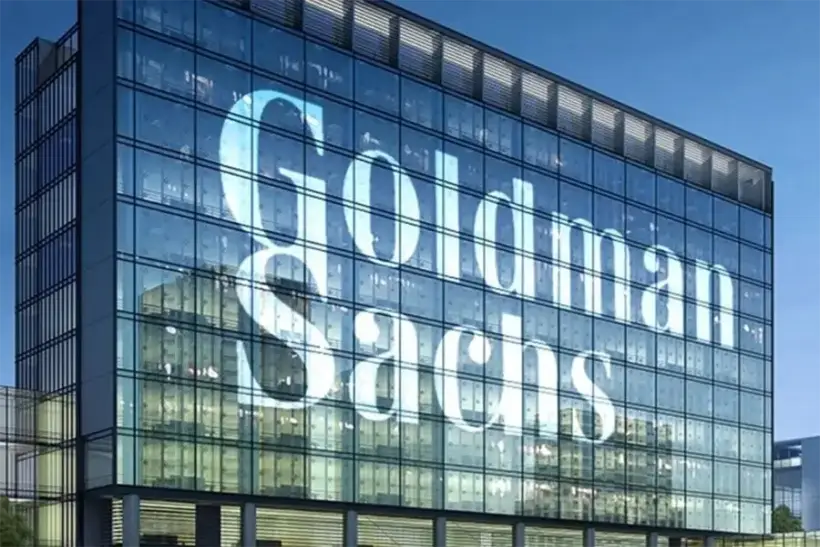
Goldman Sachs and Moelis are signaling business as usual in the Middle East despite the Iran conflict, oil volatility and the risk of delayed transactions. For major investment banks, the region remains not a peripheral risk zone, but a central source of capital, infrastructure projects and strategic deals as energy, technology and sovereign wealth are reshaped.
Bankers remain on the ground
Bloomberg reported that Goldman Sachs international co-heads Anthony Gutman and Kunal Shah see a “huge opportunity” in the Middle East despite the Iran conflict, stressing that clients want the bank on the ground rather than watching remotely. The report said Goldman Sachs has five offices and about 100 staff in the region, and cited recent work involving the Qatar Investment Authority and Saudi Arabia’s Public Investment Fund.
That position reflects a wider shift on Wall Street. The Middle East is no longer seen only as a source of oil revenue. Banks are competing to advise on privatizations, infrastructure projects, energy deals, technology investments and sovereign wealth deployment. Even when some transactions are delayed, the long-term rationale for presence remains intact: the region has deep liquidity, and diversification programs need external advisers, lenders and capital-market arrangers.
Moelis sees a return to normal
Moelis & Company Chief Executive Officer Navid Mahmoodzadegan, according to the same report, described a “return to normal” in the Middle East and said there could be an opportunity to reach a “new Middle East” after the acute phase of the conflict. He said companies in the region are investing heavily in energy, telecommunications and leisure, even though some deals have been delayed in the short term.
For Moelis, that message is supported by its own balance sheet. The firm said it ended the first quarter of 2026 with $353.7 million in cash and liquid investments and no debt. It also declared a regular quarterly dividend of $0.65 per share and continued hiring across capital markets, energy, private capital advisory and London coverage.
M&A has absorbed the shock
Mergers and acquisitions, meaning the purchase, sale or combination of companies and assets, have not stopped. S&P Global estimated global M&A volume at $861.1 billion in the first quarter of 2026, the strongest start to a year since 2021 and 9.7% above the first quarter of 2025. The market remains uneven, with large transformational deals moving faster than small and mid-sized transactions.
Goldman Sachs benefited directly from that resilience. The bank reported first-quarter 2026 net revenues of $17.23 billion and net earnings of $5.63 billion. The figures show that investment banking entered the conflict from a position of strength, supported by recovering fees, active trading and demand for strategic advice.
The Iran conflict reprices risk
The Iran conflict has not disappeared from client calculations, but it has not yet become a complete blocker for corporate decisions. Goldman Sachs Asset Management said equities, fixed income, currencies and commodities all saw increased volatility, with the duration of the conflict becoming the key variable. Its base case remained robust global growth, though it acknowledged that tail risks were rising.
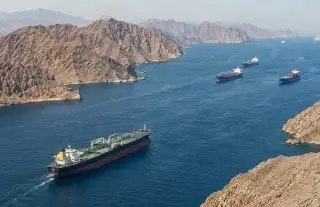
Energy is the main transmission channel. The Middle East remains critical for oil and gas, while the Strait of Hormuz is one of the world’s most important energy transit points. If supply disruptions last, corporate models will need to reassess not only raw-material costs, but also inflation, interest rates, consumer demand and the cost of debt.
Markets look through war, but not past it
Goldman Sachs Research said balanced 60/40 portfolios, made up of 60% equities and 40% bonds, had suffered relatively limited losses since the start of the war, while equities had been more resilient than expected. The bank warned, however, that the main danger is a rate shock turning into a growth shock if expensive energy and higher bond yields begin to tighten credit and investment.
Morgan Stanley also ties market scenarios to the Strait of Hormuz. Its research said oil could average $80–$90 a barrel in 2026 even if tensions ease, while continued constraints could push prices toward $100–$110 a barrel. For investment banks, that creates a two-sided effect: volatility supports trading businesses, but expensive energy and uncertainty can complicate deal financing.
Goldman is betting on large deals
Goldman Sachs CEO David Solomon previously said the Iran conflict had not yet damaged the mergers-and-acquisitions pipeline, with the bank’s backlog close to a four-year high. Business Insider reported that Solomon described large corporate decisions as resilient, even as initial public offerings, meaning first-time share sales on public markets, slowed in March.
That helps explain why bankers continue to travel through the region and meet clients. During geopolitical uncertainty, large companies do not always cancel transactions; they often adjust financing structures, demand stronger guarantees, revisit valuations, add protective clauses and extend closing timelines. For advisers, that can create more work rather than less.
Europe is part of the same story
Goldman Sachs is also linking its plans to Europe’s growth agenda. In the United Kingdom, the government is considering changes to ring-fencing rules that require large banks to separate retail operations from trading and investment-banking units. A more flexible regime could give Goldman Sachs more room to expand lending and assets in a country where it already operates the Marcus retail platform.
The European angle matters for the Middle East strategy. Gulf sovereign wealth funds are active buyers of European assets, while European companies need capital for energy, infrastructure, defense, artificial intelligence and telecommunications. Banks with a presence across London, Riyadh, Doha, Abu Dhabi and New York gain an advantage in cross-border transactions.
The region remains a capital market
For Gulf states, the conflict creates a difficult balance. Energy volatility can support oil and gas revenues, but attacks, logistics disruptions, insurance premiums and expensive financing raise project costs. That matters for diversification programs, where governments are committing hundreds of billions of dollars to tourism, sports, real estate, industry, renewable energy and digital infrastructure.
Investment banks see not only risk, but also fee revenue. The region needs advice on asset sales, debt financing, share offerings, mergers and acquisitions, restructuring and partnerships with global companies. In that context, “business as usual” does not mean safety; it means banks are prepared to monetize uncertainty through advice, trading and financing.
Business as usual is a stress test
The main question for Wall Street is not whether the conflict will influence deals, but when that influence becomes strong enough to change boardroom decisions. For now, major banks point to stable capital deployment, strong client interest and continued strategic projects. But if energy remains expensive, inflation stays elevated and interest-rate cuts are delayed, some transactions may shift from preparation to waiting mode.
For bank clients, that means more expensive insurance, tighter credit terms and a greater role for advisers in pricing political risk. For the banks themselves, it is a chance to strengthen positions in a region where access to state capital, sovereign funds and large corporate clients matters more than short-term market turbulence.
As experts at International Investment report, the comments from Goldman Sachs and Moelis show not calm, but adaptation to chronic geopolitical risk: banks are not leaving the Middle East because capital, state programs and large deals are concentrated there. Investors, however, should not confuse bank presence with market safety. If the conflict drags on and the energy shock begins to pressure consumption, debt costs and inflation, “business as usual” could quickly become an expensive waiting game.
Why are Goldman Sachs and Moelis still active in the Middle East?
They remain active because the region has deep capital pools, active sovereign wealth funds, major infrastructure programs and strong demand for transaction advice. The conflict raises risk but does not remove the long-term investment opportunity.
What does “business as usual” mean for investment banks?
It does not mean there is no risk. It means banks are keeping offices open, meeting clients, advising on deals, arranging capital and working through higher uncertainty.
How does the Iran conflict affect dealmaking?
It can delay some transactions, raise financing costs, increase demand for guarantees and change asset valuations. But large strategic deals continue when companies see long-term benefits.
Why does the Strait of Hormuz matter to banks and investors?
The Strait of Hormuz is central to global energy trade. Any disruption can affect oil prices, inflation, interest rates, borrowing costs and corporate investment decisions.
What are the main risks for the market?
The main risks are a prolonged conflict, high oil prices, persistent inflation, slower rate cuts, weaker consumer demand and delays to deals, especially in highly leveraged sectors.