







 How Ukraine’s New-Build Housing Market Has Changed Over Four Years
 European Prime Rents Rise as Property Yields Turn Higher
 The Most Expensive Airlines in Europe in 2026
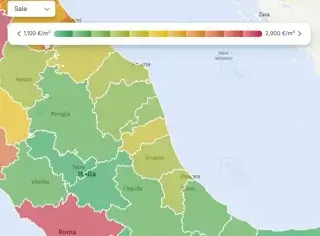 Housing Prices in Italy Reach a Two-Year High
 Travellers Increasingly Choose Cooler Scandinavia
 Serbia Property Sales Decline as Transaction Value Rises
Growing Interest in Offices and Hotels in Australia: Shift in Lending Strategy

In the second half of 2026, Australian commercial real estate lenders continue to show interest in new deals, but are reassessing priorities in favour of more stable market segments. CBRE analysts report noticeable changes in the structure of market participants’ preferences.
The research was conducted in the first half of 2026 among 44 lenders, including banks and other financial institutions.
Lender sentiment in the Australian real estate market
The commercial lending market in Australia remains active despite ongoing global uncertainty and shifts in interest rate expectations. 45% of survey participants said they plan to increase their exposure, while only 5% reported intentions to reduce activity.
Market participants are taking a more selective approach, focusing primarily on assets with stable financial performance and a clear operating model. Andrew McCasker, Managing Director of Debt & Structured Finance at CBRE, noted that the focus is shifting toward assets with sustainable income and proven economic performance rather than speculative projects.
Sector shifts in focus
The most significant decline in interest was recorded in the industrial segment, with a drop exceeding 20%. This marks the lowest level of interest since tracking began in 2023. CBRE attributes this not to weakening fundamentals in the sector, but to a reallocation of investment preferences.
At the same time, interest in stabilised office assets increased by 18%, marking the first rise in three years and signalling a shift in how lenders perceive the office segment. Interest in the hotel sector and student accommodation also strengthened. These areas are seen as more resilient in terms of income stability and operational performance.
The attractiveness of hotels is linked to the recovery of international and tourism flows, as well as limited new supply in certain markets. This increases demand for existing assets with proven occupancy and stable revenue.
Will Edwards, Director of Debt & Structured Finance at CBRE, noted that rising construction costs and constrained supply are influencing capital allocation across sectors. He emphasised that growing interest in stabilised office assets is driven by tighter development conditions and higher construction costs, which limit the viability of new development projects.
Interest rate and credit margin expectations
Expectations regarding interest rates remain mixed. More than 75% of lenders anticipate at least one further rate increase in the current cycle, while 35% expect two or more. This uncertainty is contributing to a more cautious approach to structuring new deals.
Credit margin expectations have also shifted. 34% of respondents expect margins to increase by at least 10 basis points over the next three months, compared with around 5% in the previous survey at the end of 2025. The share of those expecting stable margins has fallen from around 80% to just over 50%.
Constraints and key risks
High construction costs remain the primary pressure point in the market. Additional factors include interest rates and geopolitical uncertainty, all of which reduce predictability and complicate investment decisions.
Another constraint is the declining viability of development projects, which is increasing lenders’ focus on operational assets. This is particularly evident in the hotel sector, where occupancy levels, pricing dynamics, and cash flow stability are key considerations.
The combination of high interest rates, rising construction costs, and economic uncertainty is expected to reduce lending volumes for acquisitions and development over the next year. Banks are also tightening requirements for residential-for-sale projects, placing greater emphasis on pre-sales levels.
Market outlook
Analysts at International Investment note that Australian lenders maintain a cautious but generally positive outlook. The focus is gradually shifting toward assets with sustainable operating models and predictable cash flows.
The hotel sector is among the areas benefiting from this capital reallocation. Stabilised assets with proven financial performance are increasingly seen as a more resilient instrument in an uncertain economic environment.
A similar trend is also observed in other markets, including developing economies. In Georgia, investor interest in the hotel sector is largely driven by limited supply in the premium segment and strong competition for high-quality accommodation assets. In this context, projects with stable occupancy and clear business models remain highly sought after and continue to demonstrate stable returns even during periods of market volatility.