








Russians in Bulgaria own around 11,000 real estate properties
Bulgaria’s real estate market remains popular among foreign buyers, with nearly 11,000 properties in the country linked to citizens of the Russian Federation. In addition, 7,800 companies are associated with capital from the country. Such ownership is concentrated mainly in resort areas, with Nessebar leading among them, according to Sega, citing data from the Registry Agency.
Where Russians buy property in Bulgaria
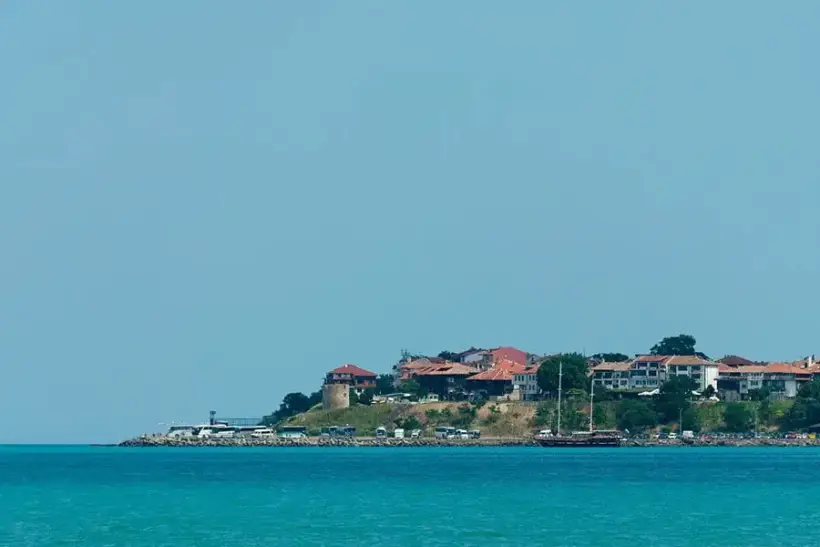
The Bulgarian Property Register contains 14,229 records and 10,375 owners linked to Russian citizens. Among them are 10,954 real estate properties. Almost half of these properties are located in the municipality of Nessebar, which includes one of the country’s largest resorts — Sunny Beach. A total of 5,106 properties owned by Russian citizens are registered there.
A significant number of properties are also located in Varna (934), Burgas (810), and Pomorie (851). Russians also own real estate in Bansko (659), Sozopol (468), Sofia (445), and Byala (232). Smaller numbers were recorded in Balchik (79), Primorsko (138), and Tsarevo (129).
Most registrations appeared after February 24, 2022 — a total of 8,723 records. At the same time, the Registry Agency noted that information about owners’ citizenship is not mandatory data required for registration. Nationality is included only if it is specified in the notarial deed. Therefore, the statistics may not reflect the full picture.
Russian business in Bulgaria
Less than 1% of companies
Russian economic presence is also visible in the corporate sector. The Registry Agency identified 7,854 Bulgarian companies where Russian citizens are partners or owners. The statistics also include nine cases where Russian legal entities own branches of foreign companies.
This represents 0.84% of the total number of companies in Bulgaria, which amounts to 935,000. Of the identified records, 944 were registered after the start of the conflict in Ukraine.
Application refusals
Due to sanctions, 37 registration applications related to 18 companies were rejected. These included entities connected with Russian businessmen and state-linked assets.
The list included VTB Capital, whose beneficial owner is Andrey Kostin, Complience Development (linked to Dmitry Pumpyansky), and EuroChem Agro Bulgaria (associated with Alexandra Melnichenko, the wife of entrepreneur Andrey Melnichenko).
In the latter case, authorities noted that transferring ownership to a spouse shortly before sanctions were introduced does not exclude the possibility of maintaining actual control and benefiting from the company’s activities. Attempts to change the management structure were therefore rejected.
Similar decisions were made regarding NIS Petrol, where changes in management and attempts to increase capital from 500,000 to 220 million leva through the contribution of loan claims were blocked.
Transport companies
The Registry Agency also refused to register new transport companies established by Russian citizens. These included LavrLev Group 777, Stroidom 2025, Rigil Kentaurus, Accent Car BG, Suingi, and Norvik.
Activities related to such services are restricted for Russian carriers and operators under the sanctions regime.
In addition, refusals were issued to Simcorp and Ekspediция, companies linked to Belarusian citizens, due to Belarus’ involvement in the conflict on Russia’s side.
Russian state assets in Bulgaria
A separate category includes Russian state assets in Bulgaria. The Registry Agency refused to register changes in the management structure of the Kamchia sanatorium and recreation complex, owned by the city of Moscow.
The process of transferring ownership between entities linked to the Moscow House in Sofia was also suspended. In addition, the agency refused to remove the registration record of the Russian Maritime Register of Shipping.
One of the most unusual cases involved Magna Vista OOD. The company attempted twice to increase its capital by contributing a helicopter registered in Russia as an asset. These attempts were blocked due to European restrictions on aviation-related assets.
Conclusion
International Investment analysts note that Russian economic presence remains significant in Bulgaria. The purchase of real estate is not prohibited in the country, but property ownership does not provide any advantages for obtaining residency status. In many cases, Russian owners include relocators, investors, and citizens who purchased resort properties for holidays or seasonal living.
Business registration in Bulgaria can be used as one of the options for obtaining a residence permit if legal requirements are met. Some Russian citizens view the country as a platform for holding assets within a European jurisdiction. At the same time, existing sanctions restrictions must be taken into account, as they apply to certain individuals and transactions.
After Bulgaria joined the European Union, the country gained additional advantages for foreigners in terms of residence and business opportunities. However, the strongest price growth occurred before this event, and the market is now stabilizing. This is an important factor for investors expecting high capitalization rates. Resort real estate remains in demand, but its profitability depends heavily on the tourism season.