







 Latvia’s Residence Permits for Real Estate to Be Abolished from September 15
 Egypt Prepares New Law for Property Developers
 Young Japanese Buyers Turn to 50-Year Mortgages
 Argentina Narrows Tourism Gap as Arrivals Rise
 Seattle Luxury Housing Loses Its Former Momentum
 The World’s Strongest Passports for Travel, Living and Investment
Investors in Georgia Are Buying Apartment Packages

BM.GE
A new investment format is gaining popularity in Georgia’s real estate market. Foreign buyers are purchasing dozens of apartments at once in pre-sale residential projects, expecting returns of up to 30%, BM.GE reports citing data from the Georgian Real Estate Association (GREA).
Demand Shifts Toward Larger Deals
Nino Absandze, founder of the Georgian Real Estate Association (GREA), said foreign investors are showing increased interest in residential projects at the pre-sale stage. Instead of buying individual units, they are entering deals to purchase packages of 30–50 apartments.
According to GREA estimates, this strategy can generate returns of around 25–30% over a relatively short period. One recent project was cited as an example: out of 150 apartments sold within two to three months, half were purchased through package deals.
GREA believes that strong demand for real estate is linked to the limited number of alternative investment instruments available in Georgia. As a result, housing is considered a relatively reliable and profitable asset by foreign investors. Absandze noted that Georgian citizens also view property purchases as a way to preserve capital and generate income.
Tbilisi: Sales and Prices Continue to Rise
Six-Month Performance in 2026
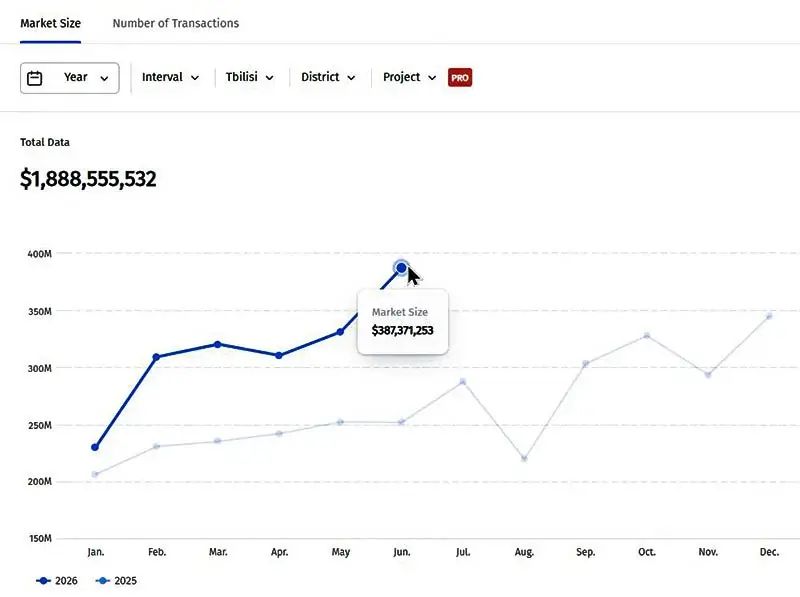
In the first half of 2026, 22,402 apartment transactions were registered in Tbilisi, 18.7% more than in the same period of 2025. The market volume increased by 33.2% to $1.8 billion.
The number of transactions involving new apartments grew by 21.9%. The report divides this segment into the primary market (+21.8%) and the secondary market for new apartments (+22.1%). Activity in transactions involving older projects increased by 7.7%.
Georgian citizens remain the main buyers of residential property in Tbilisi. The share of foreign buyers remained unchanged at 10%.
June Results
In June, the number of apartment transactions in Tbilisi reached 4,484, up 34.7% year-on-year. Sales volume increased by 53.9% to $387 million.
The number of transactions in new residential projects increased by 46.6%: sales on the primary market grew by 54.7%, while transactions on the secondary market rose by 36.5%. The number of deals involving older housing stock increased by only 2.3%.
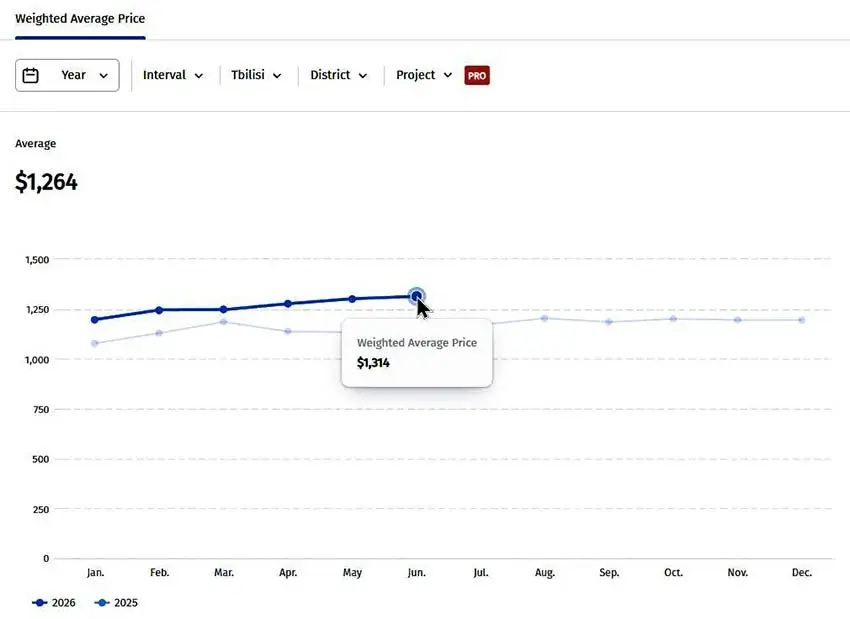
Housing prices rose by 15.4%, 11.4%, and 18.9% respectively. Colliers notes that some indicators may have been affected by the relatively small number of registered transactions.
Batumi: Fewer Deals for Completed New Projects
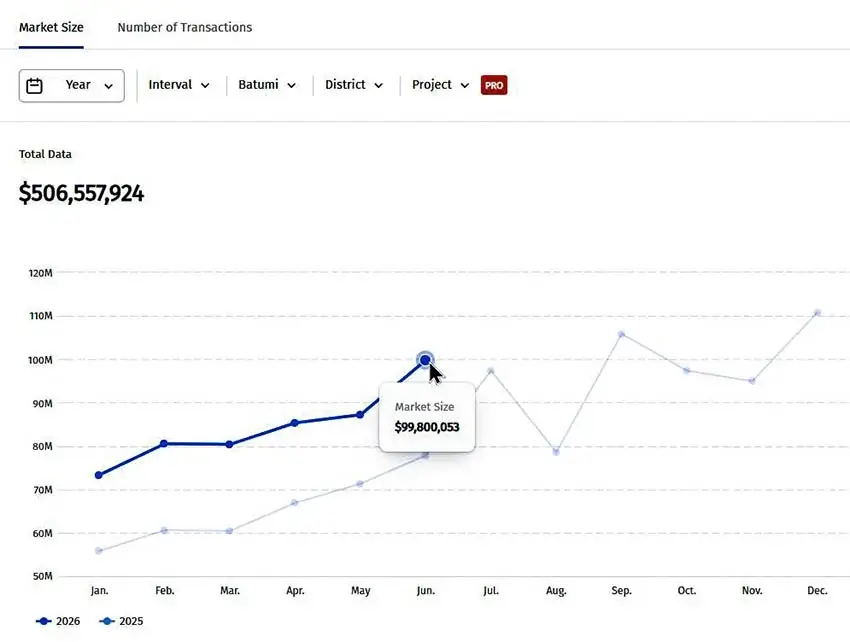
In the first half of 2026, Batumi’s residential real estate market continued to expand. The number of apartment transactions reached 7,838, up 11.4% year-on-year. Market volume increased by 29% to $507 million.
In June 2026, the city registered 1,468 apartment transactions, up 8.2%. The total value of sales increased by 28.2% to $100 million.
Foreign buyers play a significant role in Batumi’s market. In June, their share of transactions involving new and older residential projects reached 47%. Foreign buyers accounted for 87% of the overall increase in the number of transactions.
The number of transactions involving new residential projects increased by 11.6%. However, performance varied within the segment: sales of new apartments on the secondary market grew by 24.5%, while purchases directly from developers declined by 0.8%.
Transactions involving older housing stock decreased by 26.4% in June.
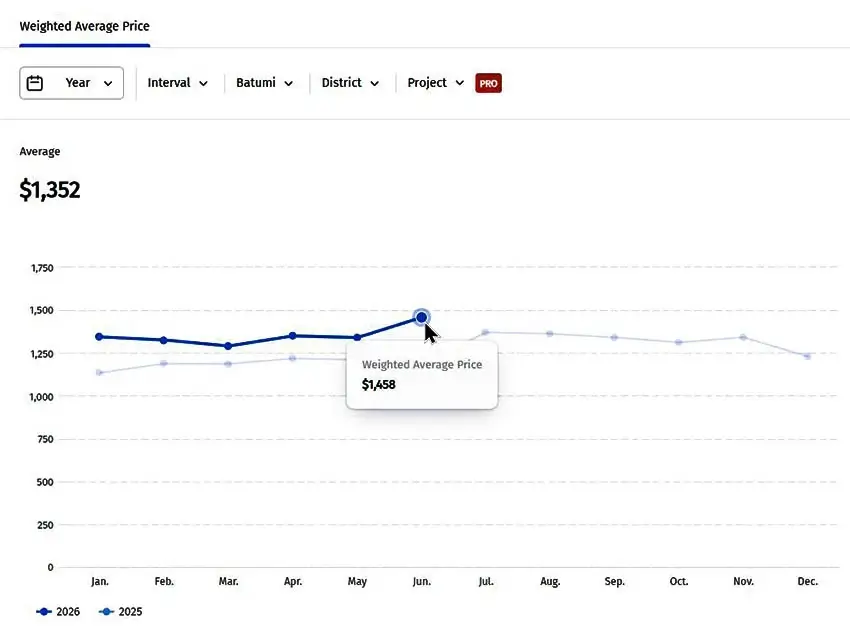
The average weighted price of new apartments in Batumi increased by 22.6% in June, reaching $1,455 per square meter. Colliers noted that price dynamics in the primary market were partly influenced by delayed registration of some transactions and sales in several high-end projects.
Outlook for Georgia’s Real Estate Market
Experts at Galt & Taggart point to an oversupply of residential real estate in Georgia, especially in Adjara. At the same time, Batumi is expected to add around 58,000 new apartments between 2025 and 2029, of which 46,300 are intended for short-term rentals — about 80% of the total volume.
In some areas, the share of investment apartments reaches 96%. Analysts note a slowdown in activity in some market segments. Gross returns on such properties have declined over three years from 10% to 7.4%. Further decreases to 5% or even 1.5% are possible.
International Investment analysts note that the actual rental yield from residential properties is lower, at only 3–5% after accounting for all expenses. During vacancy periods, which are common for apartments, returns can decline even further.
Extremely high profitability claims over very short periods in the apartment segment may represent isolated cases and should be treated with caution. A more stable segment appears to be premium hotel real estate — branded properties managed by professional operators. These assets typically have higher occupancy rates and can generate stronger revenue per room.