







 Covivio Hotels Revenue Grows 4.7% as European Markets Split
 Lithuanian Apartment Prices Accelerate Across Major Cities
 Georgia's Tourism Revenue Hits Record High
 Norway's Sovereign Fund Commits €1.5bn to European Warehouses
 Market Rout of October 2026: Can Branded Hotels Protect Capital?
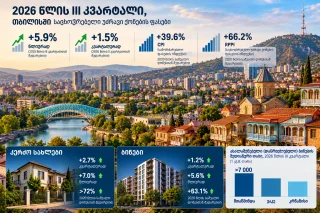 Residential Property Prices in Tbilisi Rise by 5.9% Year-on-Year
AI Power Demand Reshapes Europe's Data Centre Property Market
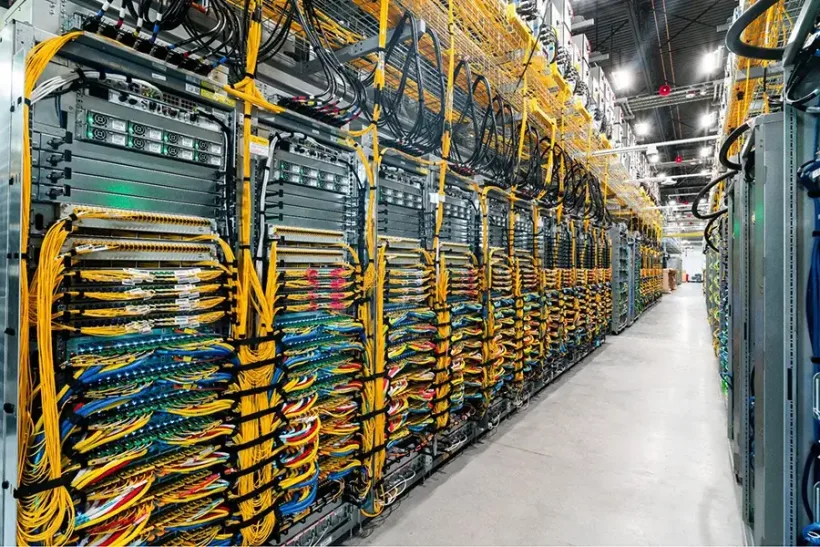
Electricity is becoming a defining constraint on Europe's data centre property market. Developers need land, grid connections, cooling and fibre networks, but AI-driven computing demand is expanding faster than suitable powered sites can be delivered. A plot with a confirmed power connection can be more attractive than larger, cheaper land without one.
Telecom groups including BT, Orange and Iliad are expanding into data centres as Europe seeks more sovereign cloud capacity. The Financial Times cites a forecast of roughly $70 billion for that market in 2027. That is a projected market size, not confirmed investment by the telecom operators.
AI demand is outrunning European capacity
CBRE revised its end-2026 European data centre vacancy forecast from 6.5% to 6%. It also cut expected new supply by 35MW, roughly 5% of the initial forecast, because some projects have been delayed. Certain new lease agreements have exceeded earlier pricing expectations, reflecting the scarcity of capacity available at the right scale and time.
Why telecom operators are entering the market
Telecom groups already own fibre networks, technical buildings and corporate relationships. BT, Orange and Iliad can use those assets to participate in cloud infrastructure growth. Demand for sovereign services reflects European customers' need for stronger control over data and operations, although hosting servers locally does not alone guarantee digital sovereignty.
Power availability changes the economics of land
A nearby transmission line does not guarantee a usable connection. Data centre developers need committed megawatts, functioning substations and realistic connection dates. Consequently, existing industrial sites with suitable connections can have an advantage over cheaper plots awaiting major grid upgrades.
Cooling and environmental approvals matter
Dense AI computing equipment generates substantial heat, making liquid cooling, water availability, waste-heat reuse and energy efficiency part of property due diligence. A cold climate helps, but neither replaces grid capacity nor removes environmental constraints.
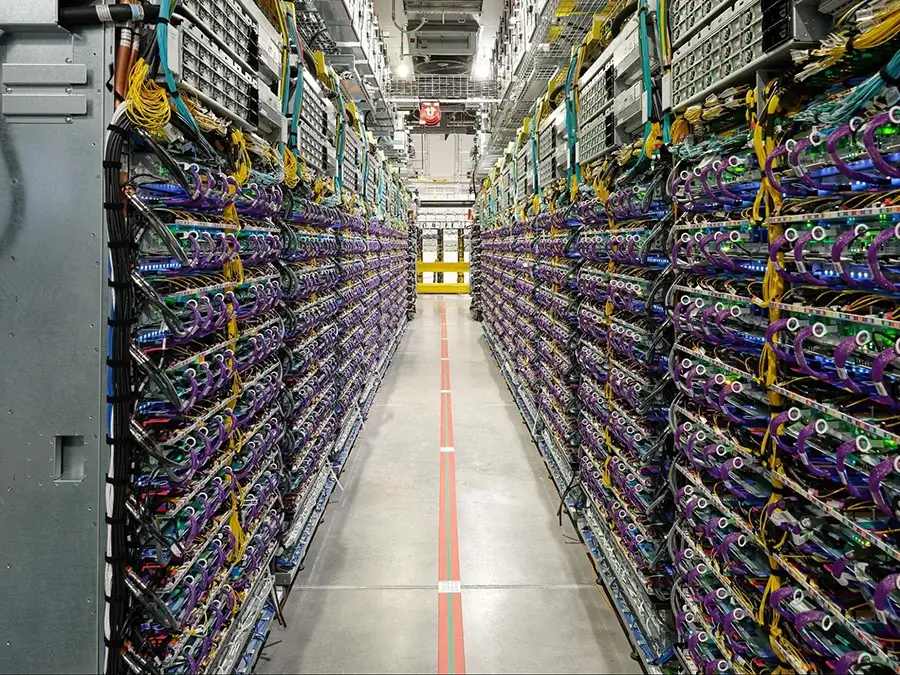
Finland attracts major capital
Google announced at least €13 billion for Finnish digital infrastructure, clean energy and partnerships over 2027–2028, including projects in Hamina, Kajaani, Muhos and Vaala. Its Hamina site uses seawater cooling and waste-heat recovery. However, environmental authorities ordered parts of the work at Muhos and Kajaani to stop amid concerns about environmental impact assessments, demonstrating that access to land and power is not enough.
Norway combines hydro power and a cool climate
Norway benefits from hydroelectric generation and cooler temperatures. Yet national renewable supply does not guarantee a connection at any particular location. Data centres compete for network capacity with industry and other electricity users.
Iceland exposes the limits of cheap green energy
Iceland has abundant renewable generation and favourable cooling conditions, but The Times reports it is declining some large AI projects because of power and grid restrictions. Data centres currently account for around 3.5% of national electricity use. The country's approach illustrates the difference between cheap renewable energy and immediately available large-scale capacity.
Where European sites remain viable
|
Market |
Advantage |
Constraint |
|
London / Frankfurt |
Customer demand |
Grid congestion |
|
Finland |
Energy and climate |
Permits and local grid |
|
Norway |
Hydropower |
Power competition |
|
Iceland |
Renewables |
Grid limitations |
|
Portugal |
New sites |
Infrastructure timing |
What property investors should check
Investors must evaluate confirmed grid access, connection timelines, cooling, fibre links, permits, expansion potential and the financial strength of prospective tenants. Existing industrial sites can gain value, but remediation, conversion costs and planning constraints can quickly change the return. International Investment has already explored how UBS sees power infrastructure, grids and data centres converging as an investment theme.
The new scarce asset is usable power
AI growth does not make every plot near a substation a sound investment. Real value lies in verifiable capacity, lawful development rights, delivery timelines and sustainable customer demand. For some European data centres, available megawatts are now as important as land price.
FAQ
Why does AI increase electricity demand?
AI model training and inference need high-density servers, electricity and cooling.
What is powered land?
Land with an available or contractually secured electricity connection; proximity to a grid line is not enough.
Why are Finland and Norway attractive?
They combine low-carbon electricity and cooler climates, although connections and permits differ by site.
Why is Iceland rejecting some projects?
Power generation and grid limitations restrict the largest new AI developments.
What is sovereign cloud?
Cloud infrastructure offering specific jurisdictional, operational and data-control guarantees