







read also
 Vietnam Mortgage Surge Pushes Homes Out of Reach
 Lithuanian Apartment Prices Accelerate Across Major Cities
 London Flats Lose Value Ahead of Leasehold Reform
 Construction of the Batumi–Sarpi Highway Begins in Georgia
 Baltic Property Investment Accelerates in 2026
 Hong Kong and Singapore Renew Their Expat Rivalry
Severe Weather Disrupts China Flights
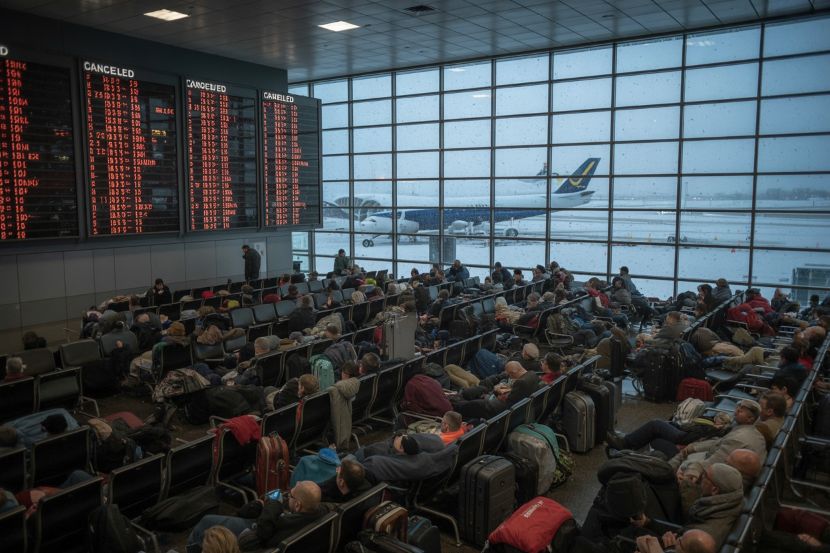
Severe weather disrupted air travel across China and parts of the wider region, triggering large-scale operational breakdowns at some of the country’s busiest airports. On January 25, 2026, China Eastern, Air China, and China Express Airlines collectively scrapped 60 flights and delayed another 520, leaving passengers stranded and turning routine schedules into a network-wide domino effect. The impact was most visible across Beijing, Chengdu, and Shanghai, where high traffic density and tight aircraft rotations tend to amplify weather shocks into prolonged disruption.
How the three carriers were affected
China Eastern faced multiple cancellations across routes feeding into major domestic gateways, with disruptions tied to airports such as Shanghai Hongqiao, Chengdu Tianfu, and Xi’an Xianyang. When cancellations hit a carrier with heavy reliance on connecting traffic, the immediate problem is rarely limited to one flight; it rapidly becomes a capacity and queue-management crisis, as passengers compete for fewer seats and rebooking counters become congested.
Air China experienced particularly acute consequences because Beijing Capital is central to its domestic and international connectivity. Weather-driven cancellations in Beijing reshape the day’s operations across the entire system, affecting not only point-to-point travelers but also passengers relying on onward links to other major markets. The cited cancellations include flights connecting key economic corridors, reinforcing how quickly hub disruption translates into widespread itinerary breakdowns.
China Express Airlines, as a regional operator, faced a different vulnerability: fewer aircraft and limited replacement options make recovery slower and detours more complex. Cancellations involving remote routes such as those linked to Ulanhot and Hailar can effectively disconnect smaller communities for extended periods, forcing travelers into longer, multi-stop reroutes through already congested hubs operating under adverse conditions.
Airports under pressure across multiple regions
The affected airports span a broad geography, suggesting that the disruption was not confined to a single localized weather cell. China Eastern’s operational strain was linked to Shanghai Hongqiao, Chengdu Shuangliu, and Xi’an Xianyang, while Air China’s network pressure centered on Beijing Capital, Guangzhou Baiyun, and Chongqing Jiangbei. China Express saw weather-driven disruption at regional points including Ulanhot, Hailar Dongshan, and Korla. When multiple hubs and feeder airports are impacted simultaneously, repositioning aircraft and crews becomes far more difficult, extending delays even after weather conditions begin to improve.
Why passengers get stranded so quickly
During mass cancellations and delays, the core passenger pain point is not only lost time but also a shortage of viable alternatives. When hubs are simultaneously constrained, the next available seat can disappear within minutes, and reassembled itineraries carry higher connection risk. Business travelers face missed meetings and compounding costs, while leisure travelers may lose hotel nights, tours, or time-sensitive bookings, often needing to change arrival cities or accept significant schedule shifts.
Tourism and business travel ripple effects
Disruptions of this scale affect more than airport terminals. Beijing and Shanghai are especially sensitive due to the volume of international and transit passengers, while Chengdu’s role as a growing domestic and regional hub means a shock there can disrupt travel deep into western China. When inbound visitor flows slip or fragment across missed connections, hotels, tour operators, and the meetings and events sector feel immediate pressure. For remote regions served by a limited number of flights, the economic effect can be even sharper, as a single cancellation can meaningfully reduce accessibility for a full day or longer.
How the system can rebound
Recovery speed is shaped less by the raw number of cancellations than by communication and rebooking performance under stress. Clear, consistent updates and practical rerouting options reduce secondary losses such as repeated check-in attempts, unmanaged queues, and overnight stays in terminals. In hub-based networks, resilience also depends on flexible re-accommodation policies and fast connection rebuilding for passengers transiting through Beijing, Shanghai, and Chengdu. Over time, the industry’s response increasingly points toward weather-resilient infrastructure planning and more robust operational playbooks for high-risk days.
Conclusion
The cancellation of 60 flights and the delay of 520 more by China Eastern, Air China, and China Express Airlines became one of the most visible weather-driven disruption episodes in Asia in late January 2026. The event underscored how vulnerable connectivity can be when multiple hubs are pressured at once, and how critical official updates and rapid rebooking pathways are for minimizing passenger and economic fallout.
As reported by International Investment experts, repeated weather disruption episodes are accelerating a shift in aviation toward operational resilience, where transparent passenger communication, flexible re-accommodation, and infrastructure readiness increasingly determine how quickly tourism flows and business mobility can normalize after severe conditions.