







 Australia’s Spring Auctions Rise but Remain Well Below 2025
 Number of Foreigners Holding Turkish Residence Permits Exceeds 1.27 Million
 Demand from Russian Tourists for Holidays in Georgia Rises by 20–25%
 Montenegro Property Buying Costs in 2026
 Four in Ten Companies Would Not Choose Slovakia
 Gulf Countries Prepare Unified Tourist Visa
Severe Weather Disrupts Flights Across China
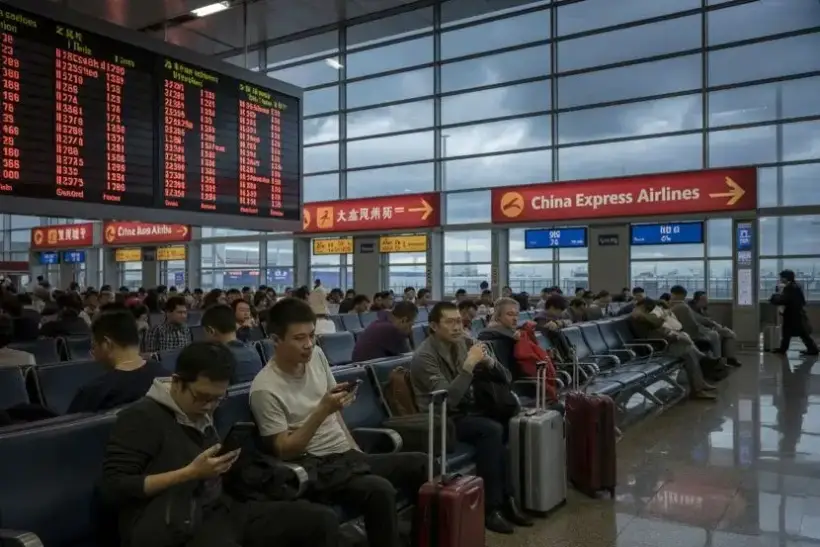
On February 16, 2026, extreme weather conditions across several Chinese regions caused major disruptions to air travel. A total of 35 flights were canceled and 1,131 delayed, significantly affecting operations in Beijing, Shanghai, and Chengdu. Thousands of passengers faced extended waiting times as airlines worked to stabilize schedules.
China Eastern Airlines, Air China, and China Express Airlines were among the carriers most affected. Heavy rainfall, thunderstorms, and reduced visibility due to fog created operational challenges at key aviation hubs.
Major Airports Facing Operational Disruptions
Shanghai Pudong and Shanghai Hongqiao experienced extensive cancellations and delays on routes connecting Xi’an, Changsha, Wuhan, and other eastern cities. In Beijing, both Capital International Airport and Daxing International Airport were impacted.
Southwestern China saw disruptions in Chengdu, including Shuangliu and Tianfu airports. Additional operational strain occurred in Zhengzhou and Chongqing, where regional routes operated by China Express Airlines were particularly vulnerable.
Airlines Struggle to Restore Schedules
China Eastern suspended or delayed flights linking Shanghai with Meixian, Xi’an, Changsha, and Wuhan. These routes are essential for domestic business and tourism flows.
Air China reported cancellations on routes between Beijing and Xiamen, Beijing and Fuzhou, and Chengdu and Wuhan, alongside disruptions to western regional services.
China Express Airlines faced cancellations on regional sectors connecting Zhengzhou, Bazhong, Chongqing, Zhaotong, and Xishuangbanna, creating cascading delays for connecting passengers.
Passenger Impact and Economic Consequences
Thousands of travelers were left stranded as service desks faced long queues and limited seat availability. Missed connections intensified the disruption, forcing many passengers to wait overnight or incur additional accommodation costs.
The financial impact extended beyond travelers. Business mobility between key economic centers slowed, and domestic tourism flows temporarily weakened.
Outlook for China’s Aviation Sector
Airlines have begun gradually restoring operations as weather conditions improve. However, high airport utilization and accumulated delays may prolong full schedule normalization.
Passengers are advised to monitor official airline updates and maintain flexible booking arrangements during adverse weather periods.
As International Investment experts report, increasingly volatile weather patterns are emerging as a structural risk for Asia’s aviation sector, accelerating the need for resilient infrastructure, advanced air traffic management systems, and flexible airline operations.