







 Vietnam Mortgage Surge Pushes Homes Out of Reach
 Lithuanian Apartment Prices Accelerate Across Major Cities
 London Flats Lose Value Ahead of Leasehold Reform
 Construction of the Batumi–Sarpi Highway Begins in Georgia
 Baltic Property Investment Accelerates in 2026
 Hong Kong and Singapore Renew Their Expat Rivalry
Collapse of Air Travel in the Middle East
Overland Transport Becomes the Main Evacuation Route
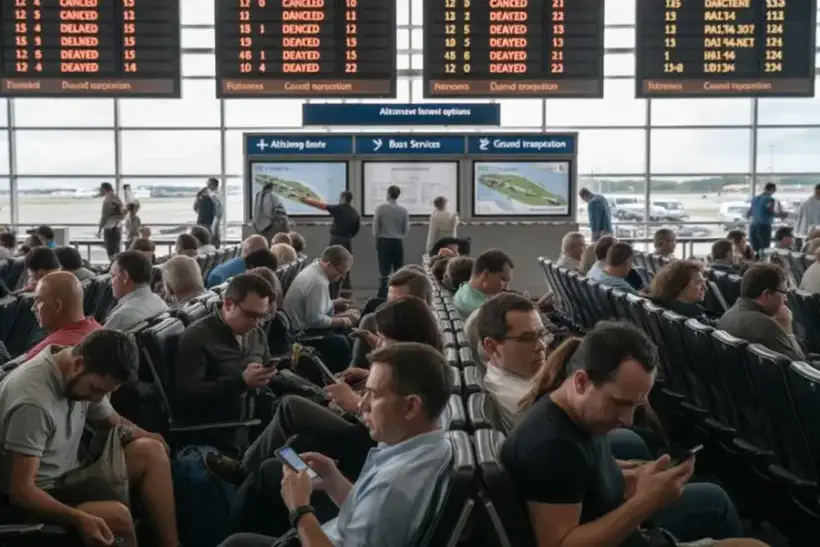
The escalation of the conflict between Iran, Israel, and the USA has led to an unprecedented collapse of air travel in the Middle East. Thousands of travelers are forced to use cars and buses to leave the dangerous region, reports Travel And Tour World. The largest aviation hubs — UAE, Qatar, Saudi Arabia, Bahrain, Kuwait, Iran, and Lebanon — are facing massive flight cancellations, delays, and airspace closures.
UAE at the Epicenter of the Crisis
The United Arab Emirates, the region's largest aviation hub, is at the center of the transport collapse. Dubai International Airport (DXB), one of the busiest airports in the world, is practically paralyzed.
Emirates has canceled flights to Iran and Israel, rerouting many aircraft around dangerous zones. The carrier has resumed limited services only to select destinations, including London, New York, and Sydney, but flights operate with reduced capacity, and many passengers are redirected to other regional routes.
Etihad Airways from Abu Dhabi has also suspended flights to high-risk countries and operates a reduced schedule to Asia, Europe, and Australia. The airline offers flexible rebooking and refund options for passengers of canceled flights.
Restrictions in Qatar
Hamad International Airport in Doha remains operational, but Qatar Airways has significantly reduced its schedule due to airspace restrictions and military activity near conflict zones. The airline canceled flights to Israel and Iran and reduced the frequency of flights to Europe and Asia. Despite ongoing disruptions, the carrier has resumed limited operations to London, Paris, Frankfurt, Madrid, Rome, and Bangkok. Passengers should expect longer waiting times and delays.
Travel via Saudi Arabia
Saudi Arabia has become a key alternative route. King Abdulaziz International Airport in Jeddah and King Khalid International Airport in Riyadh are operating under increased load, receiving passengers traveling overland from the UAE and other countries to depart on international flights.
Saudi Airlines continues to operate flights, especially to Asia, Europe, and Africa, although the carrier faces an influx of passengers due to rerouted flights and travelers trying to bypass disruptions at UAE and Qatar airports. At the same time, overland traffic has surged: travelers are driving from the UAE to Saudi Arabia to depart from functioning airports, creating border congestion and increasing demand for transport services.
Bahrain and Kuwait: Cancellations and Restrictions
Bahrain. Bahrain International Airport has faced flight cancellations and delays. While the country's airspace is not fully closed, many airlines have reduced operations in the region. Some flights are rerouted through Saudi Arabia or Qatar, with decreased frequency. Passengers are advised to depart from nearby airports in Doha or Riyadh.
Kuwait. The country has not experienced extreme disruptions like the UAE or Qatar, but its aviation sector is significantly affected. Kuwait International Airport operates with reduced capacity and delays due to restrictions in neighboring airspace. Flights to high-risk regions — Israel, Iran, and Iraq — are canceled. Travelers heading to Europe and Asia are advised to reroute through Saudi Arabia or Qatar.
Iran and Lebanon: Full Closure
Iran. Directly involved in the conflict, Iran has completely closed its airspace to commercial aviation indefinitely. This has led to the cancellation or rerouting of all flights to and from Tehran. Passengers are advised to consider alternative routes via Turkey, Pakistan, or Armenia, which maintain better connectivity to Iranian destinations.
Lebanon. Beirut International Airport continues operations, but the closure of neighboring countries' airspace has caused significant delays and cancellations, particularly affecting flights to Israel and Iran. Travelers departing from Lebanon are advised to reroute via airports in Qatar or Saudi Arabia.
Explosive Growth of Overland Transport
Residents and visitors in the region have massively switched to car travel. This route has become the main way to evacuate to countries with operational airports. UAE residents lead in the number of travelers choosing overland routes.
Bus bookings from the UAE to Saudi Arabia and Oman have increased by 300%, and car rental demand for trips to neighboring countries has grown by 40%. More than 30% of passengers from the UAE are changing their routes to fly from airports in Saudi Arabia or Qatar.
Advice for Travelers
Experts recommend that travelers affected by flight disruptions remain flexible. It is important to regularly monitor official government notifications and up-to-date information from airlines about flight status. If departure is not possible, overland routes to neighboring countries with functioning airports should be considered. Local travel agencies can assist with visa processing, transport arrangements, and rebooking tickets from alternative airports.
Where It Is Safe to Travel and Invest
Amid growing geopolitical tension in the Middle East, travelers and investors seek reliable destinations. Georgia stands out as one of them: the country is far from the conflict zone, not involved in Persian Gulf disputes, and independent of major military routes, reducing travel and aviation risks. Tbilisi International Airport and other hubs operate normally, infrastructure is open, and safety is confirmed by international ratings.
International Investment experts note that regional tensions often redirect tourist flows to calmer countries, and Georgia, with its developed hotel sector, mountain resorts, wine tourism, and cultural routes, attracts travelers from Europe, the Middle East, and Asia. This also increases investor interest in real estate, hotel projects, and infrastructure.
Conclusion
The transport collapse in the Middle East has exposed the fragility of the global aviation system. The crisis has shown that even the largest aviation hubs — Dubai, Doha, Abu Dhabi — are not immune to a complete shutdown. Airlines now depend on their ability to instantly reroute passengers through alternative hubs, while regional states are forced to rapidly increase land border capacity.
In unstable conditions, relying on combined travel routes, where flights are only part of the journey, is safer. This crisis will likely change traveler behavior in the region for the long term, making overland transport an equal option in travel planning rather than an exception.