













Cyprus Property Market Hits New Record
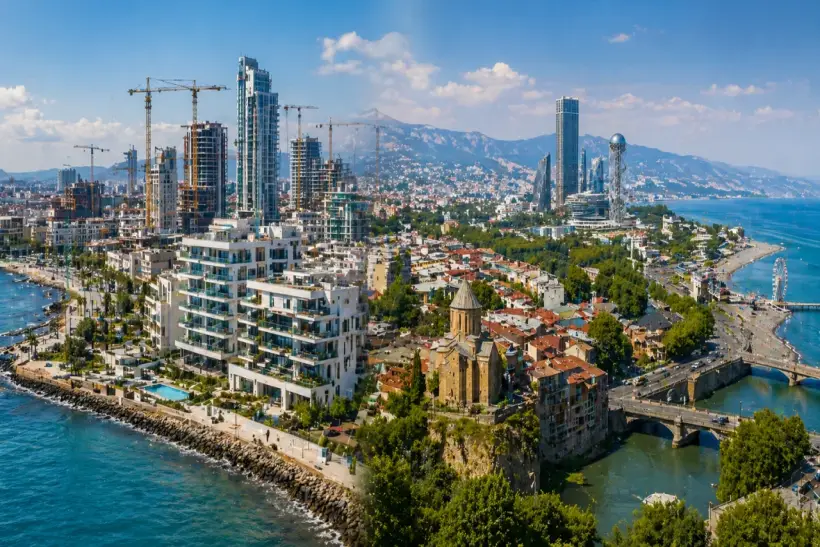
Cyprus real estate reached €6.5 billion
Cyprus’s real estate market reached a historic high in 2025, with total transaction value rising 8% to €6.5 billion and the number of deals increasing 4% to 25,600. Cyprus Mail, citing PwC Cyprus, reported that the figures reflect market activity before the latest Middle East escalation, making the 2026 outlook more uncertain.
The rise was supported by economic growth, housing demand and foreign buyers. Gross domestic product, the total value of goods and services produced in the economy, grew by a provisional 3.8% in 2025, while inflation slowed to 0.8%. Better financing conditions helped sustain demand, particularly for apartments.
Apartments became the market engine
Residential property generated €4.5 billion, or 69% of total transaction value. Around 15,900 apartments and houses were sold during the year, a 7% increase. Apartments accounted for 42% of total transaction value and 43% of transaction volume, while contributing about 60% of the market’s value growth.
The shift toward apartments reflects affordability pressure. Houses have become harder for buyers to reach, while apartments remain more liquid for local households and foreign investors. In-Cyprus reported that expensive houses and international demand made apartments the central driver of the market.
Limassol led but lost momentum
Almost every district recorded growth in transaction value. Famagusta rose 27%, Paphos 17%, while Nicosia and Larnaca each gained 15%. Limassol was the exception, with a marginal 3% decline, although it still accounted for 41% of the market by value.
By transaction volume, Nicosia and Limassol each represented 28% of deals, followed by Larnaca and Paphos. The figures show that Cyprus is becoming less dependent on a single high-value district, even as Limassol remains the country’s most important property market by value.
Foreign buyers increased their presence
Properties acquired by foreigners rose 16% to 7,255. Paphos and Limassol together accounted for 60% of foreign transactions, while around 66% of properties bought by foreigners went to non-European Union buyers. That increases the market’s exposure to external capital and residency-linked demand.
The luxury segment remained stable. There were 203 residential deals above €1.5 million, with a combined value of €550 million, equal to 8% of total sector value. Limassol’s share of luxury transactions fell from 76% to 61%, while Paphos increased its share from 18% to 28%.
Construction is rising, but pressure remains
Development activity strengthened. From January to October 2025, new building permits rose 9%, while their total value increased 28%, indicating a shift toward higher-value projects. The construction materials index returned to growth, rising 1.3%, which may add pressure to development costs.
The critical issue for Cyprus is that a record market does not automatically mean better housing affordability. If growth is driven by foreign buyers, premium projects and expensive coastal apartments, local households may face a higher entry barrier despite strong headline economic data.
Georgia shows a different investment balance
Compared with Cyprus, Georgia looks more accessible and more dynamic for some investors. Georgia Today, citing TBC Capital, reported that the country recorded 78,500 real estate transactions in 2025, up 6% year on year; 49,200 were secondary-market deals and 29,300 were primary-market transactions. Average residential prices reached $1,312 per square meter in Tbilisi, up 4.1%, and $1,395 per square meter in Batumi, up 16.5%.
Georgia has advantages in practical investment terms: a lower entry price, an active resale market, liquidity in Tbilisi and rapid resort growth in Batumi. International Investment previously reported that Tbilisi recorded 19,205 transactions worth $1.4 billion in the first half of 2025, while Batumi registered 7,129 transactions worth $397 million; average rental yield in Tbilisi reached 8.4%.
Cyprus remains a more institutional and expensive European Union market, but that also makes it less accessible. Georgia offers a more flexible entry point, faster growth in resort real estate and stronger rental-yield potential, although investors still need careful legal due diligence because the market is less standardized.
As International Investment experts report, Cyprus’s record is a strong macroeconomic signal, but the key issue is not transaction volume; it is affordability and the structure of demand. Compared with Cyprus, Georgia currently looks better for investors focused on entry price, rental yield and transaction speed, while Cyprus is becoming a market of more expensive capital and stronger dependence on foreign buyers.
FAQ
Why did Cyprus real estate reach a record in 2025?
The market grew because of economic resilience, lower inflation, strong apartment demand, foreign buyers and higher transaction values across most districts.
Which property segment performed best in Cyprus?
Apartments were the main driver, accounting for 42% of total transaction value and 43% of deal volume.
Which Cyprus districts grew fastest?
Famagusta posted the strongest increase, followed by Paphos, Nicosia and Larnaca. Limassol remained the largest market by value but showed a slight decline.
Why does Georgia look better for some investors?
Georgia offers lower average prices per square meter, stronger rental-yield potential in some segments and faster transaction dynamics, especially in Tbilisi and Batumi.