









CEE Offices Face Tight Supply

Central and Eastern Europe’s office market entered 2026 with a rare post-pandemic combination: new construction remains limited, vacancy is gradually falling, occupiers are cautious, and the best buildings in central locations are defending rents as competition shifts from volume to quality.
The CEE office market stabilised after the downturn
The office market in Central and Eastern Europe showed signs of resilience in the first quarter of 2026 despite cautious occupier behaviour and weak new development. Across the six key regional capitals — Warsaw, Prague, Budapest, Bucharest, Bratislava and Sofia — average vacancy fell to 10.3%.
Cushman & Wakefield’s Office MarketBeat report says the market was supported by an improving macroeconomic environment. Regional gross domestic product growth accelerated to 2.7%, average unemployment remained low at 4.4%, and harmonised inflation eased to 3.5%. Harmonised inflation is a consumer-price measure calculated under a common European Union methodology for country comparison.
For the office sector, this means tenants have not left the market, but they have become more selective. Companies continue to optimise space, reassess hybrid work and control costs, yet the office remains part of corporate infrastructure, especially for collaboration, hiring, training and employee retention.
Vacancy is falling because construction remains low
The defining feature of the market is not a sudden demand boom, but constrained supply. Total modern office stock across the six CEE capitals reached 22.225 million sq m at the end of the first quarter of 2026. Only 98,100 sq m of new space was delivered during the quarter, still below historical norms.
Low completions are limiting the increase in available space and gradually supporting lower vacancy. Differences between markets remain wide: Prague had the lowest vacancy rate at 5.8%, while Bratislava was at the upper end with 13.4%.
That gap shows why the region cannot be treated as a single market. Prague benefits from limited development, steady demand and a shortage of high-quality offices in central districts. Bratislava, by contrast, faces a higher level of available space, which increases competition between landlords and raises the importance of incentives, flexible terms and building upgrades.
Occupiers are choosing quality over space
Gross office take-up in the region reached 512,000 sq m in the first quarter of 2026. That was 44% lower than in the previous quarter, when the market was supported by a strong finish to 2025, but 4% higher than a year earlier. Gross take-up means the total volume of leasing activity, including new leases, expansions, relocations and renewals.
Net absorption was positive in all six capitals. This indicator measures the change in actually occupied space and is important for assessing real demand. Positive absorption suggests companies are not only renewing leases, but gradually occupying more high-quality space.
The structure of demand has changed. Occupiers do not want square metres alone. They want offices with strong transport access, energy efficiency, modern technical systems, flexible layouts, good common areas and predictable operating costs. This makes the market more difficult for older buildings that do not meet new requirements.
Prime rents are holding firm
Rents in the best buildings in central locations remained resilient. In Warsaw, prime rents in the central business district ranged from €24 to €29 per sq m per month. In central Prague, they reached €30 per sq m per month. In Budapest’s central business district, the level held at €25, while Bucharest stood at €21 to €22 per sq m per month.
Prime rent is the rent achieved by the highest-quality assets in the best locations. It does not represent the average market level, but it shows how much tenants are willing to pay for top buildings. In 2026, this segment appears the most resilient: limited new supply and demand for high-quality offices are allowing owners to defend pricing.
The secondary market is in a more difficult position. Buildings with outdated systems, weak energy performance, weaker locations or high vacancy need more flexible terms. These may include rent-free periods, fit-out contributions, discounts in the early years of a lease or shorter lease commitments.
Construction is recovering from a low base
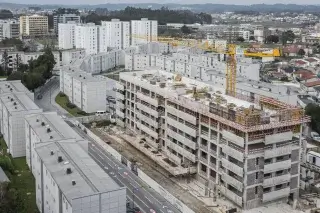
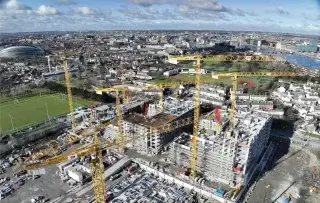
Although completions remain weak, construction is gradually rebuilding. At the end of the first quarter of 2026, 1.378 million sq m of office space was under construction across the six capitals, 12% more than a year earlier. Roughly half of the pipeline is speculative, meaning it is being built without full pre-leasing.
Risks differ sharply between markets. In Budapest, the speculative share was about 12%, while in Warsaw it was about 92%. That means the Polish capital may receive more new space without secured demand, requiring landlords to compete more actively for major tenants.
For developers, the situation is mixed. Low completions and falling vacancy create a window for new projects. At the same time, high financing costs, sustainability requirements, cautious banks and selective tenants make new office schemes riskier. Without pre-lease agreements, securing financing is becoming more difficult.
ESG has become a filter for tenants and investors
Environmental, social and governance criteria have become a key factor in office selection. In practical office-market terms, this means energy efficiency, low operating costs, indoor air quality, transport access, building certification and transparent asset management.
Companies are choosing offices not only by price, but also by whether a building can meet internal corporate standards. International occupiers are especially sensitive to this issue because office real estate affects their emissions and sustainability reporting.
Older buildings without upgrades will face pressure. Some assets will require capital expenditure on technical systems, facades, ventilation, lighting and shared spaces. In some cases, owners may consider conversion into residential, hotel, serviced-apartment or mixed-use formats.
Hybrid work changed the role of the office
Since the pandemic, the office in the region has stopped being simply a place where all employees come every day. It is increasingly used for collaboration, meetings, corporate culture, training and client interaction. That changes requirements for layout and building quality.
Companies may reduce inefficient space, but they are willing to pay for better offices. That explains why overall demand remains selective while the prime segment stays resilient. The focus is on Class A buildings, meaning the most modern and technically high-quality office assets in strong locations.
For landlords, this means they must prove the value of the building. Offering space is no longer enough. They need efficient layouts, services, transport access, energy performance, flexible areas, shared amenities, bike parking, showers, food options, employee infrastructure and predictable service charges.
Investors are returning selectively
Investor interest in the Central and Eastern European office market is recovering cautiously. The most attractive assets are prime buildings with strong tenants, long leases, stable cash flows and potential for modernisation. Investors are also looking at assets where refurbishment can lift rental income and long-term value.
The market remains divided. Quality assets in Warsaw, Prague, Budapest and Bucharest can attract capital because of deep labour markets, developed service sectors and the role of these cities as regional business hubs. Less liquid buildings, especially outdated stock, may require discounts and investment in upgrades.
For banks and institutional investors, the key issues are income predictability, vacancy level, tenant quality, lease length, future refurbishment costs and compliance with sustainability requirements. The gap between the best and secondary office assets is therefore likely to widen in 2026.
CEE is entering a quality-selection cycle
The Central and Eastern European office market is no longer growing through the mass delivery of new towers. It is moving into a quality-selection phase in which buildings with strong locations, modern systems, sustainability credentials and clear economics for tenants outperform.
For occupiers, this is a market of opportunities, but not necessarily cheap choice. Space is available, but the best central offices are limited. For owners, it is a market of discipline: older buildings need investment, while new projects require pre-leasing and careful financial modelling.
For regional cities, the office sector remains an important indicator of business activity. It shows where jobs concentrate, which industries are expanding, how corporate culture is changing and whether cities can compete for international companies and skilled workers.
As experts at International Investment report, the CEE office market is not simply recovering after the pandemic; it is undergoing structural change. The critical risk for investors is not headline vacancy, but the widening gap between modern sustainable buildings and outdated assets. In 2026, success will depend less on buying the market and more on selecting specific assets with the right location, quality, tenants and capacity to meet new corporate requirements.