







 The World’s Strongest Passports for Travel, Living and Investment
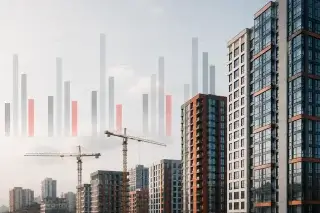 Russian Developers’ Debt Nearly Doubled in a Year
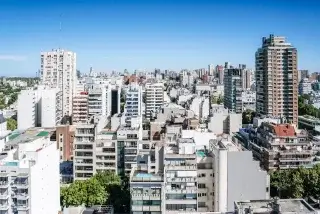 Argentina Rents Rise but Lag Inflation
 Hungary Plans Wealth Tax Above 1 Billion Forints
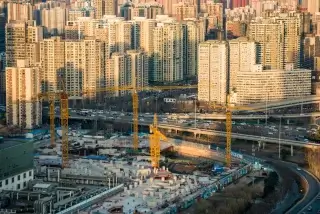 China Rewrites Its New-Home Sales Model
 Apartment Sales in Tbilisi and Batumi Reached $485 Million in July
Young Icelanders Shift Into Rental Housing

Iceland’s rental housing market is expanding as younger residents change the way they form independent households. About 29% of adults were renting in spring 2026, compared with 28% in the previous survey, while the rental share among people aged 18 to 24 jumped from 34% to 45%. At the same time, the proportion of young adults living with their parents dropped by 10 percentage points. Home ownership barely participated in the shift: only about 10% of the age group live in homes they own. Iceland Review was among the first outlets to highlight the change.
Young Adults Are Moving From Family Homes Into Rentals
New data from Iceland’s Housing and Construction Authority, HMS, show a significant change in housing arrangements among people aged 18 to 24.
The proportion living with their parents fell from roughly 47% to 37% in a year, while the share renting increased from 34% to 45%.
The movement was stronger among Iceland-born respondents. Their rental share rose from 23% to 32%, while the proportion living with parents fell from 58% to 48%. About 12% lived in owner-occupied homes, down from 13%.
Among young immigrants, renting was already dominant. The share rose from 71% to 73%, while the proportion living with parents declined from 16% to 14%. Home ownership remained at 4%.
HMS cautions that the figures come from a survey conducted between February and May 2026 and that relatively few respondents were aged 18 to 24, producing fairly wide confidence intervals. The measured decline in young people living with their parents was nevertheless statistically significant. The research combines the Prósent survey panel with a separate survey of immigrant members of the Efling, VR and Eining-Iðja unions.
The figures therefore provide a strong indication rather than definitive proof of a permanent change in Iceland’s housing structure. What is clear is that the latest increase in independent households is being absorbed mainly by rentals rather than home ownership.
Reykjavík Remains Iceland’s Largest Rental Market
Rental housing is concentrated heavily in the capital.
About 37% of adults in Reykjavík rent their homes, compared with 26% in neighbouring capital-region municipalities and 21% elsewhere in Iceland.
Home ownership follows the opposite pattern. Roughly 52% of adults in Reykjavík live in owner-occupied housing, compared with 61% in surrounding municipalities and about 73% outside the capital region.
Across Iceland, the estimated share of adults renting has increased to 29% from 28% in the previous measurement.
The national increase is modest, but the change among younger adults is far more pronounced. Their departure from family homes has become one of the clearest new sources of rental demand.
Rents Are Rising Faster Than Home Prices
The rental expansion is occurring as Iceland’s home-sales market cools.
The capital-region rental price index reached 130.4 points in July 2026, rising 0.46% from June and 4.74% from a year earlier. Over the same 12 months, the residential property price index increased by only 1.61%.
Nominal rents are therefore rising almost three times as fast as residential prices. In real terms, however, rental costs have been broadly flat rather than surging: Icelandic inflation stood at 5.3% in July, slightly above annual rental growth. HMS says the real 12-month change in rents has fluctuated around zero for roughly eight months.
For younger households, weaker home-price growth does not automatically improve affordability. The cost of financing the purchase is at least as important as the price of the property itself.
Iceland’s Key Interest Rate Has Reached 8%
On August 19, the Central Bank of Iceland raised its key interest rate by 0.25 percentage points to 8%. Four of the five Monetary Policy Committee members supported the increase, while one preferred to leave rates unchanged.
The bank cited persistent inflation pressures and inflation expectations that remain too high. Inflation stood at 5.3% in July, and the central bank expects it to rise further in the near term before easing more rapidly in 2027.
High interest rates are especially important for first-time buyers. Even if real property prices weaken, monthly mortgage payments can remain beyond the reach of younger households.
Subsequent data confirmed that inflation was still accelerating. Statistics Iceland reported that consumer prices increased 0.2% in August, pushing annual inflation to 5.6%. Inflation excluding housing costs stood at 5.2%.
Banks Have Slightly Eased Mortgage Rules
Credit conditions are moving in two directions at once.
A Central Bank survey of Iceland’s four commercial banks, conducted from July 1 to August 14, found that mortgage supply to households had increased marginally during the previous three months. Lending standards for residential mortgages were also eased slightly.
Banks expect mortgage supply to increase modestly over the coming six months.
Borrowing costs remain the problem. Interest rates on non-indexed household loans increased following rises in the central bank’s policy rate, while banks expect rates on inflation-indexed loans to rise over the next six months.
Access to a mortgage may therefore be improving slightly while the cost of servicing one remains restrictive.
Completed but Unoccupied Homes Have Almost Doubled
The financing squeeze is occurring despite increasing physical housing supply.
HMS counted 1,409 completed homes that had not yet been occupied in March 2026, almost double the 707 recorded in March 2025.
Construction activity has not stopped. Work began on 1,754 homes between the September 2025 and March 2026 surveys, 17% more than in the preceding survey period. Around 70% of those starts were in the capital region, with most located in Reykjavík.
HMS expects approximately 2,500-3,000 homes to be completed in 2026 and between 2,800 and 3,700 in both 2027 and 2028. The agency has also identified signs that some developers are delaying completion in current market conditions.
The figures expose a central contradiction in Iceland’s housing market: the physical availability of homes does not necessarily mean that households can afford to purchase them.
Iceland Estimates a Need for 3,600 New Homes
Long-term housing requirements remain substantial.
Municipalities that submitted housing plans for 2026 expect their combined population to grow by just over 8,000 people, or about 2.2%. They estimate that approximately 3,600 new homes would be required to accommodate that increase.
By early June, just under 1,500 homes had been completed, equivalent to about 42% of the projected annual need.
Actual population growth has been much slower than the municipal forecast so far. Between January 1 and June 1, the population of the municipalities concerned increased by just over 2,000 people, or around 0.5%.
Final housing demand will therefore depend heavily on migration during the rest of the year. The figures also reinforce the point that Iceland’s current housing problem cannot be reduced simply to the number of units being built.
New Homes Are Increasingly Entering the Rental Market
Relatively new properties already account for a significant share of Iceland’s rental stock.
More than 14% of active contracts in the official rental register in March involved homes built between 2021 and 2025. Properties built between 2016 and 2020 accounted for about 10%, while the average share for most earlier five-year construction periods was around 5%.
Strong construction in recent years explains part of the difference, but HMS says it does not explain the entire pattern.
The trend may help connect two developments that otherwise appear contradictory: a rising stock of completed homes and a growing rental market. A unit that is difficult to sell under expensive mortgage conditions can instead become a rental property.
Icelandic Youth Still Live With Parents More Than Nordic Peers
Despite the latest decline in young adults living with parents, Iceland has historically differed from its Nordic neighbours.
HMS notes that about 52% of Icelanders aged 20 to 29 lived with their parents in 2020. That was broadly comparable with averages for OECD and European Union countries, but substantially above the roughly 12%-22% range recorded in the other Nordic countries in 2024. HMS cautions that fully comparable datasets are limited.
A separate Eurostat indicator illustrates the broader Nordic pattern. In 2024, young people left the parental home at an average age of 21.4 in Finland, 21.7 in Denmark and 21.9 in Sweden. The EU average was 26.2 years. Comparable data for Iceland were not available in that dataset, so Iceland cannot be directly ranked using the same measure.
The recent increase in young renters may therefore indicate a move toward earlier independent living, but one being achieved mainly through rental housing.
Rental Growth Does Not Mean Housing Is More Affordable
The most important indicator is what has not changed: home ownership among 18-to-24-year-olds.
Young adults are leaving their parents’ homes in larger numbers, but almost all of the measured shift has gone into rental housing. Their ownership rate remains around 10%.
At the same time, Iceland has weak nominal home-price growth, a growing stock of completed but unoccupied homes and continued construction. Under ordinary financing conditions, that combination could strengthen the position of buyers.
An 8% policy rate changes the calculation. Lower real property prices do not necessarily translate into affordable monthly mortgage payments.
For investors, the same imbalance may support rental demand. More households need independent accommodation precisely when some new properties are taking longer to sell, increasing the incentive to place housing into the long-term rental market.
As International Investment experts note, the increase in young renters should not automatically be interpreted as an improvement in housing affordability. A more accurate reading is that young Icelanders are forming independent households more often while their ability to move into home ownership has barely changed. A 45% rental rate among 18-to-24-year-olds now coexists with an 8% policy rate, weak home-price growth and an almost twofold increase in completed but unoccupied homes. If mortgage financing remains expensive, the current expansion of renting could become a lasting structural shift rather than a short transition before home ownership.
FAQ: Iceland Rental and Housing Market
What share of adults in Iceland rent their homes?
The latest HMS housing survey estimates that about 29% of adults were renting in spring 2026, up from 28% in the previous measurement.
How many young people in Iceland rent?
Among people aged 18 to 24, the rental share increased from approximately 34% to 45%.
How many young adults still live with their parents?
The proportion of 18-to-24-year-olds living with parents fell from around 47% to 37%.
Are young Icelanders buying more homes?
The survey provides no evidence of such an increase. Only about 10% of 18-to-24-year-olds live in owner-occupied housing, while most of the move away from parents has gone into rentals.
Where is renting most common in Iceland?
Reykjavík has the largest rental share at around 37% of adults, compared with 26% in neighbouring capital-region municipalities and 21% elsewhere in the country.
How fast are rents rising in Reykjavík?
The capital-region rental price index increased 4.74% year on year in July 2026. Residential property prices increased 1.61% over the same period.
Are rents rising faster than inflation?
Not currently. Annual rent-index growth was 4.74% in July, while inflation was 5.3%, leaving real rental costs broadly flat.
What is Iceland’s key interest rate?
The Central Bank of Iceland raised its key rate to 8% on August 19, 2026.
Why are more people renting when unsold housing supply is rising?
Housing availability and housing affordability are different issues. High interest rates can make mortgage payments unaffordable even when home-price growth is weak and more properties are available for sale.
How many new homes does Iceland need?
Municipal housing plans estimate a requirement for around 3,600 new homes in 2026 based on projected population growth of just over 8,000 people. Actual population growth has so far been slower than forecast.