







 How Ukraine’s New-Build Housing Market Has Changed Over Four Years
 European Prime Rents Rise as Property Yields Turn Higher
 The Most Expensive Airlines in Europe in 2026
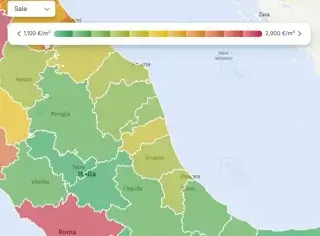 Housing Prices in Italy Reach a Two-Year High
 Travellers Increasingly Choose Cooler Scandinavia
 Serbia Property Sales Decline as Transaction Value Rises
Housing Crisis Moves to the Center in Paris

Paris housing crisis reshapes the mayoral race
Why housing defined Paris politics in 2026
The housing crisis emerged as one of the defining issues in Paris’s 2026 municipal election, as the French capital entered the campaign facing a shrinking resident population, high purchase and rental costs, and an increasingly charged debate over short-term tourist rentals. France 24 reported on March 11 that housing affordability, rather than transport, climate or security alone, could determine who would run the city next. Subsequent French reporting reinforced that conclusion: after the vote, new Paris mayor Emmanuel Grégoire made housing his top priority.
Why housing became a political fault line
Pressure on the Paris housing market has been building for years. According to the Paris Urbanism Agency, or Apur, Paris had 2,113,705 residents on January 1, 2022, and the population declined by an average of 12,800 people a year between 2016 and 2022. Researchers tied that not only to demographics, but also to the growing number of vacant homes, second homes and dwellings not used as primary residences. Apur said the link between falling population and the erosion of the main-residence housing stock is especially strong in Paris.
At the same time, a large share of the city’s housing stock has been diverted from the long-term market. Insee data showed that 11% of Paris homes were vacant and another 9% were second homes, meaning roughly one-fifth of the housing stock was not used as a main residence. In a 2024 Paris council document, city officials described the problem even more directly, citing around 270,000 vacant homes and second homes, or about 20% of total supply, while saying Paris was losing about 5,000 primary residences a year.
How short-term rentals became an election issue
One of the sharpest themes in the campaign was the role of short-term tourist rentals, including listings on digital platforms. Since January 1, 2025, Paris has capped tourist rentals of a primary residence at 90 days a year, down from 120, saying the move was needed to curb abuse and protect housing for residents. In updated guidance published in March 2026, the city maintained that tougher line and continued to step up enforcement of furnished tourist-rental rules.
Apur, using Inside Airbnb data, said that in October 2025 there were about 86,000 listings available across Paris and Greater Paris on Airbnb alone, with almost 75,000 of them for entire homes. For city authorities and much of the left, that was evidence that a meaningful part of the housing stock was being redirected into the more profitable tourist market rather than long-term rental supply. Paris City Hall has explicitly argued that the growth of furnished tourist rentals reduces the stock available to residents and contributes to rising property prices.
Social housing remained at the heart of the debate
Social housing was another major front in the race. Apur said that from 2001 to 2024, 126,544 social housing units were financed in Paris. Demand, however, remained extremely high. In its latest note, Apur said that by the end of 2024, a large social-housing waiting list remained in place and that 65% of applicant households in Paris had incomes below the threshold for the most affordable category. A 2024 Paris council document put the number of social-housing applicants at 277,000. That helps explain why the question of whether to keep expanding regulated and subsidized housing, or to limit its further growth, moved to the center of the mayoral contest.
How candidates differed on housing policy
The campaign exposed two broad approaches. The left argued for more regulated and affordable housing, tighter oversight of tourist rentals, office-to-housing conversions and stronger rent controls. After taking office, Emmanuel Grégoire confirmed that direction, pledging 30,000 new social-housing units and 30,000 affordable homes through below-market rent schemes and shared-ownership models. He also said the city would seek to double annual housing production to more than 8,000 units and back the effort with a 600 million-euro allocation in the 2026 budget.
The center-right and conservative side of the race favored a more market-led model, including calls to restrain further increases in the share of social housing and ease some of the rules that critics say discourage owners and investors. French media coverage focused on that split as a choice between stronger regulation and greater reliance on the private market.
How the 2026 election changed the Paris debate
The 2026 municipal vote was also held under a new electoral framework. Paris City Hall explained that voters cast ballots on March 15 and March 22 under a reformed system for Paris, Lyon and Marseille. That gave additional weight to city-level issues that directly affect daily life, especially housing, rent pressure and the problem of underused homes.
Polling in early March suggested a competitive race, although Emmanuel Grégoire had built a visible lead over rivals including Rachida Dati. After the first round, French press reports said Grégoire finished first with roughly 38%, comfortably ahead of Dati. That outcome highlighted how housing and broader cost-of-living pressures had become at least as politically potent as the symbolic contest over who would govern the capital.
Why Paris housing now matters beyond Paris
The housing issue in Paris has moved far beyond urban planning. It is tied to population decline, the ageing of residents, the rise of second homes, the conversion of apartments into tourist products and the widening gap between housing prices and household incomes. That is why the fight over social housing, the limits on short-term rentals and the effort to bring homes back into permanent use became, in effect, a fight over the city’s development model. The evidence from Apur, Insee and Paris City Hall suggests this is not a temporary disruption but a structural challenge for France’s largest urban market.
As International Investment experts note, the Paris case in 2026 matters beyond France. It shows that in major European cities, housing is increasingly shaping local elections as much as taxation, transport or security. When about one-fifth of the housing stock is not functioning as a primary residence and social-housing demand runs into the hundreds of thousands of applications, real estate stops being only an economic issue and becomes a central political one.
FAQ
Why did housing become a central issue in the Paris election?
Because Paris is dealing with high housing costs, a shortage of long-term rentals, a large stock of vacant and second homes, and heavy demand for social housing, all of which affect daily life for voters.
How much of Paris housing is not used as a primary residence?
Insee data showed 11% of homes were vacant and 9% were second homes, meaning around one-fifth of the stock was not used as a main residence.
How do short-term rentals affect Paris housing supply?
City authorities argue that tourist rentals reduce the stock available for residents and help push prices higher. That is why Paris cut the annual cap for primary-residence tourist rentals to 90 days and tightened enforcement.
How many short-term rental listings were there in Paris?
Apur, using Inside Airbnb data, said there were about 86,000 listings in October 2025, nearly 75,000 of them for entire homes.
How large is demand for social housing in Paris?
Paris documents and Apur data indicate demand remains extremely high, with city materials citing around 277,000 applicants.
What housing measures did the new mayor support?
Emmanuel Grégoire backed 30,000 new social-housing units, 30,000 affordable homes, office-to-housing conversions and stronger action against illegal tourist rentals.