







read also
 Vietnam Mortgage Surge Pushes Homes Out of Reach
 Lithuanian Apartment Prices Accelerate Across Major Cities
 London Flats Lose Value Ahead of Leasehold Reform
 Construction of the Batumi–Sarpi Highway Begins in Georgia
 Baltic Property Investment Accelerates in 2026
 Hong Kong and Singapore Renew Their Expat Rivalry
Germany / Spain / Tourism & hospitality / Tourism Germany / Tourism Spain / News / Business / United Kingdom / Tourism Britain / France / Tourism France / Poland / Tourism Poland 04.12.2025
Europe faces widespread travel chaos as 619 delays and 32 cancellations disrupt major airlines across Germany, the Netherlands, Finland, Spain and Poland
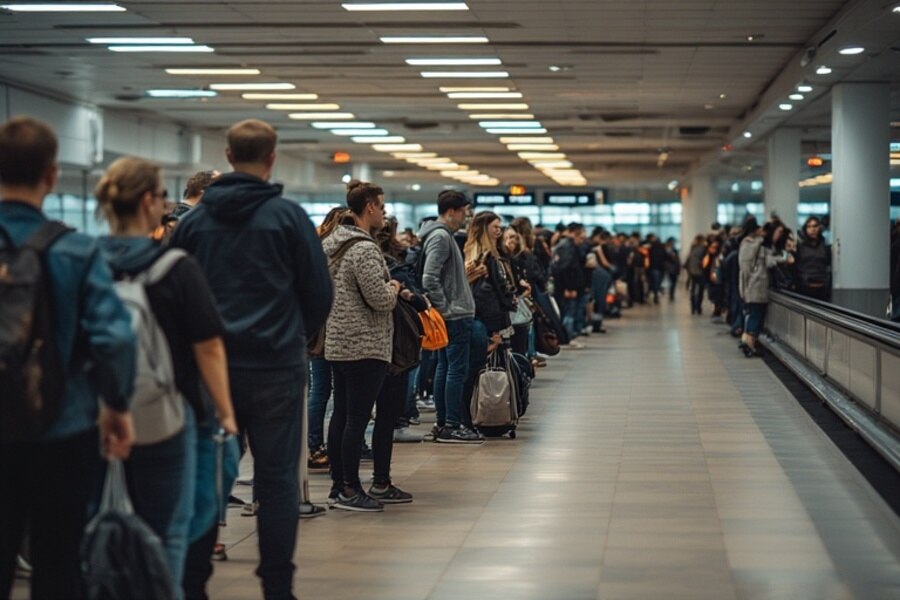
Europe found itself in the midst of a severe aviation crisis as 619 flight delays and 32 cancellations rippled across the continent, affecting passengers in Germany, the Netherlands, Finland, Spain and Poland. Major carriers, including Lufthansa, Iberia, Brussels Airlines and Air France, were forced to deal with mounting operational strain, leaving thousands of travelers stranded and unsure of their next steps.
A perfect storm of operational and weather-related challenges
The disruptions were driven by a combination of factors that collided on the same day: harsh weather conditions in northern Europe, ongoing staffing shortages, technical issues and the mounting holiday travel surge. Reduced visibility, strong winds and seasonal storms created serious safety concerns at airports in Poland and Finland. Meanwhile, airlines continued to struggle with shortages of pilots, cabin crew and ground staff — a lingering consequence of the slow recovery following COVID-19.
With travel demand surging ahead of the holiday season, airports were unable to absorb the sudden operational pressure. Passengers across Europe found themselves waiting for hours in crowded terminals, while airlines scrambled to adjust schedules.
The airports hit hardest by the disruptions
London Heathrow recorded 139 delays — the highest in Europe — although it avoided cancellations. Frankfurt faced 104 delays, while Paris Charles de Gaulle saw 93. Amsterdam Schiphol and Madrid Barajas experienced similar pressure, with ground operations stretched to the limit.
Krakow International Airport endured the most severe impact relative to its size: 4% of flights were cancelled and an astonishing 43% delayed. The figures highlight how smaller airports can be disproportionately affected by even minor operational disruptions.
Major airlines struggle to maintain schedules
Leading European carriers faced substantial operational strain. Lufthansa avoided cancellations but reported 18% delays. Air France experienced a 24% delay rate, affecting both European and connecting long-haul flights. Iberia and Brussels Airlines also struggled to maintain on-time operations.
Smaller regional operators were hit even harder. German Airways cancelled 5% of its flights and delayed 17%, while SATA Air Açores also reported a 5% cancellation rate. These numbers underscore how lack of buffer capacity leaves smaller carriers vulnerable to cascading disruptions.
Why the disruptions became so widespread
Experts point to the convergence of multiple structural weaknesses in Europe’s aviation system. Staffing shortages, underinvestment in air traffic management, unpredictable weather patterns and rising passenger numbers have created an environment where even minor issues can escalate quickly.
The lack of available landing slots, ground crew shortages and rising seasonal demand amplified the stress on airports. Once early morning flights were disrupted, the delays compounded throughout the day.
What passengers can expect in the coming weeks
As Europe enters the congested winter holiday period, airlines and airports will face even greater pressure. While carriers are attempting to increase staffing and adjust crew rotations, experts warn that disruptions may continue throughout the season.
Travelers are advised to check their flight status proactively, prepare for potential delays and allow extra time at the airport. Until systemic changes are implemented, Europe’s aviation sector is likely to remain vulnerable to sudden fluctuations in traffic and weather.
International Investment analysts note that the latest wave of delays and cancellations reflects deep-rooted structural challenges rather than isolated incidents. The aviation sector is struggling with shortages of key personnel, outdated operational processes and a fragile air traffic control system. Experts emphasize that without significant investment in digital air traffic solutions, improved staffing strategies and infrastructure upgrades, similar crises will become increasingly common. The events of this week highlight the urgent need for coordinated, long-term reforms to secure the stability of European air travel.