







 Vietnam Mortgage Surge Pushes Homes Out of Reach
 Lithuanian Apartment Prices Accelerate Across Major Cities
 London Flats Lose Value Ahead of Leasehold Reform
 Construction of the Batumi–Sarpi Highway Begins in Georgia
 Baltic Property Investment Accelerates in 2026
 Hong Kong and Singapore Renew Their Expat Rivalry
Gulf Truce Faces New Test
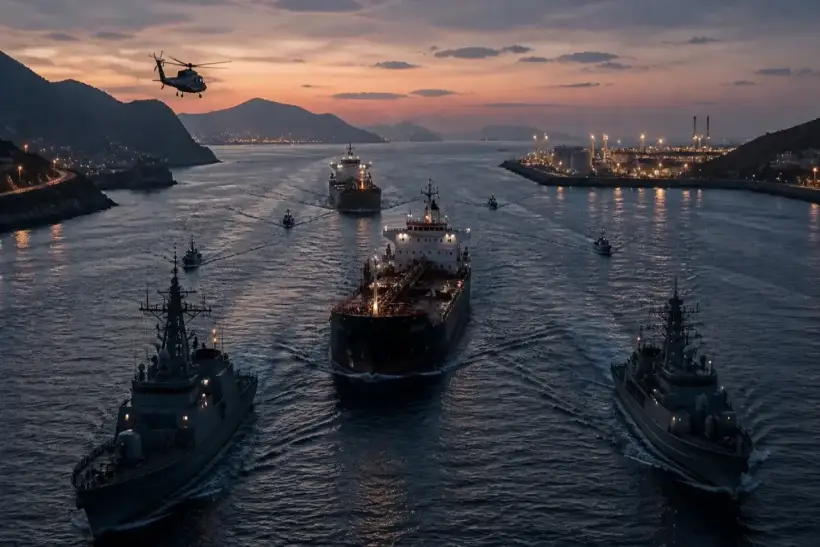
Fighting returns to the Gulf
The US and Iran exchanged fire in the Persian Gulf on May 4 as American forces escorted two US-flagged vessels through the Strait of Hormuz. Bloomberg reported that the clash cast doubt over the durability of the ceasefire and unsettled commodity markets.
The Strait of Hormuz remains one of the world’s most sensitive maritime chokepoints, carrying a large share of global oil and liquefied natural gas trade. Any disruption can quickly affect freight costs, insurance rates and energy-price expectations.
US expands vessel protection
Associated Press reported that US forces fired on Iranian small boats that were said to be threatening civilian shipping, while two American merchant vessels passed through the strait under new security measures. The agency also reported attacks on the United Arab Emirates, including a strike near oil infrastructure in Fujairah.
The operation has raised concern that the ceasefire may remain formally in place while being weakened by localized clashes, drone attacks and threats to commercial vessels.
Ceasefire terms remain unresolved
Bloomberg previously reported that Washington and Tehran were considering a ceasefire extension to allow more time for negotiations on the most difficult issues, including reopening the Strait of Hormuz and Iran’s uranium enrichment program.
Al Jazeera said the initial deal required the US to halt military strikes and Iran to ensure the safe opening of the strait, but core disputes over sanctions, US military presence and control of shipping routes remained unresolved.
Markets price in escalation risk
Bloomberg said copper fell after the Gulf exchange, as investors reassessed the risk of renewed escalation in a conflict that has already disrupted global markets.
For energy markets, the main risk is not only direct infrastructure damage but also a higher geopolitical risk premium. Even limited attacks near the strait can lift shipping, insurance and rerouting costs.
As experts at International Investment report, the latest crisis shows the weakness of ceasefires that do not resolve the economic drivers of conflict. As long as the Strait of Hormuz remains a tool of pressure and sanctions and Iran’s nuclear program remain outside a durable settlement, markets will respond less to diplomatic statements than to each new incident near shipping lanes.
FAQ
What happened in the Persian Gulf?
The US and Iran exchanged fire as American forces escorted US-flagged vessels through the Strait of Hormuz.
Why does it matter for markets?
The Strait of Hormuz is a critical route for oil and gas shipments, so military risks there can affect prices, insurance and shipping costs.
Has the ceasefire collapsed?
It may remain formally in place, but the latest clashes increase the risk of a de facto breakdown.
What is the Strait of Hormuz?
It is a narrow waterway between the Persian Gulf and the Gulf of Oman and one of the most important routes for global energy trade.