







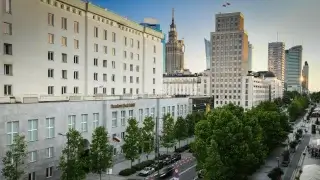
 Poland Poised to Hold Rates at 3.75%
 Ljubljana's Million-Euro Deals Are Increasingly About Land
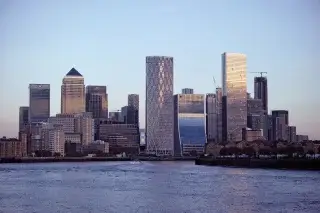 Reform UK Reworks Its Offer to Wealthy Foreigners
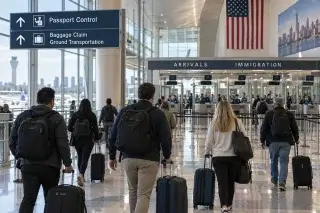 US Introduces Visa Bonds of Up to $20,000 for Tourists From 50 Countries
 Portugal Secures €1.5 Billion for Social Housing
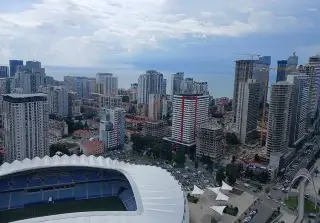 Mortgage Lending in Georgia Increased by Nearly 50%
World Economy Slows on Iran Shock

The World Bank warned that the Middle East conflict centered on Iran could hurt two-thirds of the world’s economies, cutting global growth to 2.5% in 2026, the weakest pace since the COVID-19 pandemic, as higher energy prices, inflation and borrowing costs spread through global markets.
World Bank cuts global growth outlook
The global economy is heading into 2026 with its weakest growth rate since the COVID-19 pandemic. In its June Global Economic Prospects report, the World Bank lowered its forecast for global growth to 2.5%. A year earlier, the world economy expanded by an estimated 2.9%.
This is not a minor technical revision. It reflects a new external shock. At the center of the outlook is the war involving Iran and the broader Middle East conflict, which is already affecting energy prices, transport costs, inflation expectations and access to capital for developing economies.
Bloomberg reported that the World Bank expects about two-thirds of economies to face weaker prospects. That scale means the fallout is not limited to the Persian Gulf or oil-importing countries. It is spreading through trade, commodity markets, financial conditions and public budgets.
Why the Iran conflict became a global economic risk
Energy is the main transmission channel. The Middle East remains a critical region for supplies of oil, gas and petroleum products. Any risk of disruption in the Persian Gulf and the Strait of Hormuz is quickly reflected in prices, cargo insurance, tanker routes and corporate costs.
The Strait of Hormuz is a narrow sea passage between Oman and Iran. A significant share of seaborne oil trade moves through it. Even a partial disruption can increase the risk premium in commodity prices as buyers price in delays, shortages and higher shipping costs.
Reuters, citing World Bank estimates, reported that global growth could slow to 1.3% if energy supply disruptions become more severe and are accompanied by substantial stress in financial markets. For the world economy, that would be more than a routine downgrade. It would be close to a crisis scenario, implying weaker real incomes, lower investment and reduced external demand for many countries.
Inflation returns as the central threat
The World Bank expects global inflation to average about 4% in 2026. For advanced economies, that raises the risk of a longer period of high interest rates. For developing economies, it creates a harsher combination: expensive energy imports, higher food and fertilizer costs, pressure on currencies and larger debt-service bills.
Inflation means a sustained increase in the general price level. In the current environment, it is being driven not only by demand but also by costs. When oil, gas, electricity, fertilizers and logistics become more expensive, the increase moves through production chains and eventually reaches consumers.
The Guardian, discussing the World Bank’s findings, noted that fertilizer prices could also come under pressure. That is especially important for low- and middle-income countries, where food inflation can quickly become a social risk. When farmers pay more for fertilizer and fuel, prices for grain, vegetables, meat and staple goods rise.
Developing economies face a lost-decade risk
Developing economies remain the most vulnerable. Their problem is not only weaker growth but limited policy space. Many entered the new shock with high public debt, expensive external borrowing and fragile currencies.
The World Bank warned that the 2020s could become a lost decade for many developing countries. The term means a period when economies may still grow, but too slowly to lift incomes meaningfully, reduce poverty, modernize infrastructure or narrow the gap with richer countries.
The situation is especially difficult for energy-importing countries. They must pay more for oil and gas, draw down foreign-exchange reserves, subsidize fuel or pass higher prices on to consumers. Both options are painful. Subsidies worsen public finances, while higher retail prices accelerate inflation and reduce purchasing power.
Debt burdens limit government responses
Higher interest rates and persistent inflation intensify the debt problem. When central banks keep rates high, new borrowing becomes more expensive and existing debts become harder to refinance. For countries borrowing in dollars or euros, currency depreciation adds another layer of risk.
The United Nations, in its mid-2026 World Economic Situation and Prospects update, also said the Middle East crisis is weakening the growth outlook, stoking inflationary pressures and increasing uncertainty in financial markets.
That is consistent with the World Bank’s assessment: weak growth and expensive money create a difficult choice for governments. They must fund social support, infrastructure, defense, food imports and debt service at the same time. As a result, less money is left for education, health care, energy systems and long-term investment.
The commodity shock goes beyond oil
The economic effect of the conflict is broader than the oil market. Higher gas prices affect electricity generation and chemicals. More expensive fertilizers hit agriculture. Higher shipping costs increase expenses for importers and exporters. Greater uncertainty forces companies to postpone investment.
The International Monetary Fund, in its April World Economic Outlook, had already warned that the Middle East war disrupted global recovery, raised commodity risks and made the inflation fight more difficult for central banks.
For companies, the result is higher costs and more cautious planning. For consumers, it means the risk of higher fuel, utility, airfare, food and imported-goods prices. For investors, it means greater volatility in currencies, bonds and equities.
Central banks have less room to cut rates
Before the latest Middle East shock, many markets expected major central banks to gradually move toward interest-rate cuts. Energy-driven inflation complicates that path. If oil, gas and food prices rise, policymakers cannot ease monetary policy quickly even as economic growth slows.
Monetary policy is the management of interest rates and financial conditions by a central bank. Its usual goal is to contain inflation and support stable employment. The problem in 2026 is that those goals may conflict: the economy needs support, while prices demand restraint.
That is why the World Bank’s forecast matters for financial markets. It points to a scenario in which growth slows while inflation remains above comfortable levels. For investors, that is less favorable than a normal cooling cycle, where weak data automatically strengthen expectations for rate cuts.
World Bank prepares major support for affected countries
The World Bank said it is ready to provide up to $100 billion over 15 months to countries most affected by the conflict’s fallout. The funding could support budgets, food and energy security, vulnerable households and infrastructure programs.
Such support will not erase the economic damage, but it can soften the most acute effects. For countries with limited access to capital markets, loans and guarantees from international institutions can help avoid sharp cuts in social spending or currency crises.
The size of the support package itself shows the seriousness of the situation. When an international institution prepares tens of billions of dollars in assistance, the risk is no longer treated as a local regional episode. It becomes a systemic challenge for the global economy.
What the forecast means for investors
For global markets, the World Bank’s forecast increases the importance of three indicators: oil prices, inflation and government-bond yields. If oil stays expensive, inflation falls more slowly. If inflation falls more slowly, central banks keep rates high for longer. If rates stay high, the cost of capital rises for companies and governments.
Shares of companies exposed to consumer demand may come under pressure as real incomes weaken. Emerging-market bonds become riskier when rates rise and currencies depreciate. Currencies of energy importers may face additional pressure, especially if countries run large current-account deficits.
Some energy and commodity exporters may benefit temporarily. Even for them, the picture is mixed: high prices lift revenues, but geopolitical risk, disrupted logistics and higher security costs can damage the investment climate.
Global growth becomes dependent on geopolitics
The World Bank report shows that the 2026 economy is becoming less driven by ordinary cycles of demand and interest rates. Geopolitics now has a direct impact on inflation, trade, public finances and access to capital. That makes forecasts less reliable and policy mistakes more expensive.
If the Middle East conflict remains limited in duration and scale, the world economy may stay close to the 2.5% forecast. If energy disruptions intensify and financial markets start pricing in higher risk, the slowdown could become much deeper. In that scenario, the hit to two-thirds of economies would no longer be a statistical estimate, but a practical problem for budgets, companies and households.
As experts at International Investment report, the central danger in the World Bank’s outlook is not only weaker global growth but the combination of slow activity and renewed inflation pressure. For developing economies, that is an especially harsh scenario: they must pay more for energy and debt while losing room to invest in infrastructure and social stability. The critical conclusion is that global markets are again repricing not just a regional conflict, but the resilience of an entire growth model built on cheap logistics, accessible energy and relatively low capital costs.