







 Latvia’s Residence Permits for Real Estate to Be Abolished from September 15
 Egypt Prepares New Law for Property Developers
 Young Japanese Buyers Turn to 50-Year Mortgages
 Argentina Narrows Tourism Gap as Arrivals Rise
 Seattle Luxury Housing Loses Its Former Momentum
 The World’s Strongest Passports for Travel, Living and Investment
Rental growth in Germany has stalled in real terms
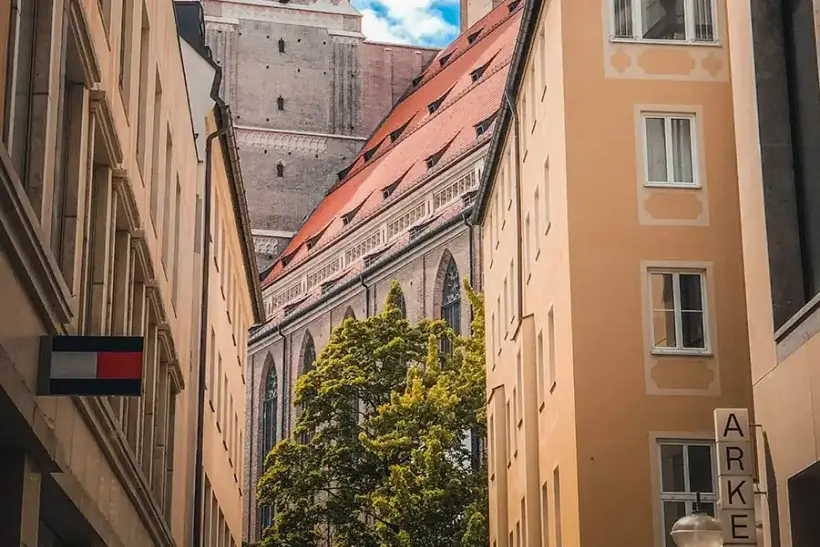
In the second quarter of 2026, the growth of asking rents in Germany almost ceased to outpace inflation. Moderate nominal price increases continued, but in real terms rental costs remained virtually unchanged, according to the GREIX Rental Price Index published by the Kiel Institute for the World Economy (IfW Kiel).
The GREIX index analyzes apartment rental listings in 37 German cities and regions, including the country’s 30 largest cities. The study is based on data from the VALUE Marktdatenbank.
Rental price trends in Germany
Average asking rents for apartments in the 37 largest German cities and regions increased by 0.8% compared with the first quarter, when the figure stood at 2.9%, and by 3.0% year-on-year. However, consumer prices rose faster over the same period. As a result, adjusted for inflation, rents declined by 0.4% over three months and increased by only 0.3% over twelve months.
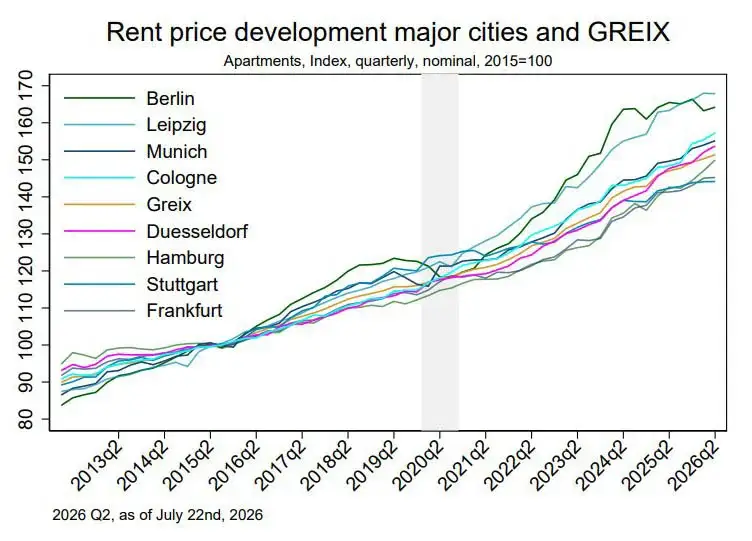
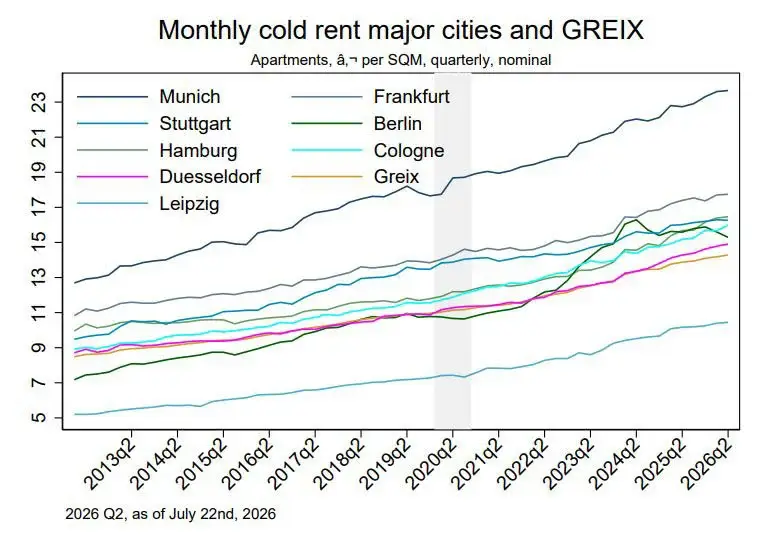
Rental market dynamics varied significantly across Germany’s eight largest cities. The strongest quarterly increases were recorded in Hamburg (+2.0%), Cologne (+1.3%), and Düsseldorf (+1.1%). In Munich, growth matched the GREIX average at +0.8%, while Berlin recorded a 0.6% increase. In Frankfurt am Main, rental rates remained almost unchanged (+0.1%), in Stuttgart they stayed flat, and in Leipzig they declined by 0.1%.
On an annual basis, the strongest rent growth was recorded in Cologne (+6.0%), Hamburg (+5.1%), and Düsseldorf (+4.1%). In Munich, rents increased by 3.7%, in Frankfurt am Main and Leipzig by 2.8% each, and in Stuttgart by only 1.3%. Berlin was the only major city where asking rents were below last year’s level, declining by 0.8%.
Top 8 largest cities
The highest average net cold rents (excluding utilities) remain in Munich, at €23.7 per square meter per month.
Frankfurt am Main — €17.8;
Hamburg — €16.5;
Stuttgart — €16.3;
Cologne — €16.0;
Berlin — €15.3;
Düsseldorf — €14.9;
Leipzig — €10.5.
The weighted average across all 37 cities and regions was €14.3 per square meter.
Analysts note that high rental levels do not always translate into faster growth. Stuttgart, for example, remains one of the most expensive rental markets, but since 2020 its rental price index has shown the weakest growth among the eight largest cities.
Rental rates in other German cities
Outside the eight largest cities, the most notable quarterly increases were recorded in Kiel (+2.0%), Karlsruhe (+1.8%), Wiesbaden (+1.6%), Münster (+1.6%), Lübeck (+1.5%), Essen (+1.4%), Wuppertal (+1.4%), and Potsdam (+1.3%). Rent declines remained rare and were mainly observed in Braunschweig (-0.9%), Erfurt (-0.8%), Aachen (-0.4%), and the Rhein-Erft district near Cologne (-0.2%).
On an annual basis, the strongest rent increases were recorded in Potsdam (+6.8%), Mönchengladbach (+6.7%), Erfurt (+5.8%), and Wiesbaden (+5.5%).
The highest average rental rates among cities outside the top eight were recorded in Potsdam (€14.9), Augsburg (€14.8), Münster (€14.5), and Wiesbaden (€14.1). The most affordable markets remain Chemnitz (€6.2), Gelsenkirchen (€7.6), Hamm (€8.5), and Duisburg (€8.6).
New-build and existing housing market in Germany
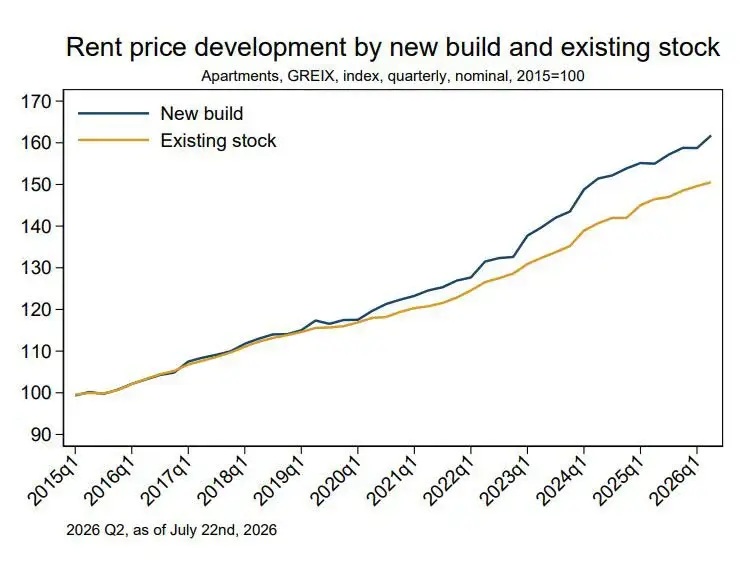
In the second quarter of 2026, the average net cold rent for newly built apartments was €19.0 per square meter, compared with €13.9 per square meter for existing housing stock. The difference reached 36.6%. At the same time, the eight largest urban markets accounted for around 71% of the total weighting of the new-build segment.
Among the largest cities, the highest new-build rental rates were recorded in Munich at €27.1 per square meter. It was followed by Hamburg (€21.5), Stuttgart (€20.7), Frankfurt am Main (€20.6), Düsseldorf (€19.3), Berlin (€19.1), Cologne (€18.4), and Leipzig (€14.6).
The largest gap between new-build and existing housing was recorded in Leipzig, where newly built apartments were 43.7% more expensive than existing properties. In Dresden, the difference reached 40.6%, while in Hamburg it was 34.3%.
Rental market liquidity in Germany
Across the 37 cities analyzed, there is a strong positive relationship between rental levels and the speed at which properties leave the market. The correlation coefficient is 0.74. Listings disappear from the market fastest in Potsdam, while Munich continues to have the highest rental prices.
In Stuttgart, apartments remain expensive, but the speed at which listings are withdrawn is lower than would be expected based on the overall trend. Chemnitz ranks among the cities with both the lowest rental rates and the slowest listing turnover.
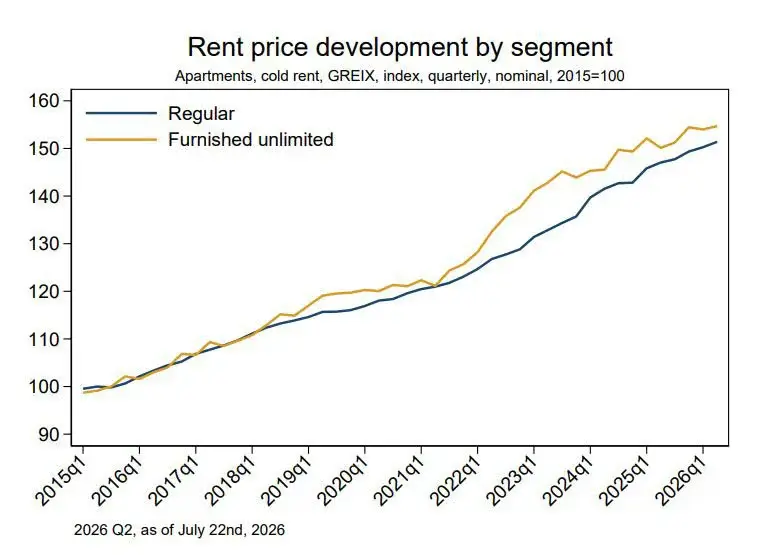
GREIX also analyzes special market segments. A comparison since 2015 shows that long-term furnished rentals have increased in price at almost the same pace as regular apartments. In the second quarter of 2026, the index for furnished long-term rentals was only slightly higher. A similar pattern was observed when analyzing total rental costs.
What this means for investors
Analysts at International Investment note that slower rental growth is changing investment calculations in the German residential real estate market. The period when rising rents were the main driver of improving investment performance is gradually coming to an end: in many cities, growth is becoming more moderate, while differences between individual markets are widening.
Investors can no longer rely solely on market size or current rental levels. For example, the most expensive cities do not always demonstrate the strongest growth dynamics: Munich remains the leader in terms of rental prices, but Cologne, Hamburg, and several other markets are ahead in terms of growth rates.
This means that the key issue for investors is becoming the relationship between an asset’s purchase price and its future development potential. As overall rental growth slows, markets that retain growth potential without excessively high entry costs are becoming increasingly attractive.